

Tech time, again?
Sector's stock has kept markets from mirroring COVID economy
Advertisement
Read this article for free:
or
Already have an account? Log in here »
To continue reading, please subscribe:
Monthly Digital Subscription
$1 per week for 24 weeks*
- Enjoy unlimited reading on winnipegfreepress.com
- Read the E-Edition, our digital replica newspaper
- Access News Break, our award-winning app
- Play interactive puzzles
*Billed as $4.00 plus GST every four weeks. After 24 weeks, price increases to the regular rate of $19.95 plus GST every four weeks. Offer available to new and qualified returning subscribers only. Cancel any time.
Monthly Digital Subscription
$4.99/week*
- Enjoy unlimited reading on winnipegfreepress.com
- Read the E-Edition, our digital replica newspaper
- Access News Break, our award-winning app
- Play interactive puzzles
*Billed as $19.95 plus GST every four weeks. Cancel any time.
To continue reading, please subscribe:
Add Free Press access to your Brandon Sun subscription for only an additional
$1 for the first 4 weeks*
*Your next subscription payment will increase by $1.00 and you will be charged $16.99 plus GST for four weeks. After four weeks, your payment will increase to $23.99 plus GST every four weeks.
Read unlimited articles for free today:
or
Already have an account? Log in here »
Hey there, time traveller!
This article was published 03/10/2020 (2007 days ago), so information in it may no longer be current.
Many businesses — whether small or titanic in size — are on the corporate equivalent of a ventilator. Without government support, they’d be dead. COVID-19 has been just that economically devastating.
Not all businesses are foundering though. Some are booming — because of the virus. The health-care and pharmaceutical sectors aside, technology has been the biggest winner. Love or hate big tech—and there’s lots to check in both those columns — these companies have powered portfolios for the past six months. Heck, they’ve been the engine for the last half decade.
Take the FANG (and friends) stocks. The FANGs are Facebook, Amazon, Netflix and Google (now Alphabet). And their ‘friends’ are Twitter, Microsoft, Apple and few other large technology companies, headquartered in the U.S, China and elsewhere. The NYSE FANG+ Index — which largely tracks all these firms — has an annualized return of more than 34 per cent since 2014. That’s almost triple the S&P 500’s performance. And since the pandemic, the index has more than doubled in value.
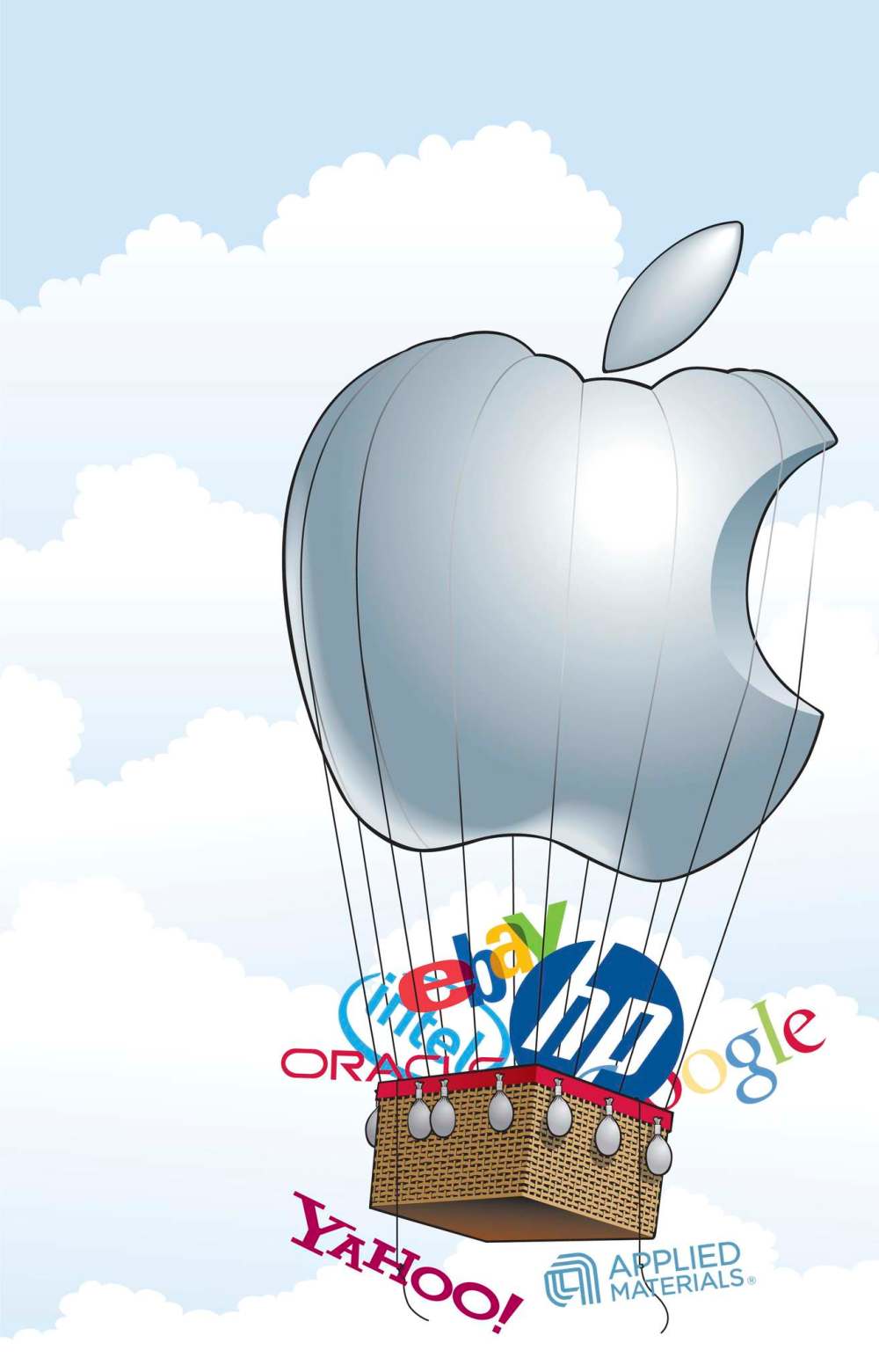
That said, big tech stocks have taken a step back lately, falling about five to 10 per cent (based on the aforementioned index). But the question remains, if you’re not investing in tech, are you missing out? The simple answer is: yes. You’ve missed a decade of growth. And you might miss out in the future. Having said that, if you own a broad-based global or U.S. equity fund, you already own some technology.
But the pandemic has served to accentuate tech’s importance (for better and for worse). So allocating 10 to 20 per cent of a portfolio specifically to technology stocks, via individual stocks, mutual funds or exchange-traded funds is worth considering.
“This pandemic has caused a significant shift in how people work and interact with each other, and how we entertain ourselves,” says Jonathan Mzengeza, equity research analyst with CIBC Asset Management.
Mzengeza helps manage CIBC’s Global Technology Fund. Through the 1990s (it started in 1995) to the early 2000s, the fund soared. Then, like most tech mutual funds, it became radioactive in the 2000s. Investor money went into tech funds to die slowly, eaten by high management fees.
Since about 2015, however, the fund has been a winner, with an annualized return of more than 20 per cent. It’s the same for most tech funds. Almost all have been winners, powered by secular trends. These are tailwinds for growth that occur no matter what occurs in other sectors. Of course, you needn’t be a technology analyst to understand why tech companies have seen sales grow during the pandemic. Just imagine the COVID-19 world without internet access, video-conferencing, streaming music and video, e-commerce and financial technology.
“COVID has been a mess for the entire world,” Vitali Mossounov, vice-president, portfolio manager and technology analyst with TD Asset Management.
It’d be even worse without technology.
Mossounov too helps manage a major technology mutual fund: the TD Science & Technology Fund. Also launched in the mid-’90s, $10,000 invested then would be worth $149,000 today. That’s despite the dot-com bubble in the early 2000s that burst, and a management expense ratio of 2.83 per cent. And FANGs have been its high-performance fuel.
When it comes to the FANGs, “you can’t divorce tech from the performance of those companies,” Mossounov says.
Their secret sauce is they aren’t just technology companies. They encroach on profits of retail, finance, and other sectors. Amazon is the most obvious example. It competes with other tech companies — like Microsoft in cloud computing and Netflix in media streaming — but it also does battle with big retail, like Walmart.
Walmart, by the way, knows it must transform to keep up. That’s why it wants a stake in TikTok — the Chinese social media company U.S. President Donald Trump wants to ban.
Walmart is “trying to acquire small competitors of big tech because that’s where the future is, so it’s willing to pay a huge premium,” says Mossounov.
Of course it’s not just big tech. The pandemic has also helped elevate small technology companies — like Zoom Video Communications. Its share price was about $67 at the start of 2020. Now Zoom shares are worth almost $500.
Even Canada — renowned for its bank, energy and mining stocks — has its big tech now. E-commerce provider Shopify Inc. is now the largest Canadian company traded on the Toronto Stock Exchange by market capitalization (total value of its shares).
“Shopify’s CEO said it jumped about five years ahead in e-commerce penetration from the pandemic.” Mzengeza says its revenue growth surged from the low 40 per cent range annually to 100 per cent since March.
But Canada’s tech industry is more than just one success story. The recent IPO (initial public offering) of Montreal-based Nuvei Corp. is another example of homegrown market innovation.
“It’s a pretty unique company,” says Dave Taylor, portfolio manager with BMO Global Asset Management, who helps run the BMO Growth Opportunities Fund. For one, Nuvei had the most successful IPO in Canadian history, now valued at more than $2 billion.

That’s due to it being the leading global provider of business to business payments. That includes the lucrative gambling industry. As such its revenues have “double-digit” growth and the company “has a long secular trend ahead of it” to continue its torrid pace, he says.
Now, one could argue tech’s big run-up will end once life returns to normal. What’s more is that tech companies trade at high valuations — you’re paying a lot of money to own them.
“But in a post-COVID world, many of these tech companies will be in an even better position,” Taylor argues.
Use of their products and services should only deepen because they typically make life easier, Mossounov adds.
“So they are likely to come out of this stronger than they were heading into COVID.”