Fossil fuel divestment gains momentum in philanthropy
Advertisement
Read this article for free:
or
Already have an account? Log in here »
To continue reading, please subscribe:

Digital Subscription
One year of digital access for only $205*
- Enjoy unlimited reading on winnipegfreepress.com
- Read the E-Edition, our digital replica newspaper
- Access News Break, our award-winning app
- Play interactive puzzles
*First annual payment billed as $205.00 + GST for one year. This annual subscription will automatically renew at $233.00 + GST every 52 weeks (10% off the regular annual price of $259.35). Offer available to new and qualified returning subscribers only. Cancel any time.
To continue reading, please subscribe:
Add Free Press access to your Brandon Sun subscription for only an additional
$1 for the first 4 weeks*
- Enjoy unlimited reading on winnipegfreepress.com
- Read the E-Edition, our digital replica newspaper
- Access News Break, our award-winning app
- Play interactive puzzles
*Your next Brandon Sun subscription payment will increase by $1.00 and you will be charged $17.95 plus GST for four weeks. After four weeks, your payment will increase to $24.95 plus GST every four weeks.
Read unlimited articles for free today:
or
Already have an account? Log in here »
Hey there, time traveller!
This article was published 01/11/2021 (1783 days ago), so information in it may no longer be current.
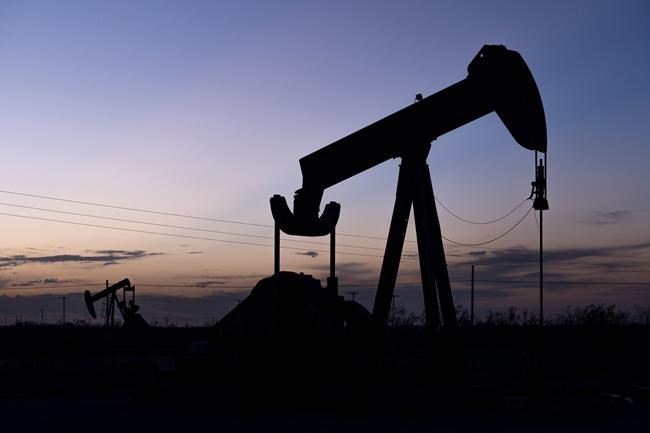
A movement to divest from fossil fuel is gaining support among foundations as activists push for funding to be shifted away from coal, oil and natural gas.
The call from activists to the charitable world is simple: Ditch fossil fuels and direct your investments into climate-friendly companies and funds.
The worldwide divestment campaign has sought commitments from universities, corporations and other entities. Now, two of the biggest names in philanthropy — the Ford and MacArthur foundations — are reorienting their investments away from fossil fuels, a move that leaders of the divestment movement hope will prove to be a tipping point for the charitable world.
“We’re calling on governments and corporations to act on climate aggressively and commensurate with the science,” said Ellen Dorsey, executive director of the Wallace Global Fund and a leader in Divest-Invest Philanthropy, which is pushing the philanthropic community to dump its fossil fuel investments. “Why aren’t we asking ourselves if we’re doing that?”
The announcements from Ford and MacArthur came in the lead-up to the United Nations’ climate summit in Glasgow, where activists, policymakers and scientists are pushing for far-reaching action on climate change. Both foundations are joining nearly 200 charitable organizations and firms that manage investments for wealthy families that have committed to divest, according to Divest-Invest Philanthropy.
“I’m glad that we were able to finally reconcile our financial imperative with our moral imperative as a foundation,” Darren Walker, president of The Ford Foundation, told The Associated Press.
About $1 trillion is sitting in endowments of private foundations, which are required to pay out only 5% of their assets annually. The rest is invested for growth. Traditionally, the two sides of their operations have been seen as separate: Grants were given to advance the foundations’ mission. The foundations’ money managers, meantime, sought high investment returns to maintain their organizations’ financial health.
But in recent years, activists have argued that it’s hypocritical for some foundations to fund initiatives that address climate change while potentially investing in fossil fuel-related companies. According to the ClimateWorks Foundation, global philanthropic funding for climate change mitigation totaled $6 to $10 billion in 2020, less than 2% of overall giving.
Critics of divestment counter that such changes could hurt investment returns and hinder foundations from maintaining their endowment size — thereby damaging what they set out to achieve. Ivo Welch, a finance professor at the University of California, Los Angeles, argues that foundations that divest won’t have much impact on the market and could even lose whatever leverage they might have with fossil fuel companies.
“I think it’s primarily a public relations exercise,” Welch said. “Let’s presume we really could bring fossil fuel companies to their knees, and they would be bankrupt now. The world would be in utter collapse. They cannot possibly want that.”
That said, many foundations see their shift away from fossil fuels as part of a broader effort to integrate the philosophies behind their donations with their investments.
“It was long overdue,” Walker said. “I don’t think The Ford Foundation deserves to be congratulated for doing the right thing.”
The Ford Foundation, which has $16 billion in assets, said in a statement last month that only 0.3% of its endowment is directly invested in fossil fuel-related companies. It said it has made no such investments since 2013 and won’t do so anymore.
Instead, the foundation says, it will invest in funds “that address the threat of climate change, and support the transition to a green economy.” Within five years, Walker said, the organization will also wind down its indirect investments in fossil fuels through partnerships with private equity funds.
For outside observers, it’s often been difficult to determine where Ford and some other foundations have been directing their investments. Some have been transparent about where their investments are landing. Others provide little information apart from how many assets they hold in various investment categories.
John Seitz, a former Wall Street portfolio manager who runs FoundationMark, which tracks investment performances of private foundations, noted that foundations are limited in what they can share if they’ve invested in entities, like hedge funds, that are not typically transparent.
The Ford Foundation’s 990 forms, which it must file annually with the IRS, don’t provide a clear picture of where its investments are landing. Walker says many of Ford’s investments are in private equity and hedge funds rather than directly in companies. He says the foundation will seek to be more specific about funds it invests in.
Another factor in the lack of transparency among foundations, Seitz suggested, is the desire to avoid outside scrutiny.
“It tends to create a lot of headaches,” Seitz said. “Because you’re just going to be questioned on every move you make.”
The AP reached out to a handful of sizable foundations that haven’t made a pledge to divest. Spokespeople for three of them said they were reviewing their investment strategy. One didn’t reply to an email seeking comment. Two others declined to speak on the matter.
The MacArthur Foundation, an $8 billion organization known for its “genius grants,” pledged two years ago to halt new investments in oil and gas. It went further in September, saying it would switch to U.S. index funds that exclude fossil fuel companies. And it’s aiming to change its global index funds to do the same within a year.
John Palfrey, the foundation’s president, didn’t specify how much money is involved but said the move was in “the billions.”
“Our goal is to be on a pathway to have zero fossil fuel-related companies in our portfolio over time,” he said.
Palfrey says the foundation had been working for a couple of years to divest more of its portfolio from fossil fuels. Recently, it chose to announce its plans partly to add momentum to the effort to address climate change at the U.N’s climate conference.
Last month, the McKnight Foundation, a Minnesota-based family foundation, committed to achieving net zero greenhouse gas emissions across its $3 billion endowment by 2050.
Some other foundations have been quietly shifting investments away from fossil fuels.
Don Chen, president of the Surdna Foundation, which has about $1 billion in assets, says the foundation has been reducing its investments in fossil fuels over the past decade and plans to phase out more in coming years.

“I do recognize the importance of using our public platform, profile and also our influence to be able to join the chorus of folks who are really trying to do more with our endowment assets,” Chen said.
___
AP journalist Emma H. Tobin contributed to this report.
___
The Associated Press receives support from the Lilly Endowment for coverage of philanthropy and nonprofits. The AP is solely responsible for all content. For all of AP’s philanthropy coverage, visit https://apnews.com/hub/philanthropy.