

Hemming in sexism in the workplace
As witnessed by deputy premier comparing a good speech and skirt length, we’ve still got a long way to go
Advertisement
Read this article for free:
or
Already have an account? Log in here »
To continue reading, please subscribe:

Digital Subscription
One year of digital access for only $205*
- Enjoy unlimited reading on winnipegfreepress.com
- Read the E-Edition, our digital replica newspaper
- Access News Break, our award-winning app
- Play interactive puzzles
*First annual payment billed as $205.00 + GST for one year. This annual subscription will automatically renew at $233.00 + GST every 52 weeks (10% off the regular annual price of $259.35). Offer available to new and qualified returning subscribers only. Cancel any time.
To continue reading, please subscribe:
Add Free Press access to your Brandon Sun subscription for only an additional
$1 for the first 4 weeks*
- Enjoy unlimited reading on winnipegfreepress.com
- Read the E-Edition, our digital replica newspaper
- Access News Break, our award-winning app
- Play interactive puzzles
*Your next Brandon Sun subscription payment will increase by $1.00 and you will be charged $17.95 plus GST for four weeks. After four weeks, your payment will increase to $24.95 plus GST every four weeks.
Read unlimited articles for free today:
or
Already have an account? Log in here »
Hey there, time traveller!
This article was published 28/05/2022 (1598 days ago), so information in it may no longer be current.
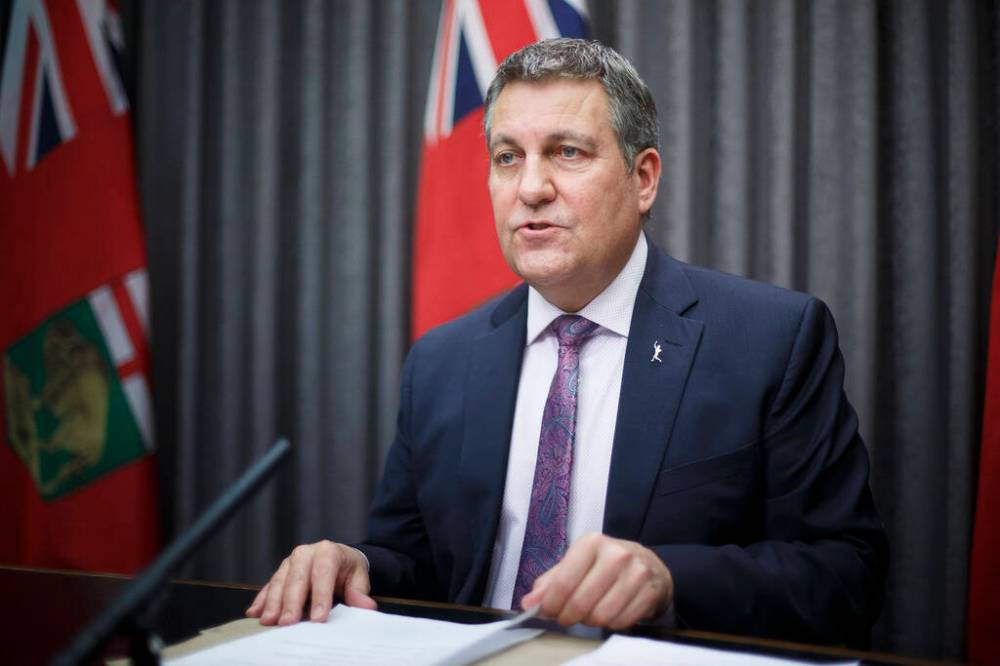
As someone who has experienced sexism in the workplace many times, I acknowledge there have certainly been improvements, but sexism in society and the workplace is alive and well. In fact, sexism is deeply buried in the psyches of our workplaces as recently evidenced by Deputy Premier Cliff Cullen. What was he thinking when he compared a good speech to the length of a woman’s skirt? I would suggest he wasn’t thinking.
As children continue to be socialized to support a rigid allocation of traditional male/female roles, the result is an unconscious bias that individuals don’t recognize until someone brings the issue to their attention. Consider the following.
● Insults as jokes: This is a very common form of sexism. Examples include jokes about dumb blonds, mothers-in-law and female drivers. It also includes attempts at humour, such as, “Wear the low-cut skirt to the meeting and I will seal the deal.”
● Gender labelling: Stating and believing that women are too emotional to be in a leadership role. Or, calling a strong woman leader bossy. It is also sexist to accuse a male of acting like a girl.
● Physical focus: Women more often than men receive comments on their appearance, especially hair, clothes, size and lipstick. In addition, many women in politics have been criticized for the sound of their voice.
● Opinions: A frequent complaint from women is that the good idea or opinion they put on the table for discussion is quickly discounted. Later in the meeting, the same idea is presented by a male colleague and perceived as a good idea.
● Promotion: Men are often offered a promotion versus a woman even when both have family responsibilities. The assumption is often made that a women wouldn’t want to take time away from their children. What about a male in the same position?
● Wage gap: This area continues to be a well-known discrepancy that has resulted in inequalities in pay for men and women with the same job title, education and experience. In general, so-called “women’s work” is especially underpaid.
It is very obvious that sexism continues to influence our workplaces, so the question is how can individuals fight this continued sexism in the workplace? It is everyone’s responsibility to recognize they are part of the problem, so they must also be part of the solution. The following outlines some tactics that can be used to help remove sexism from our lives.
● Self-assessment: Have you ever thought about the beliefs regarding women you may have grown up with? What are they and what impact do they have on your relationships, both at home and at work? Take a moment and think about how you talk. Do you make sexist comments, do you make assumptions based on how women dress or talk? Do you describe a woman competing head-to-head with a male colleague as power-hungry?
● Educate, educate: For the past few years, organizations have spent a good deal of time training employees and managers about harassment and bullying. Yet, it appears it is time leaders get back to the basics and educate everyone on the concept of sexism and how it permeates the workplace. Discuss the concept of “unconscious bias” and the fact that while behaviour is the result of socialization, it can be overcome with new education.
● Review your policies: Because sexism is so embedded in everything we do, there will probably be sexism embedded in many of your workplace policies and systems. For instance, years ago, women had to leave work shortly after becoming pregnant and there was no maternity leave. Women were expected to change their name after marriage to the name of their spouse. Today, there have been recent public complaints about government policy on registering a baby’s name. Times change and policies need to change as well. What’s the status of your policies?
While these items are all good suggestions for leaders and organizations, I guarantee there will be no change unless there’s a commitment to understand the challenges of sexism in the workplace. And since men continue to hold the majority of senior leadership roles, and influence organizational culture, they need to play a key role in creating an equitable and safe workplace without sexism.

However, a recent study on the role of men in overcoming sexism in the workplace identified there are several challenges men face when they do encounter sexism. For instance, they may not even recognize a sexist situation and therefore don’t deem it inappropriate. Or they don’t know how to address the issue of sexism when it arises. Sometimes a male leader will choose to ignore a sexist comment and instead try to redirect the conversation back to the topic at hand. In other words, the leader does not step in to interrupt the sexist behaviour. On the other hand, a male leader may show their disagreement through their body language such as rolling their eyes or using humour. Finally, a leader may simply ignore a sexist comment or situation and rely on someone else to deal with it.
More specifically, the study identified that less than 50 per cent of the male participants in the survey indicated they were comfortable interrupting a sexist event. Two-thirds indicated they would redirect while 25 per cent said they would react unassertively and 20 per cent would do nothing.
These statistics suggest there is a sobering gap amongst male leaders in taking the lead to eradicate sexism in our workplaces. Cullen’s recent comments about the length of women’s skirts confirms there is much more work to be done.
Source: Why is Sexism a Wicked Problem, Susan Madsen, Forbes, May 10, 2021; How does Sexism Influence workplaces today, Susan Madsen, Forbes, March 16, 2020; To Interrupt of not interrupt, that is the question, Interrupting Sexism at Work: What Drives Men to Report Directly or Do nothing, Catalyst, 2020.
Barbara J. Bowes, FCPHR, B.Ed, M.Ed, CCP is a human resource professional, author, radio personality, speaker, executive coach and workshop leader. She can be reached at barb@bowesleadership.com.