

History and healing
Businesses learning importance of including Indigenous people and perspectives
Advertisement
Read this article for free:
or
Already have an account? Log in here »
To continue reading, please subscribe:

Digital Subscription
One year of digital access for only $205*
- Enjoy unlimited reading on winnipegfreepress.com
- Read the E-Edition, our digital replica newspaper
- Access News Break, our award-winning app
- Play interactive puzzles
*First annual payment billed as $205.00 + GST for one year. This annual subscription will automatically renew at $233.00 + GST every 52 weeks (10% off the regular annual price of $259.35). Offer available to new and qualified returning subscribers only. Cancel any time.
To continue reading, please subscribe:
Add Free Press access to your Brandon Sun subscription for only an additional
$1 for the first 4 weeks*
- Enjoy unlimited reading on winnipegfreepress.com
- Read the E-Edition, our digital replica newspaper
- Access News Break, our award-winning app
- Play interactive puzzles
*Your next Brandon Sun subscription payment will increase by $1.00 and you will be charged $17.95 plus GST for four weeks. After four weeks, your payment will increase to $24.95 plus GST every four weeks.
Read unlimited articles for free today:
or
Already have an account? Log in here »
Hey there, time traveller!
This article was published 02/07/2022 (1547 days ago), so information in it may no longer be current.
These past several years have seen much attention paid to Indigenous issues in our Canadian landscape.
For instance, the Truth and Reconciliation Commission and its 2015 report helped bring attention to the grim reality of horrible treatment of students at residential schools, and the many unmarked graves being discovered on the sites of residential schools across Canada.
These findings and others have started a major shift in the thinking of ordinary Canadian citizens and businesses alike. Finally, there is growing respect for Indigenous history, culture and language. Conferences, speeches and meetings are frequently being opened with land acknowledgements where attendees are reminded that they are meeting on historical treaty territory.
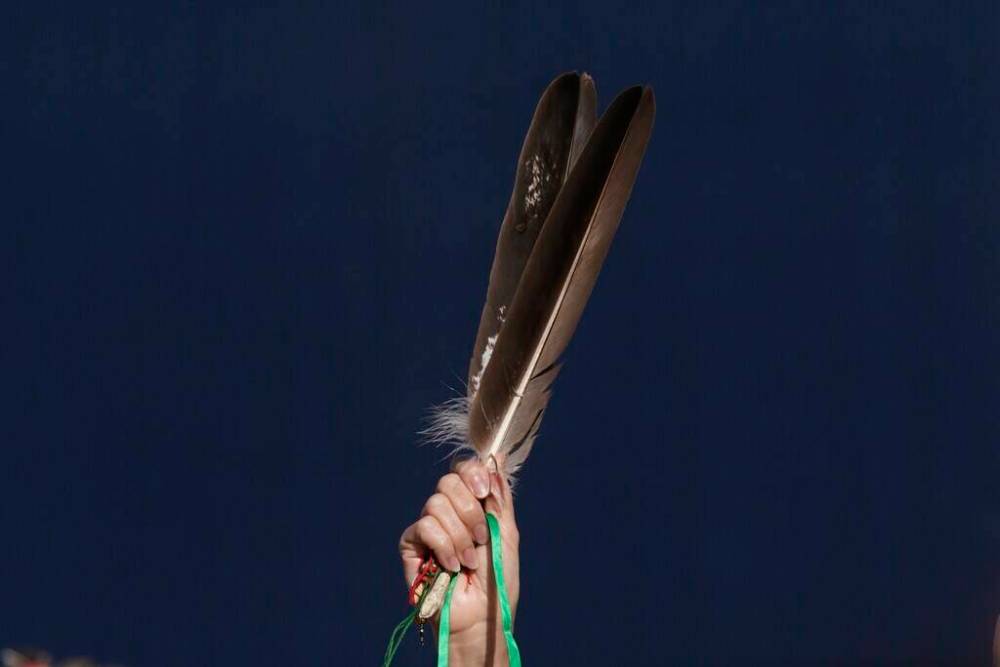
Elders and knowledge keepers are being invited to hold information sessions in the workplace and more organizations are beginning to train their employees on Indigenous history and what the truth and reconciliation calls to action are all about. The goal of today’s leaders is to help employees understand and learn the importance of renewing our relationship with Indigenous peoples. And finally, organizations are taking a serious look at how their policies and procedures might be hindering the recruitment and retention of Indigenous peoples within their employee group.
Recently, a group of Indigenous leaders including Jennefer Nepinak, Diane Roussin and Mary Jane Brownscombe spoke to attendees at the Institute of Corporate Directors luncheon, where they emphasized the importance of educating corporate board members about Indigenous history.
They also expressed the importance of including Indigenous people and perspectives at the decision-making table. This would lead to creating healthier systems, as well as the ability to tap into the huge potential within the Indigenous population.
Other corporations, such as banks, credit unions and universities, have been making strong efforts to support Indigenous awareness education and business development, along with providing services that strengthen Indigenous well-being. These reconciliation-based endeavours are good for business, as the Canadian Indigenous economy itself is forecast to be in excess of $100 billion in the next five years.
There has also been a major shift and a strong resurgence amongst Indigenous groups themselves as they proudly and publicly reclaim and celebrate their culture through powwows, sundances, horse racing and dance competitions. Indigenous language courses are filling up as individuals seek out opportunities to recapture and/or learn their traditional language. Service organizations in health, social services and education are now led by Indigenous professionals who are incorporating language, culture and ways of being into everything thing they do.
Jennifer Oborne Crolly is a settler born on Treaty 1 Territory who has spent years forging relationships with and serving Indigenous communities. Jennifer is a small business owner and entrepreneur who is expanding her organization, Energetic Explorations Ltd., to better and more widely serve Indigenous people and organizations.
Oborne Crolly’s ancestors hailed from England, Ireland and Sweden and arrived on these lands between 1647 and 1901. Some participated in governance, including the creation of the Dominion of Canada in 1867.
Reflecting on this colonial history, Oborne Crolly’s mind goes to the painfully missed opportunity for settlers to have learned and integrated Indigenous wisdom. Now, 155 years later, and one year following the announcement of children’s graves located at the Kamloops Indian Residential School site, she wonders, “Who could we have become as a nation, and who could we yet be?”
Oborne Crolly credits Indigenous friends, teachers and ceremonial community for the experiences that have influenced her sensitivity and care for Indigenous people and her understanding of the systemic issues created by colonization.
In 2003, she was led into the Indigenous ceremonial community, which validated her identity as a healer and began an intensive education in Indigenous ways of knowing and being, the historical experience of Indigenous relatives, and service in the Indigenous community.
These experiences are driving her to ensure her business is in alignment with reconciliation and healthy Indigenous-settler relations.
Over the last 28 years and in many contexts, Oborne Crolly has listened, learned and helped Indigenous and non-Indigenous people on their healing journeys. She has been an educator and student services teacher in the public school system, which awakened her to issues of intergenerational trauma in the classroom.
Having left the school system, Oborne Crolly continues to offer both in-person and group healing support through innovative holistic modalities at her company Energetic Explorations Ltd.
The call for reconciliation is one Oborne Crolly hears and works to support in her life and business. She sees this as a “thank you in action” for the friendships and gifts received from the Indigenous community, and is expanding her healing practice to offer effective, economical wellness supports for educators and social service employees, with a particular eye to supporting Indigenous relatives and the aims of reconciliation.
Oborne Crolly has been building her business on the values learned in ceremonial circles, such as generosity, reciprocity, honesty, kindness, ecology, the sacredness of all life, and the honouring of women, to name a few. Her business model is based on the principle of “Two-Eyed Seeing” that seeks to engage the best of both Indigenous and settler ways.
Her company makes its decisions daily by considering these questions:
● Are Indigenous people served by our presence here?
● Are we behaving in ways that align with healthy relationship?
● Where is Indigenous voice in decision-making, and what is that voice saying?

● How are we engaging in social and economic reconciliation?
● Are we being a good relative and/or ally?
Former senator Murray Sinclair recently stated at the Winnipeg Chamber of Commerce Road to Reconciliation luncheon that there are many advantages to businesses engaging in and having an action plan on reconciliation, saying, “You will become not only better businesses, but you will become better humans, too.”
Oborne Crolly can see the truth in Sinclair’s words and is creating and following her own personal path to reconciliation. Her healing service applies a combination of intercultural methodologies combined with the goal of helping others heal themselves. In my view, Oborne Crolly is indeed a leader in the growing movement to integrate the wisdom of other cultures into mental health practices.
Barbara J. Bowes, FCPHR, B.Ed, M.Ed, CCP is a human resource professional, author, radio personality, speaker, executive coach and workshop leader. She can be reached at barb@bowesleadership.com