Hunting guides turn to ecotourism as COVID-19 keeps American hunters away
Advertisement
Read this article for free:
or
Already have an account? Log in here »
To continue reading, please subscribe:

Digital Subscription
One year of digital access for only $205*
- Enjoy unlimited reading on winnipegfreepress.com
- Read the E-Edition, our digital replica newspaper
- Access News Break, our award-winning app
- Play interactive puzzles
*First annual payment billed as $205.00 + GST for one year. This annual subscription will automatically renew at $233.00 + GST every 52 weeks (10% off the regular annual price of $259.35). Offer available to new and qualified returning subscribers only. Cancel any time.
To continue reading, please subscribe:
Add Free Press access to your Brandon Sun subscription for only an additional
$1 for the first 4 weeks*
- Enjoy unlimited reading on winnipegfreepress.com
- Read the E-Edition, our digital replica newspaper
- Access News Break, our award-winning app
- Play interactive puzzles
*Your next Brandon Sun subscription payment will increase by $1.00 and you will be charged $17.95 plus GST for four weeks. After four weeks, your payment will increase to $24.95 plus GST every four weeks.
Read unlimited articles for free today:
or
Already have an account? Log in here »
Hey there, time traveller!
This article was published 19/12/2021 (1705 days ago), so information in it may no longer be current.
OTTAWA – Hunting guides, hit hard by COVID-19 restrictions on travel keeping foreign customers out of the country, are turning to ecotourism, including wildlife viewing, snowmobiling and guided hikes, to keep their business alive during the pandemic.
The body representing Canada’s outfitters says far more of their members have been opening up their cabins and lodges in Canada’s backcountry — as well as transport by small plane and horseback — to people who want to enjoy the outdoors and view wild animals but not hunt them.
The COVID-19 pandemic has also seen a rising number of licences reserved for hunters from outside Canada made available to Canadians, some of whom have taken up hunting for the first time.
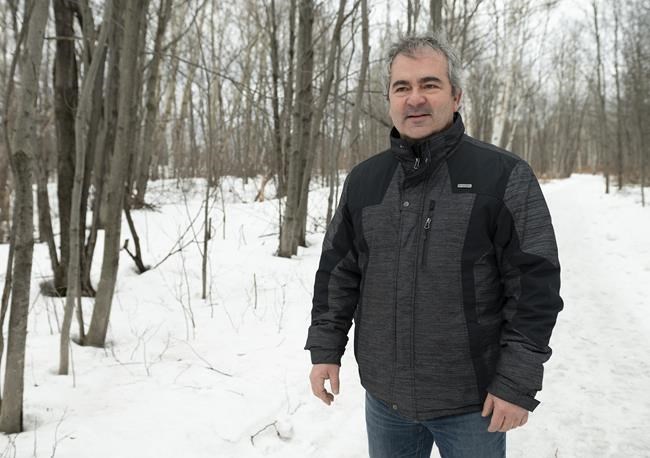
Some outfitters say they have not had a single client from outside Canada since March 2020 until recently, after the border reopened to vaccinated Americans in August.
With thousands of American hunters who usually come to Canada to shoot big game forced to stay away during COVID-19, some outfitters say there also are hundreds more bears in their areas.
COVID-19 has led some provinces, including Saskatchewan, to try to bolster the hard-pressed outfitting industry by offering bear-hunting licences usually reserved for non-residents to local Canadians.
Dominic Dugre, president of the Canadian Federation of Outfitter Associations, said COVID-19 has had a devastating impact on Canada’s guided hunting industry, though less so in Quebec where most hunting is local.
He said some outfitters, catering to hunters from abroad, “have lost 99 per cent of their clients.”
COVID-19 benefits, including wage subsidies, have helped hard-pressed hunting guides. But many have branched out into ecotourism to survive, catering to the rising number of Canadians enjoying outdoor pursuits such as snowmobiling during the pandemic.
“It’s a trend to diversify right now because of COVID. Many outfitters have opened up their cabins for people. There are more and more outfitters offering (guided) wildlife viewing. Hunters have changed too. We have seen more and more women and families taking up hunting and fishing,” Dugre said.
Gudie Hutchings, the federal rural economic development minister, who was involved in the formation of the Canadian Federation of Outfitting Associations, said the guided hunting industry catering to Americans and Europeans was “totally decimated” last year.
But she said the government provided emergency help including wage subsidies, which have just been extended.
“Some provinces did pivot to allow Canadians to apply for licences,” she said, adding that in Newfoundland and Labrador where she lives, there was “a half-decent hunting season this year.”
Mike McIntosh, founder of Bear With Us, an Ontario centre which rescues orphaned bear cubs and injured bears, said he feared Canadians who have taken up bear hunting may be killing more bears than Americans who hire professional guides directing and witnessing hunts.
Most licences only allow a hunter to kill a single bear, and this must be reported.
“The fact that we have had a COVID situation and we have fewer non-resident hunters hasn’t affected bear numbers in Ontario. There’s still just as many bears being killed, if not more, by resident hunters who have taken up bear hunting during COVID,” Macintosh said.
Ontario’s Natural Resources Ministry said it had deferred its usual surveys of black bear populations for 2020 and 2021 until 2022 due to COVID-19.
Most outfitters guide hunters from outside Canada, with many buying packages including lodge accommodation and transport by small plane, worth thousands of dollars. Canadian hunters tend to go it alone, or with friends or family.
Scott Ellis, chief executive of the Guide Outfitters Association of B.C., and vice-president of CFOA, said each province was a little different when it came to the number of non-resident hunters, but overall outfitters had seen a 75 per cent to 85 per cent decline in the number of hunters from outside Canada since the start of the pandemic, with a 100 per cent decline in some cases.
He said that B.C.’s 180,000-strong bear population had not seen a noticeable increase without American hunters, but said “in localized spots if you have 2,200 less guided clients, there are going to be 2,200 more bears.”
Ellis said outfitters have been catering to the rising numbers of Canadians seeking safe outdoor leisure pursuits during the pandemic.
“Where they have no clients, some are renting out cabins for people to do fishing or nature viewing, or fat-biking, which you can do in the snow,” he said.
Darrell Crabbe, executive director of the Saskatchewan Wildlife Federation, which manages land used for hunting, said during COVID-19 he had seen outdoor activity exponentially increase on land the federation manages, including wildlife viewing and an explosion in geocaching where people use a GPS system to hide and seek containers containing treasure, trinkets or notes in remote locations.
Crabbe added that, without the American hunters, there were now “more bears around.”
“Most Saskatchewan residents don’t hunt bear. We know the population is rising based on the counts, but we have not had a problem,” he said.
In Saskatchewan, there was a huge drop in the number of Americans buying licences for guided hunts. But many of the bear-hunting licences reserved for non-residents have now been taken up by people who live in Saskatchewan.
Val Nicholson of the Saskatchewan Ministry of Environment said in a normal year, approximately 1,800 guided bear licences are sold, mainly to American hunters.
“Even if all were successful, this harvest would not significantly affect overall populations,” Nicholson said.
Alberta Environment and Parks said in a statement it did not expect changes in hunting pressure to affect overall wildlife populations.
“Alberta resident hunters make up the majority of hunters in the province and have increased during COVID,” it added.
In Nova Scotia, where most people hunt deer, more local people have also taken up hunting as a pastime during the pandemic, the wildlife division of the provincial government said.
Ellis said COVID-19 would be a catalyst for the outfitting industry to pivot and offer more guided outdoor pursuits as well as hunting in future. Many had already started offering snowshoeing, wildlife viewing and trips to watch the Northern Lights, he said.
The experience would not appeal to everybody, though, as cabins and lodges are set deep in the backcountry in remote areas, only accessible by horse, plane or helicopter, he said.
“They may have a couple of cabins that sleep four but it could be a three-day hike to get there,” he said. “Some want to watch animals. In the spring, you can see the bears which come out to the grass and clover in some spots.”
“Some people are going there to ski, snowmobile or just do nothing, say if they are from Toronto and just want to watch the Northern Lights or listen to nature sounds.”
This report by The Canadian Press was first published Dec. 19, 2021.