

In Uganda, disputes over bills mark chaotic COVID-19 care
Advertisement
Read this article for free:
or
Already have an account? Log in here »
To continue reading, please subscribe:
Digital Subscription
One year of digital access for only $1.44 a week*
- Enjoy unlimited reading on winnipegfreepress.com
- Read the E-Edition, our digital replica newspaper
- Access News Break, our award-winning app
- Play interactive puzzles
*Billed as $5.77 plus GST every four weeks. After 52 weeks, price increases to the regular rate of $19.95 plus GST every four weeks. Offer available to new and qualified returning subscribers only. Cancel any time.
To continue reading, please subscribe:
Add Free Press access to your Brandon Sun subscription for only an additional
$1 for the first 4 weeks*
- Enjoy unlimited reading on winnipegfreepress.com
- Read the E-Edition, our digital replica newspaper
- Access News Break, our award-winning app
- Play interactive puzzles
*Your next Brandon Sun subscription payment will increase by $1.00 and you will be charged $17.95 plus GST for four weeks. After four weeks, your payment will increase to $24.95 plus GST every four weeks.
Read unlimited articles for free today:
or
Already have an account? Log in here »
Hey there, time traveller!
This article was published 07/07/2021 (1785 days ago), so information in it may no longer be current.
KAMPALA, Uganda (AP) — Holding out for nearly $9,000 in unpaid medical bills, one hospital in Uganda allegedly refused to hand over the dead body of a patient who had received oxygen therapy for several days.
Tofa Tamale said he tried to reason with hospital managers, hoping for an arrangement that would preserve his mother’s dignity. After a lawsuit was threatened, the body was released to the family but with no post-mortem report.
“The hospital didn’t give us a single piece of documentation,” said Tamale, who believes his mother had COVID-19 before she suffered a stroke.
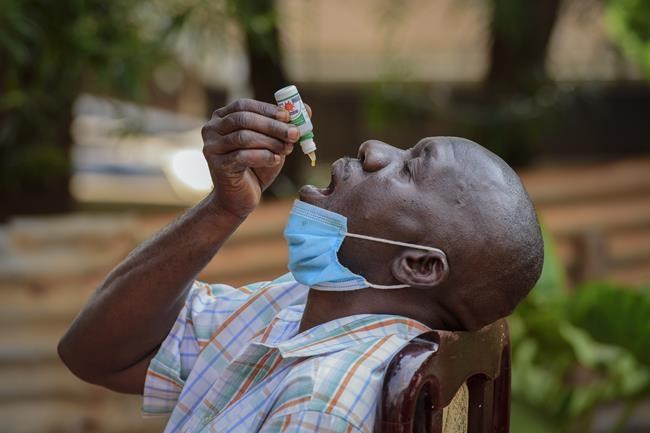
The case, one of two publicly known as this East African country sees a surge in COVID-19 infections, has shocked many in a socially conservative society where bereavement customs are strictly observed.
“You can’t say you’re holding onto a dead body in order for you to get your fee. That’s repugnant,” said Joseph Luzige, an attorney who represented Tamale.
The case also highlights the sense of chaos in COVID-19 care as Ugandans grapple with the high cost of treatment. Some hospitals are accused of demanding cash deposits upfront before admission. Others are said to demand security items such as title deeds in lieu of cash, drawing the attention of an anti-corruption investigator who says her office has received over 200 complaints.
Uganda has confirmed a total of 84,554 COVID-19 cases, including 1,995 deaths as of Wednesday. Authorities are reporting dozens of deaths a day.
As in many other African countries, the actual number of infections and deaths are believed to be much higher because testing is not widely available. And now “the speed and scale of Africa’s third wave is like nothing we’ve seen before,” the World Health Organization’s Africa director, Matshidiso Moeti, said last week.
The highly infectious delta variant is fueling Africa’s new surge in cases, a worrying situation on a continent where just over 1% of the continent’s 1.3 billion people are fully vaccinated.
In Uganda, where less than 1% of the country’s 44 million people have received even one shot of the AstraZeneca vaccine, hundreds of new cases daily are overwhelming public health centers and creating more business for private facilities, which traditionally accept cash.
Some hospitals with COVID-19 wards have charged nearly $1,500 in daily treatment fees, a prohibitive sum for most Ugandans. Many are now self-medicating within their homes, experimenting with everything from traditional medicine to new herbal remedies.
“There are many Ugandans who are dying in their homes simply because they fear to face high-deposit hospital fees,” Col. Edith Nakalema, leader of an anti-corruption unit under the presidency, said in a series of Twitter posts. “If you have not yet suffered this personally remember that you might suffer it soon.”
Grace Kiwanuka, executive director of an association of private health groups, said hospitals are caught “between a rock and a hard place” as they balance their obligations to patients and business concerns in an unprecedented pandemic. “The market is dictating certain prices we have to pay,” she said, citing complicated COVID-19 cases of patients with kidney failure who stay in intensive care units for several days.

Some die, leaving hefty bills that hospital directors have to account for, she said: “I feel for these people. I really do. But the fact is, this is medicine.”
The fear of detaining patients — dead or alive — over medical bills is a source of frustration, said Sarah Mirembe, who recently accused a hospital director of not honoring his word to waive certain fees.
Although her grandmother recovered from COVID-19, Mirembe said, the experience left her upset after the family had to sanitize the “filthy” room she was given. After threatening to take her grandmother elsewhere, she was able to negotiate the daily rate down to $170 from $714.
The total bill was $4,000, she said.
“What if I didn’t have this money?” she asked.