

Indigenous businesses soar
Dozens taking part in matchmaking meetings downtown today
Advertisement
Read this article for free:
or
Already have an account? Log in here »
To continue reading, please subscribe:
Digital Subscription
One year of digital access for only $1.44 a week*
- Enjoy unlimited reading on winnipegfreepress.com
- Read the E-Edition, our digital replica newspaper
- Access News Break, our award-winning app
- Play interactive puzzles
*Billed as $5.77 plus GST every four weeks. After 52 weeks, price increases to the regular rate of $19.95 plus GST every four weeks. Offer available to new and qualified returning subscribers only. Cancel any time.
To continue reading, please subscribe:
Add Free Press access to your Brandon Sun subscription for only an additional
$1 for the first 4 weeks*
- Enjoy unlimited reading on winnipegfreepress.com
- Read the E-Edition, our digital replica newspaper
- Access News Break, our award-winning app
- Play interactive puzzles
*Your next Brandon Sun subscription payment will increase by $1.00 and you will be charged $17.95 plus GST for four weeks. After four weeks, your payment will increase to $24.95 plus GST every four weeks.
Read unlimited articles for free today:
or
Already have an account? Log in here »
Hey there, time traveller!
This article was published 10/02/2020 (2335 days ago), so information in it may no longer be current.
Interest in the Aboriginal Chamber of Commerce’s second annual procurement opportunities event was so strong that organizers had to turn people away.
It may be a sign of the times that business-to-business speed-dating events like the one that will be held today at Stantec’s downtown offices are now being held across the country. It’s an indication that mainstream businesses are reaching out to potential Indigenous-owned suppliers in greater numbers and with heightened determination.
This year, there are 31 procurement representatives and 31 businesses that self-identify as Indigenous businesses that will be participating in 15-minute matchmaking meetings.
The Indigenous companies participating range from creative services, branding companies, consulting agencies, IT firms and construction companies.
And whereas public-sector procurement professionals might have been the only ones who would go out of their way to apportion a certain amount of work to Indigenous companies, this year a host of private-sector companies and organizations like post-secondary institutions and Crown corporations are taking part.
Darrell Brown, the chair of the Aboriginal Chamber of Commerce (ACC), said there is increasing demand from the business community to extend their supplier networks to include Indigenous business.
A report that came out about a year ago spearheaded by the Southern Chiefs’ Organization, the Manitoba Keewatinowi Okimakanak, and the Rural Development Institute at Brandon University, showed that the greater Indigenous economy is worth about $9.3 billion annually to the province, a much larger economic force than had previously been considered.
There are plenty of Indigenous companies providing all sorts of goods and services, but for mainstream companies looking to connect with them, it’s not always apparent who they are.
“This is as much about awareness as it is actual business opportunities,” Brown said.
But he also knows firsthand both the opportunities and the challenges. His furniture distribution business, Kisik Inc., has been getting in on various kinds of public sector procurement set-asides for more than 15 years. But it’s not as if everyone is on the same page.
“The lack of knowledge at the local (government) offices is sometimes frustrating because they sometimes don’t know their own Indigenous procurement policies,” he said.
With multibillion-dollar companies like the North West Company, Babcock International and all of the post-secondary institutions sending representatives to the event today, Indigenous businesses now don’t have to think they have to count on government work to get a leg up.
For instance, the University of Manitoba is starting an Indigenous procurement program and Monique Whitehill, a procurement manager at the university, said she’s glad to have the chance to start taking the steps to create pathways to Indigenous achievement and economic reconciliation.
“The university has done a lot regarding Indigenous student achievement but we are also recognizing economic reconciliation is important as well,” she said. “We are like a small city. We buy so many things. We are looking to find matches, to learn about Indigenous suppliers we don’t even know about and to find partnerships and ways to work together.”
Among other things, one of the reasons those potential partnerships are undiscovered is that Indigenous-owned businesses do not always declare themselves as such.
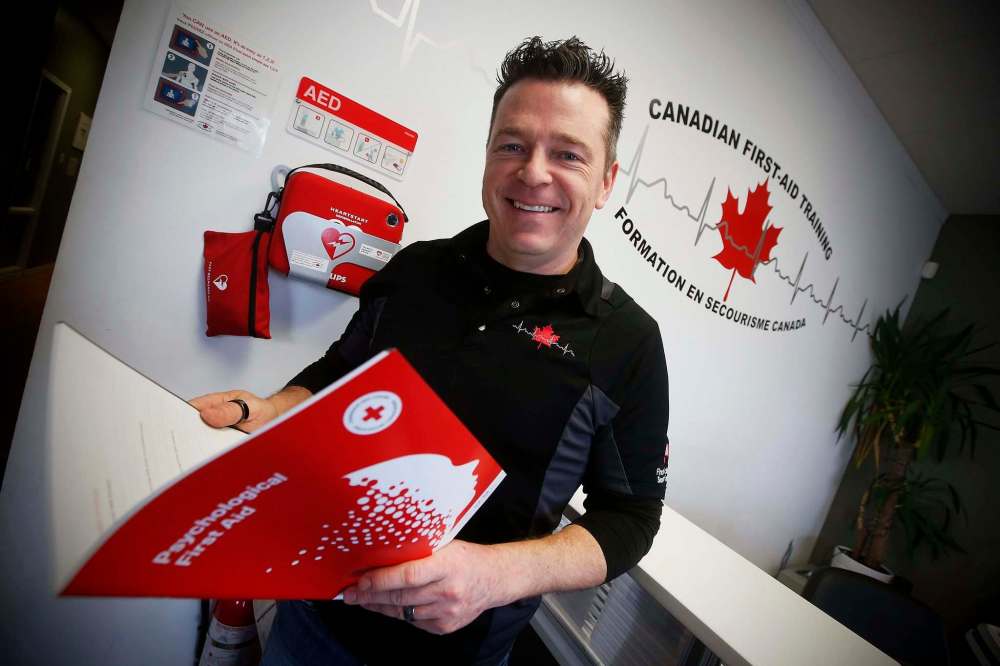
For instance, Christian Clavelle has been building his business, Canadian First-Aid Training, for close to 15 years without playing the Métis card, even though he has always been proud of his Métis heritage.
Clavelle will participate in the event and is scheduled to speak to participants. He does not make a point of declaring the company’s Métis roots, but is happy to have the chance to investigate some of the procurement opportunities that Indigenous companies might be able to take advantage of.
“The entire reconciliation process that is on-going is driving more decisions this way and there is an importance tied to it,” he said.

But he is quick to point out that he has no misconceptions about what the expectations are.
“There are no free rides,” he said. “I have worked hard for every single ounce of success we’ve had.”
He said even if there is more willingness from businesses to establish partnerships with Indigenous suppliers, there are responsibilities attached to that.
“There are good businesses and bad businesses regardless of what background they have,” he said.
martin.cash@freepress.mb.ca