

Keystone XL ‘clarity’ boosts Gibson Energy diluent recovery project, says CEO
Advertisement
Read this article for free:
or
Already have an account? Log in here »
To continue reading, please subscribe:
Digital Subscription
One year of digital access for only $1.44 a week*
- Enjoy unlimited reading on winnipegfreepress.com
- Read the E-Edition, our digital replica newspaper
- Access News Break, our award-winning app
- Play interactive puzzles
*Billed as $5.77 plus GST every four weeks. After 52 weeks, price increases to the regular rate of $19.95 plus GST every four weeks. Offer available to new and qualified returning subscribers only. Cancel any time.
To continue reading, please subscribe:
Add Free Press access to your Brandon Sun subscription for only an additional
$1 for the first 4 weeks*
- Enjoy unlimited reading on winnipegfreepress.com
- Read the E-Edition, our digital replica newspaper
- Access News Break, our award-winning app
- Play interactive puzzles
*Your next Brandon Sun subscription payment will increase by $1.00 and you will be charged $17.95 plus GST for four weeks. After four weeks, your payment will increase to $24.95 plus GST every four weeks.
Read unlimited articles for free today:
or
Already have an account? Log in here »
Hey there, time traveller!
This article was published 23/02/2021 (1924 days ago), so information in it may no longer be current.
CALGARY – The CEO of Gibson Energy Inc. says “clarity” about the future of the cancelled Keystone XL pipeline has prompted increased interest from potential customers in an expansion of its diluent recovery unit now under construction at the Hardisty crude transport hub in east central Alberta.
Diluent, a light oil mixed with sticky, heavy bitumen from the oilsands to allow it to flow in a pipeline, makes up as much as a third of the volume of blended bitumen or “dilbit” headed to U.S. refineries.
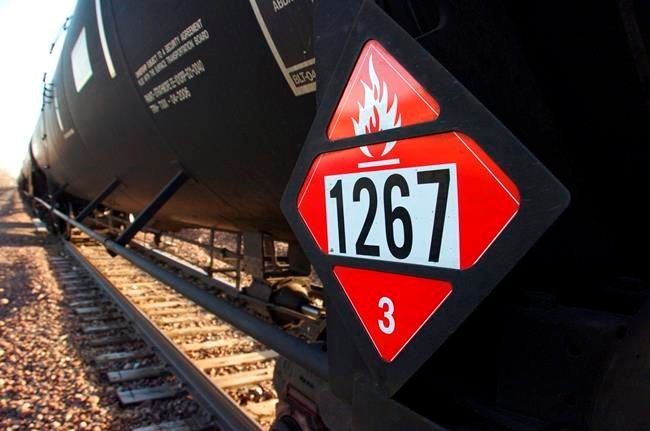
Gibson’s project is designed to remove the diluent from dilbit transported by pipeline to Hardisty, allowing transfer of the concentrated heavy crude to railcars for shipping south, while the diluent can be recycled to Alberta oilsands producers.
Gibson CEO Steve Spaulding says the first 50,000-barrel-per-day phase of its project is set to be in service by the middle of this year under a 10-year contract with ConocoPhillips Canada, which owns the Surmont thermal oilsands project in northern Alberta with French partner Total S.A.
Gibson is partnering with US Development Group, LLC, to construct and operate the facility which is to connect with a new US Development off-loading terminal in Port Arthur, Texas, from which the oil will be distributed to refineries on the U.S. Gulf Coast.
Canadian crude-by-rail export numbers have been volatile in the past year, with shipments rising to a record 412,000 bpd in February 2020, then falling to an eight-year low of 39,000 bpd last July.
“I think clarity around KXL certainly helps and discussions have picked up … as we continue to talk to multiple producers and refiners,” said Spaulding on an earnings conference call on Tuesday.
“The feedstocks … coming from Venezuela and Mexico continue to decline. So those U.S. refineries need that heavy crude oil produced by Canada.”

This report by The Canadian Press was first published Feb. 23, 2021.
Companies in this story: (TSX:GEI)