

Sponsored Content
Respect is key at University College of the North

Advertisement
Read this article for free:
or
Already have an account? Log in here »
To continue reading, please subscribe:

Digital Subscription
One year of digital access for only $205*
- Enjoy unlimited reading on winnipegfreepress.com
- Read the E-Edition, our digital replica newspaper
- Access News Break, our award-winning app
- Play interactive puzzles
*First annual payment billed as $205.00 + GST for one year. This annual subscription will automatically renew at $233.00 + GST every 52 weeks (10% off the regular annual price of $259.35). Offer available to new and qualified returning subscribers only. Cancel any time.
To continue reading, please subscribe:
Add Free Press access to your Brandon Sun subscription for only an additional
$1 for the first 4 weeks*
- Enjoy unlimited reading on winnipegfreepress.com
- Read the E-Edition, our digital replica newspaper
- Access News Break, our award-winning app
- Play interactive puzzles
*Your next Brandon Sun subscription payment will increase by $1.00 and you will be charged $17.95 plus GST for four weeks. After four weeks, your payment will increase to $24.95 plus GST every four weeks.
Read unlimited articles for free today:
or
Already have an account? Log in here »
Hey there, time traveller!
This article was published 10/03/2026 (218 days ago), so information in it may no longer be current.
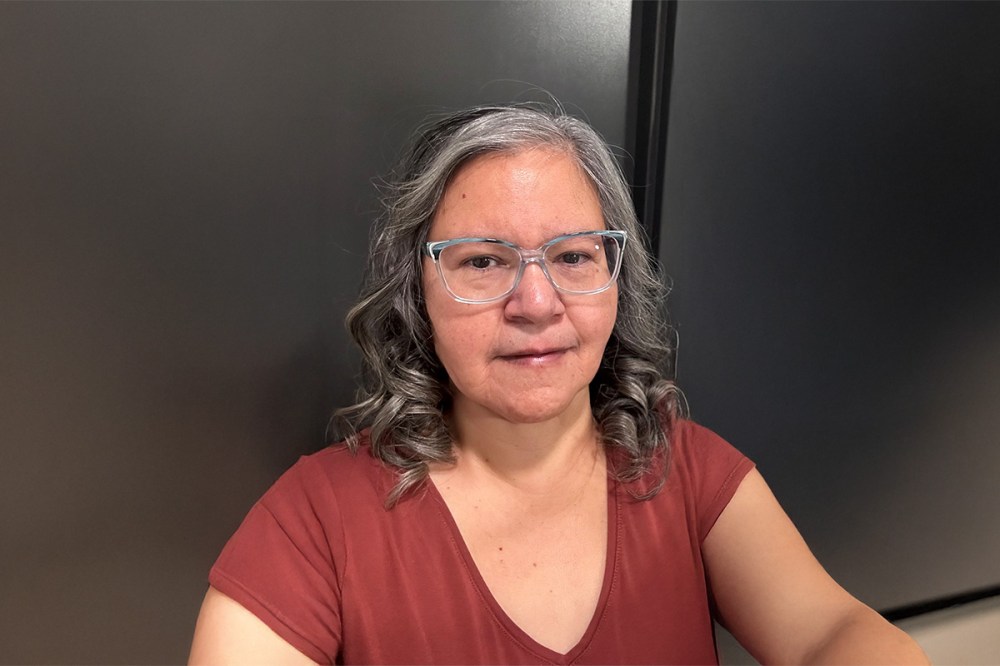
As a manager of inter-universities services at University College of the North (UCN), Lavina Fecteau ensures that students based in northern Manitoba have a better student experience than she did.
“I had to leave my family and move to Brandon,” she says. “As a single parent, I had limited family support there. I was taking evening classes and needed to build a support network.” Leaving her close-knit family was difficult. Her parents finally relented on her leaving home for post-secondary education when she promised to come back to the community after graduation.
University College of the North has two main campuses, in The Pas and Thompson, and several satellite stations in Manitoba’s northern communities which offer trades and skills certificates, college diploma programs and bachelor-level degrees. Despite the small size of the organization, its coverage area is broad, and its student body is very diverse. Almost three-quarters of UCN’s students are Indigenous and more than half of all students are sponsored by bands or by Service Canada.
There is also variability in levels of education. “Someone could be an A-student in their community and then come to a bigger school and now they’re a C-student,” says Kim Laycock, vice-president, finance and administration. “Understanding where people are coming from and being attuned to those nuances is something we can offer.”
Support comes in various forms to address student needs. “We do a lot of preparatory programming directly in the community, so students don’t need to move away from their families and support systems,” says Laycock.
The prep programs fall under the umbrella of holistic services UCN offers. In The Pas and Thompson, services include on-site daycare facilities, housing close to UCN’s two main campuses, academic and student counselling, student associations, and access to Indigenous Elders. These Knowledge Keepers give workshops and counselling in addition to leading Indigenous ceremonies — including monthly sweat lodges, National Indigenous Peoples Day and the National Day for Truth and Reconciliation.
Transparent communication and a mechanism for constructive feedback are the pillars that keep the internal teams and external partners working together smoothly. “Listening to and being informed up instead of telling down is important to keeping the culture at UCN positive,” says Laycock. “We strive to understand the different perspectives. We have three different councils at UCN including an academically focused Learning Council, our Governing Council which focuses on overall governance and strategic direction, and the Council of Elders which is fairly unique to UCN. Our goal is always to learn and move forward in a good way.”
Moving forward means drawing on Indigenous cultural practices to enrich students and staff. “Something I find comfortable here is we can express ourselves,” says Fecteau. “Whether we agree or disagree, the respect is there. Working closely with the Knowledge Keepers, who teach our cultural practices, and seeing Indigenous women leaders makes me feel confident that I can express myself.”

Fecteau is currently being mentored by Knowledge Keepers who assist her with ceremonies at Mile 20 Camp and White Wolf Medicine Camp near Thompson. “As I gain more knowledge, I could see becoming more involved in land-based teachings, ceremonies and engaging directly with the students.”
If Fecteau could give advice to her younger student self, she would tell her: “Be comfortable with who you are. Don’t be scared to share your voice, even if it shakes, even if you are standing alone. Use your voice and know you have a rightful place where you are.”
This article is produced by the Advertising Department of the Winnipeg Free Press, in collaboration with University College of the North