Montreal-made website uses AI to show impacts of climate change on any address
Advertisement
Read this article for free:
or
Already have an account? Log in here »
To continue reading, please subscribe:

Digital Subscription
One year of digital access for only $205*
- Enjoy unlimited reading on winnipegfreepress.com
- Read the E-Edition, our digital replica newspaper
- Access News Break, our award-winning app
- Play interactive puzzles
*First annual payment billed as $205.00 + GST for one year. This annual subscription will automatically renew at $233.00 + GST every 52 weeks (10% off the regular annual price of $259.35). Offer available to new and qualified returning subscribers only. Cancel any time.
To continue reading, please subscribe:
Add Free Press access to your Brandon Sun subscription for only an additional
$1 for the first 4 weeks*
- Enjoy unlimited reading on winnipegfreepress.com
- Read the E-Edition, our digital replica newspaper
- Access News Break, our award-winning app
- Play interactive puzzles
*Your next Brandon Sun subscription payment will increase by $1.00 and you will be charged $17.95 plus GST for four weeks. After four weeks, your payment will increase to $24.95 plus GST every four weeks.
Read unlimited articles for free today:
or
Already have an account? Log in here »
Hey there, time traveller!
This article was published 14/10/2021 (1822 days ago), so information in it may no longer be current.
TORONTO – Imagine Parliament Hill blanketed in orange skies, floodwaters climbing the sides of BC Place stadium or a thick layer of smog fogging the view of Halifax from Citadel Hill.
These are all scenes depicted on a website published Thursday that blends artificial intelligence with geography to show the potential impact of climate change on almost any address on the planet.
The website, thisclimatedoesnotexist.com, was created by Mila, a machine-learning and technology research institute in Quebec founded by Yoshua Benigo, one of the godfathers of AI.
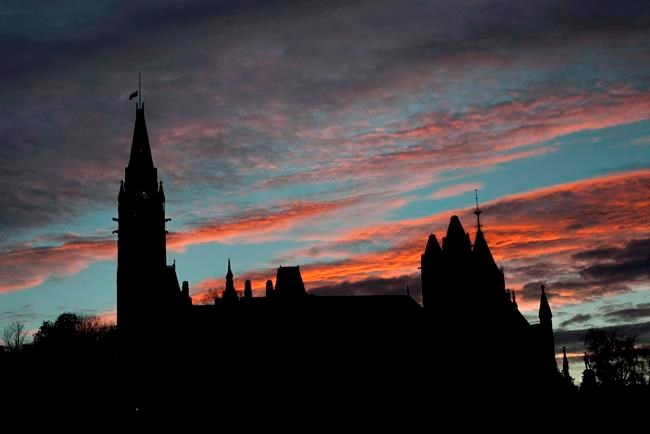
The website can apply filters showing the impacts of flooding, wildfires or smog to any address available through Google Street View and is meant to raises awareness about future scenarios that could arise if the world’s response to climate change continues to fall short.
Victor Schmidt, a lead researcher on the project, said the site is not meant to predict climate change, but rather, it strives to make the issue more personal for people who can’t visualize something that is seemingly far off or something that could impact another community sooner than theirs.
“Just because it may not happen to them, doesn’t mean it won’t happen to other people elsewhere or sometime in the future,” Schmidt said.
To boost empathy, the website prompts people to search their current or childhood home, workplaces, favourite restaurants and travel destinations.
The images the website will return are built around generative adversarial networks, or GANs, a class of machine-learning frameworks designed by Mila that allow a computer to create and transform images.
The site doesn’t adjust water levels or air quality conditions based on where an address is, so users won’t find coastal areas completely underwater or wildfire-ridden neighbours more engulfed by dusty skies than less fire prone regions.
This is intentional, Schmidt said. Mila didn’t want people visiting the website, discovering their neighbourhood was facing less distressing climate change impacts than others and then deciding not to care about the issue.
“It’s about connecting with other people and trying to make common sense feel closer,” he said.
“Making climate change more personal is going to try and help bridge that gap.”
Schmidt hopes people will visit the website built with the support of National Geographic Society, Microsoft, BCG Gamma and Borealis AI, and leave feeling more aware about climate change and its affects.
Research on the Canadian Centre for Climate Services website shows climate change has already caused the country’s average annual temperature to rise by 1.7 C from 1948 to 2016, about double the global rate.
In Northern Canada alone, the average annual temperate has risen by 2.3 C, about triple the global rate, over the same period.
Almost simultaneously, the summer sea ice area in Northern Canadian waters decreased by nearly 7 per cent per decade on average between 1968 and 2015.
It is expected to keep decreasing to the point where Arctic waters could be nearly ice-free by the 2050s.
This report by The Canadian Press was first published Oct. 14, 2021.