Mower, co-inventor of implantable defibrillator, dies at 89

Advertisement

Advertise with us

BALTIMORE (AP) — Dr. Morton Mower, a former Maryland-based cardiologist who helped invent an automatic implantable defibrillator that has helped countless heart patients live longer and healthier, has died at age 89.

Read this article for free:


or

Already have an account? Log in here »

To continue reading, please subscribe:

Subscribe and receive a limited-edition Free Press branded hat or tote.

Digital Subscription

One year of digital access for only $205*

  • Enjoy unlimited reading on winnipegfreepress.com
  • Read the E-Edition, our digital replica newspaper
  • Access News Break, our award-winning app
  • Play interactive puzzles

*First annual payment billed as $205.00 + GST for one year. This annual subscription will automatically renew at $233.00 + GST every 52 weeks (10% off the regular annual price of $259.35). Offer available to new and qualified returning subscribers only. Cancel any time.

To continue reading, please subscribe:

Add Free Press access to your Brandon Sun subscription for only an additional

$1 for the first 4 weeks*

  • Enjoy unlimited reading on winnipegfreepress.com
  • Read the E-Edition, our digital replica newspaper
  • Access News Break, our award-winning app
  • Play interactive puzzles
Start now

*Your next Brandon Sun subscription payment will increase by $1.00 and you will be charged $17.95 plus GST for four weeks. After four weeks, your payment will increase to $24.95 plus GST every four weeks.

Hey there, time traveller!
This article was published 01/05/2022 (1593 days ago), so information in it may no longer be current.

BALTIMORE (AP) — Dr. Morton Mower, a former Maryland-based cardiologist who helped invent an automatic implantable defibrillator that has helped countless heart patients live longer and healthier, has died at age 89.

Funeral services were held Wednesday for Mower, who died two days earlier of cancer at Porter Adventist Hospital in Denver, The Baltimore Sun reported. The Maryland native had moved to Colorado about a decade ago.

Mower and Dr. Michel Mirowski, both colleagues at Sinai Hospital in Baltimore, began working in 1969 on developing a miniature defibrillator that could be implanted into a patient. The device would correct a patient’s over-rapid or inefficient heartbeat with an electric shock to resume its regular rhythm.
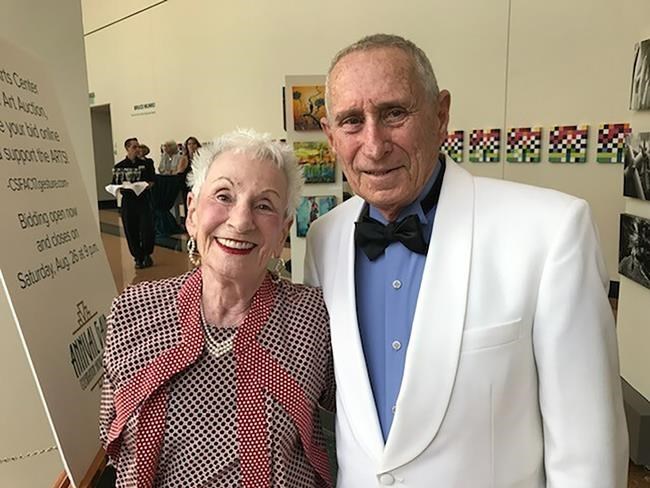
In this undated image provided by the Jewish National Fund-USA, Dr. Morton Mower and his wife, Toby, pose for a picture. Dr. Morton Mower, a former Maryland-based cardiologist who helped invent an automatic implantable defibrillator that has helped countless heart patients live longer and healthier, has died at age 89. Funeral services were held Wednesday, April 27, 2022, for Mower, who died two days earlier of cancer at Porter Adventist Hospital in Denver, The Baltimore Sun reported. The Maryland native had moved to Colorado about a decade earlier. (Courtesy of Jewish National Fund-USA via AP)

“It was the talk of the whole hospital that these two crazy guys are going to put in an automatic defibrillator,” Mower said in a 2015 interview with The Lancet medical journal. “If something had gone awry, we would have never lived it down. We were these two crazy guys who wanted to put a time bomb in people’s chests, so to speak.”

The physicians had, in a matter of months, a model of an automatic implantable cardioverter defibrillator for demonstration. But it wasn’t until 1980 that the device was implanted into a human at Johns Hopkins Hospital, the newspaper reported.

The U.S. Food and Drug Administration approved the device in 1985. Both doctors shared the patent for the device, the technology of which was sold to pharmaceutical giant Eli Lilly. Mower later became director of medical research for the Eli Lilly division that produced the implantable cardioverter defibrillator, according to the newspaper.

“I think Morty had as much influence successfully finding a treatment for sudden death as anyone in our profession,” said Dr. David Cannom, a retired Los Angeles cardiologist and longtime friend.

The device “proved that it was better than medication in treating arrhythmia, and they did this against all odds at a small hospital in Baltimore,” Cannom added. “And for the past 40 years, it has proven that it’s reliable” while saving many lives.

Mower, a Baltimore native who grew up in Frederick, attended Johns Hopkins and the University of Maryland School of Medicine. He worked at Baltimore hospitals and served in the Army before beginning his professional career at Sinai in 1966 as a co-investigator of its Coronary Drug Project. He was chief or acting chief of cardiology at the hospital for several years in the 1970s and 1980s. Sinai Hospital named a medical office building for him in 2005.

Later in his career, he was a consultant or executive for several medical companies.

“He continued his research and worked up until his death,” his son, Mark Mower, of Beverly Hills, California, wrote in an email to the newspaper. “He never wanted to waste a moment of his life.”

Mower received many awards, including a 2002 induction into the National Inventors Hall of Fame. He also was involved in many Jewish charitable organizations. One group, Jewish National Fund-USA, praised him for his fundraising efforts toward water infrastructure, education and community centers in Israel. Mower and his wife of 57 years, Toby, had visited Israel weeks before his death.

“As a medical inventor, his innovations restarted the hearts of millions, yet he also gave a heartbeat to an entire nation – the land and people of Israel,” Jewish National Fund-USA CEO Russell F. Robinson said in a news release.

In addition to his wife and son, Mower is survived by his daughter, Robin Sara Mower of Denver; and three grandchildren.


Report Error Submit a Tip

More Stories

Mower, co-inventor of implantable defibrillator, dies at 89

The Associated Press 4 minute read Preview

Mower, co-inventor of implantable defibrillator, dies at 89

The Associated Press 4 minute read Sunday, May. 1, 2022

BALTIMORE (AP) — Dr. Morton Mower, a former Maryland-based cardiologist who helped invent an automatic implantable defibrillator that has helped countless heart patients live longer and healthier, has died at age 89.

Funeral services were held Wednesday for Mower, who died two days earlier of cancer at Porter Adventist Hospital in Denver, The Baltimore Sun reported. The Maryland native had moved to Colorado about a decade ago.

Mower and Dr. Michel Mirowski, both colleagues at Sinai Hospital in Baltimore, began working in 1969 on developing a miniature defibrillator that could be implanted into a patient. The device would correct a patient’s over-rapid or inefficient heartbeat with an electric shock to resume its regular rhythm.

“It was the talk of the whole hospital that these two crazy guys are going to put in an automatic defibrillator,” Mower said in a 2015 interview with The Lancet medical journal. “If something had gone awry, we would have never lived it down. We were these two crazy guys who wanted to put a time bomb in people’s chests, so to speak.”

Read
Sunday, May. 1, 2022

Bumps in the road as students collect free bus passes

Maggie Macintosh 5 minute read Preview

Bumps in the road as students collect free bus passes

Maggie Macintosh 5 minute read Yesterday at 9:17 PM CDT

Alexis Enns left her guidance counsellor’s office empty-handed, but no less excited about starting Grade 12 — even though she still didn’t know how she would get there or her timetable — on Tuesday.

Read
Yesterday at 9:17 PM CDT

Ferraro, Skinner getting lay of the land before training camp starts

Mike McIntyre 8 minute read Preview

Ferraro, Skinner getting lay of the land before training camp starts

Mike McIntyre 8 minute read 5:45 PM CDT

They’ve both been around the NHL block a bit, but make no mistake, Stuart Skinner and Mario Ferraro are experiencing some “new kid at school” type jitters this week.

The pair were prized July 1 free agent signings by the Winnipeg Jets and are now quickly trying to get the lay of the land — from teammates and systems and structure to restaurants, schools and the best routes to the rink — in what is a frantic time on both a professional and personal level.

“It’s a big change, right?” Ferraro said Wednesday following a pre-training camp skate at the Hockey For All Centre.

“Like moving cities, getting settled somewhere else, with my family, my wife, my daughter, our two dogs. But I think it’s gone really well and smooth. We found a great place here, and we’re really happy with where we’re living.”

Read
5:45 PM CDT

Carney warns of tough times ahead in national address as retaliatory tariffs begin

Nick Murray, The Canadian Press 5 minute read Preview

Carney warns of tough times ahead in national address as retaliatory tariffs begin

Nick Murray, The Canadian Press 5 minute read Updated: Yesterday at 4:10 PM CDT

OTTAWA - Canada's pivot away from the United States will "come at a cost" but the alternative would be far worse, Prime Minister Mark Carney said Tuesday.

Carney made the remarks in a video released just hours after his government made good on a promise to implement retaliatory tariffs on the United States. Those tariffs respond to American duties imposed last month by U.S. President Donald Trump, after the two countries could not come to an agreement to settle some outstanding trade irritants.

Carney spent much of the video laying out Canada's response to Trump's protectionist trade policies, including expanding trade with other countries and building more capacity domestically.

But he said it "won't be easy."

Read
Updated: Yesterday at 4:10 PM CDT

‘Huge resource gaps’: judge shortage leads to circuit court cuts

Dean Pritchard 4 minute read Preview

‘Huge resource gaps’: judge shortage leads to circuit court cuts

Dean Pritchard 4 minute read Updated: 6:33 PM CDT

A shortage of judges is forcing Manitoba’s provincial court to slash sittings across the province.

The court announced in a notice to the profession Wednesday that it will be reducing the number of annual court sittings at nine rural circuit locations and St. Boniface provincial court in Winnipeg by 68 sittings, effective April 1, 2027.

The reductions are necessary to balance “access to justice needs with the complement of judicial resources currently insufficient to maintain the current court schedule,” said the notice, signed by provincial court Chief Judge Ryan Rolston.

Affected circuit courts include Altona, Arborg, Beausejour, Easterville, Cranberry Portage, Lundar, Grand Rapids, Moose Lake, and Pine Falls.

Read
Updated: 6:33 PM CDT

‘Dynacare sucks’: premier muses about bringing lab services back into public system

Carol Sanders 6 minute read Preview

‘Dynacare sucks’: premier muses about bringing lab services back into public system

Carol Sanders 6 minute read Updated: 7:45 PM CDT

Premier Wab Kinew says Manitoba may bring Dynacare’s diagnostic lab services back into the public system rather than continue to sign contracts with the for-profit company.

“Dynacare sucks. They’ve made an absolute mess of this situation,” the premier said Wednesday, the day the company’s 350 employees reported back to work after the labour board halted their strike after just one day.

Kinew first made the remark about Dynacare in a CBC radio interview Wednesday morning and added he is “not happy with them.”

Dynacare performs the majority of non-emergency blood and urine tests in the province.

Read
Updated: 7:45 PM CDT