

Observers see rays of hope for 2021 in Canada’s gloomy oil and gas sector
Advertisement
Read this article for free:
or
Already have an account? Log in here »
To continue reading, please subscribe:

Digital Subscription
One year of digital access for only $205*
- Enjoy unlimited reading on winnipegfreepress.com
- Read the E-Edition, our digital replica newspaper
- Access News Break, our award-winning app
- Play interactive puzzles
*First annual payment billed as $205.00 + GST for one year. This annual subscription will automatically renew at $233.00 + GST every 52 weeks (10% off the regular annual price of $259.35). Offer available to new and qualified returning subscribers only. Cancel any time.
To continue reading, please subscribe:
Add Free Press access to your Brandon Sun subscription for only an additional
$1 for the first 4 weeks*
- Enjoy unlimited reading on winnipegfreepress.com
- Read the E-Edition, our digital replica newspaper
- Access News Break, our award-winning app
- Play interactive puzzles
*Your next Brandon Sun subscription payment will increase by $1.00 and you will be charged $17.95 plus GST for four weeks. After four weeks, your payment will increase to $24.95 plus GST every four weeks.
Read unlimited articles for free today:
or
Already have an account? Log in here »
Hey there, time traveller!
This article was published 20/12/2020 (2096 days ago), so information in it may no longer be current.
CALGARY – The sombre mood that has gripped the Calgary-based oilpatch for several years is starting to show flickers of hope, with more financially secure companies making moves to grow in 2021.
Recent export pipeline news is offsetting the ongoing reality of volatile commodity prices, general investor distaste for the sector and regulatory uncertainty and leading to more mergers and targeted increases in capital spending plans, observers say.
“The oilpatch has changed again. I think it’s changed forever in a few fashions,” said veteran oilman Neil Roszell, CEO of newly created Headwater Exploration Inc., in an interview.
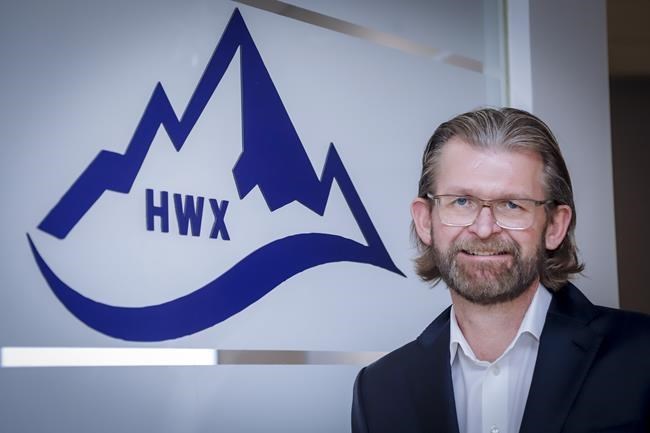
“Definitely different dynamics. I don’t think we’re ever going to see one hundred small companies active again in Western Canada.”
Roszell heads a team of executives who have created, built and sold three Calgary-based conventional oil and gas companies in the past dozen or so years. All had water-themed names: Raging River Exploration, Wild Stream Exploration and Wild River Resources.
Early this year, just before the pandemic struck, the team took over management of a junior company called Corridor Resources Inc., changed its name to Headwater Exploration and raised $50 million in equity to add to its working capital balance of about $65 million.
In a deal that closed Dec. 2, Headwater bought northern Alberta conventional oil assets from oilsands giant Cenovus Energy Inc. for $35 million in cash and 50 million Headwater shares.
It plans to have four drilling rigs working those lands in January with a 2021 budget of $85 million to $90 million and a goal of more than doubling the current 2,800 barrels per day of medium oil production.
“Without the pandemic happening, which made a lot of companies re-evaluate their assets, I don’t think this deal would have been available,” Roszell said, noting Cenovus’s decision to slash operating costs and concentrate spending on its core operations as oil prices fell amid the pandemic lockdowns.
As 2021 dawns, the oilpatch is waiting to see if U.S. president-elect Joe Biden will carry through with his campaign vow to kill the Keystone XL pipeline designed to take Alberta oil to the U.S. Gulf Coast refining complex. It’s also waiting to get the details on a new clean fuel standard in Canada expected to decrease the carbon content of transport fuels.
Meanwhile, the energy index which tracks the value of the best oil and gas companies on the Toronto Stock Exchange has fallen by about two-thirds over the past five years. And Calgary’s downtown office vacancy rate — stalled at over 25 per cent — stands to worsen due to layoff plans by Cenovus and Suncor Energy Inc.
On the other hand, work has started on the Minnesota portion of the Enbridge Inc. Line 3 replacement pipeline after six years of regulatory delays, potentially adding about 370,000 barrels per day of export capacity beginning next fall. Construction is also advancing on the Trans Mountain pipeline expansion from the Edmonton area to the West Coast, expected to triple existing capacity to about 890,000 bpd by the end of 2022.
In December, the Alberta government ended its oil production curtailment program after nearly two years, reacting to a better balance between crude production and pipeline take-away capacity which supports local price levels and provincial royalty revenues.
The end of the program was cited by major oilsands producer Canadian Natural Resources Ltd. in recently signalling a five per cent production increase on higher spending in 2021 — analysts say the company is among those most likely to benefit from the completion of Line 3.
“I’m optimistic with regards to the recovery for the Canadian energy sector, with a dose of cautiousness thrown in,” said Grant Fagerheim, CEO of Whitecap Resources Ltd., in an interview.
His company ends 2020 awaiting the close of stock-swap deals to buy Calgary rivals TORC Oil & Gas Ltd. and NAL Resources Ltd., transactions expected to boost Whitecap’s average daily production to about 100,000 barrels of oil equivalent per day.
Oil producers can make money from existing wells at current benchmark West Texas Intermediate prices of about US$45 per barrel, Fagerheim said, but it takes prices of $50 to $60 to make it worthwhile to spend money on exploration and development for new wells.
In a recent forecast, RBC estimated that WTI crude will average US$46.15 per barrel in 2021 and US$49.75 in 2022 after averaging US$38.77 per barrel this year.

Analysts with RBC and Goldman Sachs expect average daily crude oil production in Western Canada in 2021 to regain almost all of the volumes lost because of the pandemic in 2020 as rising prices set the stage for future production growth.
Despite the better times, most oil and gas producers remain cautious about opening their wallets, said ATB Financial analyst Patrick O’Rourke.
“Capital spending … is expected to remain relatively flat in 2021, while consensus estimates show marginal production growth for the sector,” he said in a recent note to investors.
This report by The Canadian Press was first published Dec. 20, 2020.
Companies in this story: (TSX:HWX, TSX:WCP, TSX:CVE, TSX:CNQ, TSX:SU)