

Phage-turner
Winnipeg biotech company to begin testing on its mouth-and-nose spray that kills COVID virus
Advertisement
Read this article for free:
or
Already have an account? Log in here »
To continue reading, please subscribe:
Monthly Digital Subscription
$1 per week for 24 weeks*
- Enjoy unlimited reading on winnipegfreepress.com
- Read the E-Edition, our digital replica newspaper
- Access News Break, our award-winning app
- Play interactive puzzles
*Billed as $4.00 plus GST every four weeks. After 24 weeks, price increases to the regular rate of $19.95 plus GST every four weeks. Offer available to new and qualified returning subscribers only. Cancel any time.
Monthly Digital Subscription
$4.99/week*
- Enjoy unlimited reading on winnipegfreepress.com
- Read the E-Edition, our digital replica newspaper
- Access News Break, our award-winning app
- Play interactive puzzles
*Billed as $19.95 plus GST every four weeks. Cancel any time.
To continue reading, please subscribe:
Add Free Press access to your Brandon Sun subscription for only an additional
$1 for the first 4 weeks*
*Your next subscription payment will increase by $1.00 and you will be charged $16.99 plus GST for four weeks. After four weeks, your payment will increase to $23.99 plus GST every four weeks.
Read unlimited articles for free today:
or
Already have an account? Log in here »
Hey there, time traveller!
This article was published 24/03/2021 (1856 days ago), so information in it may no longer be current.
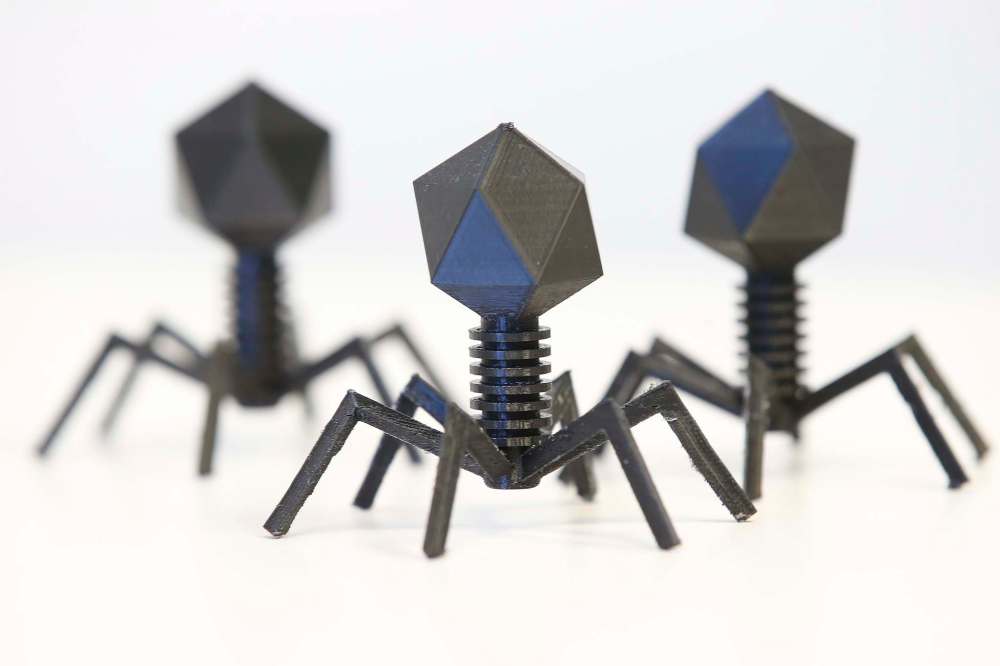
A Winnipeg biotech company has come up with a novel approach to preventing COVID-19 infection using naturally occurring organisms called phages — viruses that kill specific bacteria — that scientists have been aware of for many decades
Cytophage Technologies Inc. just received approval from the Public Health Agency of Canada’s animal care committee for animal testing on a bacteriophage that would stimulate the production of antibodies that would kill off the coronavirus.
The animal studies begin next week and founder and CEO Steven Theriault said if everything goes well, clinical studies (on humans) would commence shortly thereafter.
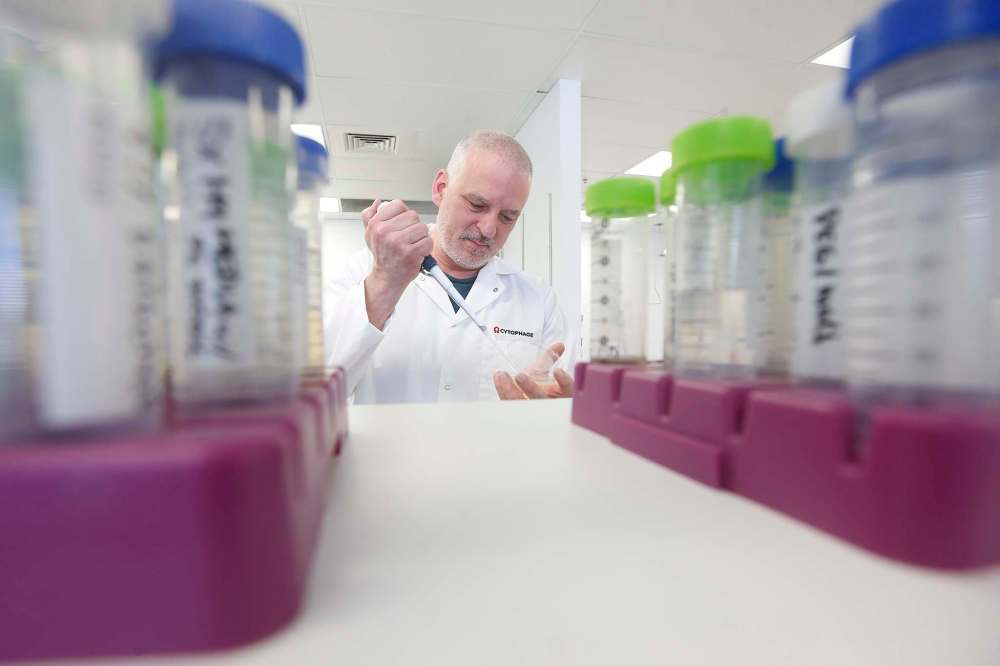
“If we show that they do work then within a very short period of time… hopefully in six months down the road, we could have a COVID spray that you would spray in your mouth — that will protect you from being infected,” Theriault said.
He said it’s not clear yet whether it would provide protection for an individual from being infected for a week or a month.
While it may sound too good to be true, the fact is that research using phages to treat antibiotic-resistant infections is picking up. The World Health Organization says by 2050 there will be as many deaths as a result of an inability to cure superbugs as there are from cancer.
But there are a number of reasons why there has not been intensive research efforts to come up with pharmaceutical therapies using phages. For one thing, it is hard to patent phages that are naturally occurring and antibiotics have done the trick for so long.
“Also, if I tell you I’m going to treat you with a virus you would look at me funny,” said Theriault, an adjunct professor in microbiology at the University of Manitoba and a former chief of applied biosafety research at the National Microbiology Lab in Winnipeg, who founded Cytophage in 2017.
“We are all trying to deal with the education of the general public,” he said.
While phages are definitely not part of mainstream medical science, that may be changing.
Michael Graham, Cytophage’s chief financial officer, said there are 20 companies he is aware of developing phage-based medical therapeutics, whereas there were only five a couple of years ago.
Earlier this month, the National Institute of Allergy and Infectious Diseases (NIAID) in the U.S., part of the National Institutes of Health, awarded US$2.5 million to support 12 different bacteriophage therapy research projects. It is the first time the NIAID has funded research into bacteriophages.
Cytophage’s edge is that it has developed a technology to synthesize phages, actually designing them to kill a particular bacteria, which can be done very quickly.
Whereas phages are naturally occurring, no one has figured out how to effectively harvest the right ones.
As for the COVID application, rather than kill a bacteria, the phages would be designed to have what looks like the coronavirus’s protein “crown” — and not the tentacles that a phage typically attaches to a bacteria cell to neutralize it — which would theoretically stimulate production of antibodies.
As a longtime member of the NML staff, Theriault knows some of the ins and outs of how the regulatory body operates, but he has been frustrated at the length of time he’s had to wait to get the animal trials started.
Perhaps out of an abundance of caution, the federal government has mandated all COVID research take place in Level-3 labs, and that has limited the availability of space to conduct the kind of experimentation necessary to move biotech innovations along.

Prior to COVID, Cytophage had concentrated its work on replacing antibiotics in the livestock industry. It’s currently doing experiments with chickens in Colorado with the goal of creating a feed input that would replace antibiotics for salmonella.
“We are hoping to get that done in the third quarter of this year and from that point we should be able to get our first regulatory approval with the Veterinary Drugs Directorate (of Health Canada) and have our first product on the market by the end of the year or early in 2022,” Theriault said.
The company just raised $6.5 million from private investors after having previously raised $8.5 million since the company was formed and Theriault said the plan is to have a public offering by the end of the year.
“That would bump us up to where we need to be, so we can build our own facility, start more research, hire more staff and start kicking it into high gear developing these phages for not only agriculture but also for human health,” he said.
martin.cash@freepress.mb.ca
History
Updated on Wednesday, March 24, 2021 8:47 AM CDT: Minor copy editing changes