

Portugal’s president calls a snap election on Jan. 30
Advertisement
Read this article for free:
or
Already have an account? Log in here »
To continue reading, please subscribe:
Monthly Digital Subscription
$1 per week for 24 weeks*
- Enjoy unlimited reading on winnipegfreepress.com
- Read the E-Edition, our digital replica newspaper
- Access News Break, our award-winning app
- Play interactive puzzles
*Billed as $4.00 plus GST every four weeks. After 24 weeks, price increases to the regular rate of $19.95 plus GST every four weeks. Offer available to new and qualified returning subscribers only. Cancel any time.
Monthly Digital Subscription
$4.99/week*
- Enjoy unlimited reading on winnipegfreepress.com
- Read the E-Edition, our digital replica newspaper
- Access News Break, our award-winning app
- Play interactive puzzles
*Billed as $19.95 plus GST every four weeks. Cancel any time.
To continue reading, please subscribe:
Add Free Press access to your Brandon Sun subscription for only an additional
$1 for the first 4 weeks*
*Your next subscription payment will increase by $1.00 and you will be charged $16.99 plus GST for four weeks. After four weeks, your payment will increase to $23.99 plus GST every four weeks.
Read unlimited articles for free today:
or
Already have an account? Log in here »
Hey there, time traveller!
This article was published 04/11/2021 (1610 days ago), so information in it may no longer be current.
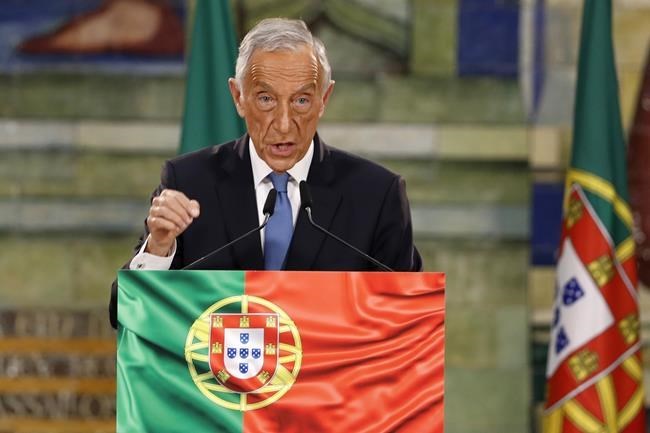
LISBON, Portugal (AP) — Portugal’s president announced Thursday that he is dissolving parliament and calling a snap election for Jan. 30, following the minority Socialist government’s defeat in a key vote on post-pandemic plans to spend billions of euros in European Union funding.
The announcement, in a televised address to the nation, was widely expected. President Marcelo Rebelo de Sousa had previously said Portugal would go to the ballot box two years ahead of schedule if the government’s 2022 state budget proposal was rejected by parliament, which happened last week.
The ballot will elect 230 lawmakers to parliament, where political parties then decide who forms a government.
The election comes at a sensitive time for the country of 10.3 million people, as it is poised to begin deploying some 45 billion euros ($52 billion) in help from the EU to help fire up the economy after the COVID-19 pandemic.
Rebelo de Sousa said the Portuguese needed to decide what they want from the next few years, “which are decisive” due to the windfall of funds.
“This is the decisive moment for a long-lasting recovery from the greatest pandemic of the past 100 years and the social and economic crisis it caused,” he said.
The 2022 spending plan is “an especially important budget at an especially important time,” he said.
Recent opinion polls suggest the center-left Socialist Party will win re-election but will again fall short of a parliamentary majority.
Given the procedural requirements, a new state budget proposal may not come before parliament until April. That could put the brakes on an economic rebound.
As things stand, the COVID-19 pandemic shouldn’t disrupt an election, though health authorities have warned about a potential winter resurgence in Europe.
A popular mass vaccination campaign has helped Portugal, for the moment, largely contain COVID-19. The country has on average been reporting fewer than 1,000 new cases a day since mid-September, with daily deaths in single figures.
The 2022 state budget forecast GDP growth of 4.8% this year and 5.5% next year, with a jobless rate of around 6.5%, roughly the same as now.

That has helped lift the Socialist Party’s popularity, with polls predicting it will be returned to power with a comfortable win, capturing around 39% of the vote. But that would still leave the Socialists needing parliamentary support for legislation and put Portugal back where it started before the political crisis of recent weeks.
The traditional center-right opposition parties are in disarray. Both the main opposition Social Democratic Party and the smaller Popular Party are engaged in divisive leadership challenges.
The hard-left Communist Party and Left Bloc, who allied with the government up to last week, have seen their popularity dwindle to single figures in recent elections.
In the last election, in 2019, 10 parties won seats in the 230-seat parliament in a trend toward political fragmentation that compels parties to negotiate with each other.
Most striking is the rise of Portugal’s first right-wing populist party, Chega! (Enough!), which was founded just three years ago. It currently has just one lawmaker, but polls indicate it could capture as many as 20 seats in an election, potentially serving as a kingmaker.