

Premier leads huge delegation to major mining conference
Province intends to double mineral exploration this year
Advertisement
Read this article for free:
or
Already have an account? Log in here »
To continue reading, please subscribe:
Monthly Digital Subscription
$1 per week for 24 weeks*
- Enjoy unlimited reading on winnipegfreepress.com
- Read the E-Edition, our digital replica newspaper
- Access News Break, our award-winning app
- Play interactive puzzles
*Billed as $4.00 plus GST every four weeks. After 24 weeks, price increases to the regular rate of $19.95 plus GST every four weeks. Offer available to new and qualified returning subscribers only. Cancel any time.
Monthly Digital Subscription
$4.99/week*
- Enjoy unlimited reading on winnipegfreepress.com
- Read the E-Edition, our digital replica newspaper
- Access News Break, our award-winning app
- Play interactive puzzles
*Billed as $19.95 plus GST every four weeks. Cancel any time.
To continue reading, please subscribe:
Add Free Press access to your Brandon Sun subscription for only an additional
$1 for the first 4 weeks*
*Your next subscription payment will increase by $1.00 and you will be charged $16.99 plus GST for four weeks. After four weeks, your payment will increase to $23.99 plus GST every four weeks.
Read unlimited articles for free today:
or
Already have an account? Log in here »
Hey there, time traveller!
This article was published 14/06/2022 (1374 days ago), so information in it may no longer be current.
The Manitoba government is looking to bolster its downgraded reputation in the mining industry with a major show of force at the premier mining industry conference in the world this week in Toronto.
Premier Heather Stefanson is leading the province’s largest delegation ever to the Prospectors and Developers Association of Canada (PDAC) event that attracts about 40,000 people every year.
The premier disclosed that mineral exploration intentions for this year could hit an all-time high in the province at $154 million, double what it was in 2021.
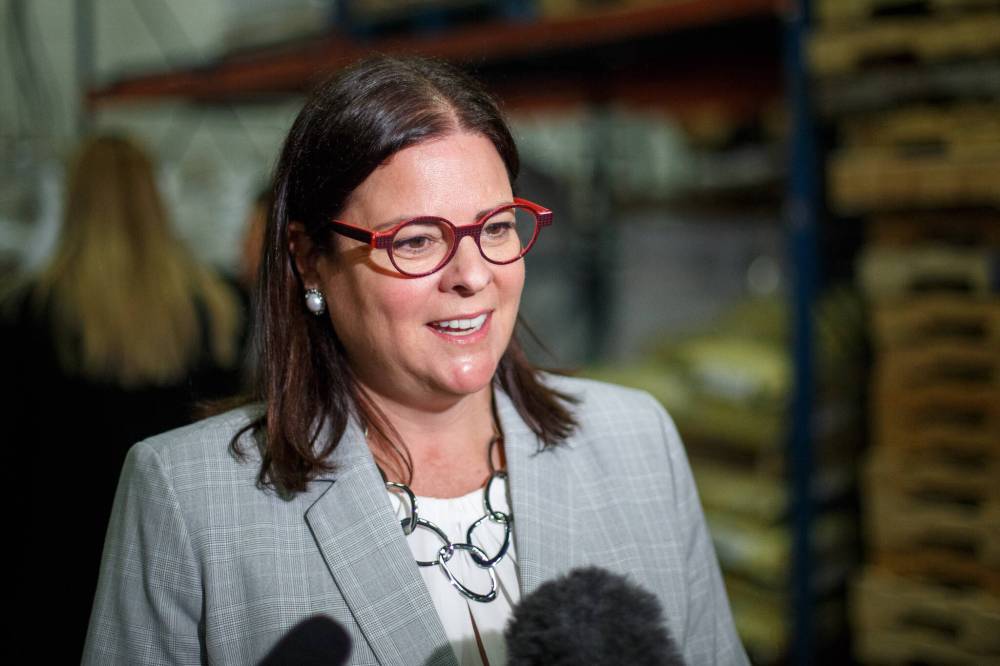
The premier also announced at the PDAC conference on Monday evening that the province is investing another $10 million into the Manitoba Mineral Development Fund (MMDF) that was set up with a $20 million stake in 2019 and was to expire last year. The MMDF is administered by the Manitoba Chambers of Commerce, and the additional allotment ensures funding will be available for new mining opportunities and other economic development projects in the north for another three years.
She also announced that a small potash mining operation near Russell, called Potash and Agri-Development Corporation of Manitoba (PADCOM) should be in production later this year, the first ever potash production in the province.
The province boasts the most generous mineral exploration tax credits in the country, but downsizing of the permitting and geological survey departments, as well as under-resourced staffing when it comes to the community consultation process for First Nations has all conspired to drop Manitoba’s ranking in the important Fraser Institute Annual Survey of Mining Companies from a top three ranking last decade down into the 30s for the past few years.
“That’s why we are here,” Premier Stefanson said on Monday. “We want to get back up to the top of that ranking. We are sending a message that we are open for business.”
The timing for such a message is crucial as there is heightened demand around the world for minerals that will aid in the de-carbonization process that is underway. Those minerals include nickel, cobalt and lithium used in batteries and copper to upgrade the electrical grid.
The Chinese-owned Tanco Mine in Manitoba is the only place in Canada that lithium is produced.
Snow Lake Resources has a significant lithium exploration project underway near Snow Lake and the company is intensely pursuing partnership opportunities with a battery manufacturer or even an automobile company to also build a lithium processing plant in the Winnipeg capital region.
Philip Gross, the CEO of Snow Lake Resources, said that despite Manitoba’s down-sliding ranking on the Fraser Institute survey, he said he’s had good relations with the province.
“I have worked in many places around the world, in a lot of different jurisdictions. Each place has its own nuances in terms of bureaucracy and government engagement,” said Gross. “My experiences in Manitoba so far has only been positive.”
He said Manitoba is well positioned in the current mineral exploration dynamics with ideal geographic location in the middle of the continent, good infrastructure including rail service in Northern Manitoba, sustainable and inexpensive hydroelectricity as well as expertise and experience in the industry.
“At the end of the day Manitoba is uniquely positioned to really benefit from the electrification process that is going to take place across the entire industrialized world,” Gross said.
Even those who are critical of the Progressive Conservative government’s downsizing of its minerals branch operation say that it’s a smart thing for the province to wave the flag at the PDAC event.
But Chris Beaumont-Smith, an industry consultant and former director in the province’s mines branch, said despite the government current show of support for the industry, it is late in coming.
“We are in danger of missing a huge bull market,” said Beaumont-Smith.
The province significantly downsized its department over the past few years with the permitting department so understaffed that Beaumont-Smith said he has two clients waiting two years for permits.

Stefanson said her government’s introduction of a multi-year permitting process has been well-received but she acknowledged that more work needs to be done.
“That is why we are out listening and interacting and finding out what the barriers are to getting these things done,” she said. “We are challenging our internal team to take action.”
Michael Swistun, the secretary of the province’s Economic Development Board, said additional investment in the department in those areas are required.
“The market has told us in no uncertain terms there was an under-investment and we have to catch up,” he said.
martin.cash@freepress.mb.ca