

Publisac grocery flyers to reach only those Montreal households that ask for them
Advertisement
Read this article for free:
or
Already have an account? Log in here »
To continue reading, please subscribe:

Digital Subscription
One year of digital access for only $205*
- Enjoy unlimited reading on winnipegfreepress.com
- Read the E-Edition, our digital replica newspaper
- Access News Break, our award-winning app
- Play interactive puzzles
*First annual payment billed as $205.00 + GST for one year. This annual subscription will automatically renew at $233.00 + GST every 52 weeks (10% off the regular annual price of $259.35). Offer available to new and qualified returning subscribers only. Cancel any time.
To continue reading, please subscribe:
Add Free Press access to your Brandon Sun subscription for only an additional
$1 for the first 4 weeks*
- Enjoy unlimited reading on winnipegfreepress.com
- Read the E-Edition, our digital replica newspaper
- Access News Break, our award-winning app
- Play interactive puzzles
*Your next Brandon Sun subscription payment will increase by $1.00 and you will be charged $17.95 plus GST for four weeks. After four weeks, your payment will increase to $24.95 plus GST every four weeks.
Read unlimited articles for free today:
or
Already have an account? Log in here »
Hey there, time traveller!
This article was published 11/04/2022 (1628 days ago), so information in it may no longer be current.
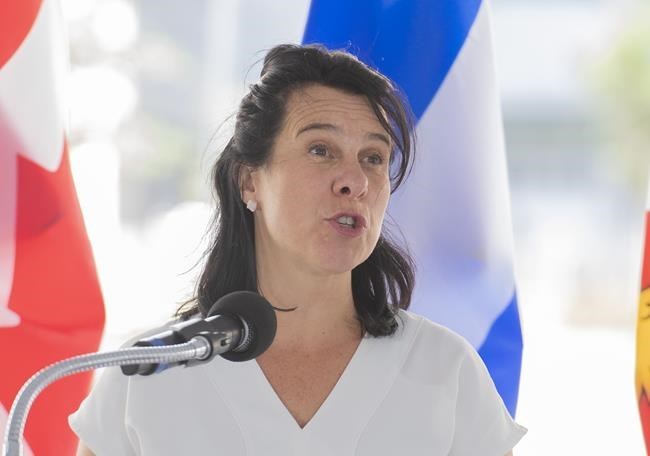
Montreal Mayor Valérie Plante said Monday grocery store flyers will be delivered only to residents who request them, marking a win for environmentalists and prompting criticism from the company behind the advertisements.
Starting in May 2023, those who still want to receive the flyer bundles — dubbed the Publisac in Quebec — will have to slap a sticker on their door, Plante said. The bags will no longer be plastic.
The move follows a public consultation by the city and years of criticism from environmental groups demanding a ban on Publisac deliveries.
But TC Transcontinental, a Montreal-based packaging and printing company, says an opt-in system would effectively end its flyer distribution due to prohibitive costs and complexity.
The 46-year-old firm says the current opt-out model, where residents can unsubscribe by contacting the company via its Publisac website, is “simple and effective.”
It says the deliveries currently go out to more than 200,000 Quebecers, including 120,000 Montreal households, allowing them to take advantage of grocery deals.
“The Publisac, in addition to giving consumers access to discounts, distributes local newspapers at an advantageous cost, helps merchants to attract customers and compete against the giants of e-commerce, and supports thousands of direct and indirect jobs,” Patrick Brayley, vice-president of Transcontinental’s distribution segment, said in a statement.
“We intend to assert our rights and those of our customers if necessary.”
A verdict is pending in Transcontinental’s legal case against the City of Mirabel, which switched to an opt-in system for Publisac in October 2019.
Plante says about 800,000 flyers and other unsolicited ads reach Montreal doorsteps each week, amounting to more than 41 million flyers per year that wind up in recycling depots and landfills.
“Cities must take strong action to respond to the climate crisis, and this regulation will allow us to reduce at the source a significant quantity of paper and plastic in circulation in Montreal,” the mayor said.
Montreal aims to become zero waste by 2030.
On top of food flyers, the Publisac includes a range of community newspapers that must now rethink their distribution plan.
Andrew Mulé, president of Métro Média and chair of a municipal advisory committee on community newspapers, says the company will have to rely on financial support from Montreal to transition to a revised business model, already underway.
Métro Média supports the new rule for environmental reasons, he said, but stressed the “collateral impacts on the local news industry.”
The company owns the Journal Métro and 20 local community newspapers distributed by the Publisac.
Transcontinental generates about $100 million in annual revenue from flyer distribution across Quebec, with Montreal accounting for between 20 and 25 per cent of that figure, according to National Bank analyst Adam Shine. Its revenue in 2021 totalled $2.64 billion.
“As such, the revenue hit would not be very big and the profit impact appears immaterial. That said, the company would not want to see any collateral implications from Montreal’s decision that could impact retail distribution and printing elsewhere across its footprint,” Shine wrote in a note to investors.

Meanwhile, Unifor’s Quebec director Renaud Gagné said it jeopardizes the jobs of 140 workers in the two Quebec factories that churn out the paper used for the flyers.
Fédération des travailleurs et travailleuses du Québec general secretary Denis Bolduc called the outcome “very disappointing.”
“Since 2020 we have been asking to be heard by the city. Unfortunately the Plante administration refused, despite our insistence, to meet with us,” Bolduc said in a French news release.
This report by The Canadian Press was first published April 11, 2022.
Companies in this story: (TSX:TCL.A)