

Richardson reels in American giant
Purchases largest U.S. durum and semolina processor
Advertisement
Read this article for free:
or
Already have an account? Log in here »
To continue reading, please subscribe:

Digital Subscription
One year of digital access for only $205*
- Enjoy unlimited reading on winnipegfreepress.com
- Read the E-Edition, our digital replica newspaper
- Access News Break, our award-winning app
- Play interactive puzzles
*First annual payment billed as $205.00 + GST for one year. This annual subscription will automatically renew at $233.00 + GST every 52 weeks (10% off the regular annual price of $259.35). Offer available to new and qualified returning subscribers only. Cancel any time.
To continue reading, please subscribe:
Add Free Press access to your Brandon Sun subscription for only an additional
$1 for the first 4 weeks*
- Enjoy unlimited reading on winnipegfreepress.com
- Read the E-Edition, our digital replica newspaper
- Access News Break, our award-winning app
- Play interactive puzzles
*Your next Brandon Sun subscription payment will increase by $1.00 and you will be charged $17.95 plus GST for four weeks. After four weeks, your payment will increase to $24.95 plus GST every four weeks.
Read unlimited articles for free today:
or
Already have an account? Log in here »
Hey there, time traveller!
This article was published 04/08/2021 (1872 days ago), so information in it may no longer be current.
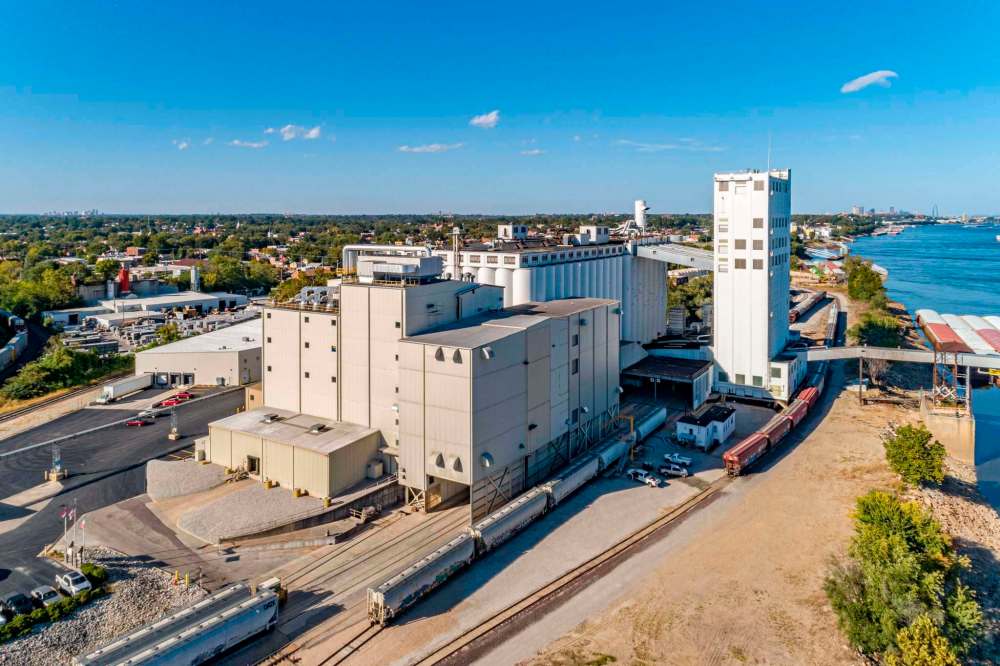
A subsidiary of Winnipeg-based Richardson International Limited has closed its acquisition of the largest durum and semolina processor in the U.S., Italgrani USA Inc.
The milling facility and company headquarters is in St. Louis, Mo., and the company has storage and grain input facilities in North Dakota and a merchandising office in Minneapolis.
The acquisition is part of Richardson’s fairly aggressive expansion into the processing side of the grains business as well as gaining increasing presence in the U.S. market.
The deal is part of what is now a two-decade long investment strategy, first into canola crushing, then oats processing and now durum and semolina.
That process began in 1999 with the acquisition of a canola crushing plant in Lethbridge, Alta. followed by the construction of another canola crushing plant in Yorkton, Sask.
In early 2019, it acquired the Wesson cooking oil business from ConAgra with its large production facility in Memphis. Tenn.
It has acquired a string of oat processing facilities starting in 2013 including Can-Oats in Portage la Prairie and facilities in Saskatchewan, Alberta and Nebraska. In 2017 it acquired European Oat Millers, in Bedford, Eng., the second-largest oat miller in Europe
No financial details of the Italgrani acquisition were released, but it is a large operation that undertook a major expansion a couple of years ago. In 2016, the company had revenue of US$381 million.
“We are excited to further diversify our processing operations — building on the success of both our value-added canola crushing and oat milling businesses — and expand our grain origination capabilities in a new marketplace,” said Curt Vossen, president and CEO of Richardson International.
As with its other recent acquisitions, the company has said all of Italgrani’s more than 100 employees will continue working with Richardson.
In an interview with the Free Press, James Meyer, president of Italgrani USA, said, “The interesting thing about this is that Richardson is a family-owned company and that has been our entire history. While Richardson is a much larger organization than ours you get a fair degree of comfort in the fact that culturally it is a tremendous fit.”
Italgrani’s milling operation in St. Louis underwent a US$37-million expansion that was completed in 2019, expanding its capacity by 40 per cent.
Meyer said the operation accounts for slightly more than 20 per cent of all the durum and semolina processing in the U.S.
Richardson has been in a significant expansion mode for some time.

In early 2021, the parent company James Richardson & Sons Ltd. acquired Bison Transport, adding $1 billion in annual revenue.
It is also in the process of doubling the capacity of its Yorkton canola crushing operation, as well it is upgrading the capacity of its Richardson Pioneer network of grain elevators throughout Western Canada.
Kelcey Vossen, a spokeswoman for Richardson International, said the deal achieves several components of the company’s strategic plans at the same.

“It is expansion into the U.S., diversifies our processing capabilities, and is part of our long-term strategy to build further value-added operations.”
At one time Richardson International was almost exclusively into grain handling and now it is has significant holdings in canola processing, oats processing and now durum processing.
“This deal expands our grain origination capabilities and diversifies our capabilities to process more of the commodities we handle,” she said.
Meyer said the pasta market has seasonal demand dynamics in the U.S. with the fall and winter being the busier period. The U.S. is a net importer of durum and most of its domestic crop is grown in northwestern North Dakota and the eastern third of Montana.
martin.cash@freepress.mb.ca