

Rocket ‘terminated’ in fiery explosion over Pacific Ocean
Advertisement
Read this article for free:
or
Already have an account? Log in here »
To continue reading, please subscribe:
Monthly Digital Subscription
$1 per week for 24 weeks*
- Enjoy unlimited reading on winnipegfreepress.com
- Read the E-Edition, our digital replica newspaper
- Access News Break, our award-winning app
- Play interactive puzzles
*Billed as $4.00 plus GST every four weeks. After 24 weeks, price increases to the regular rate of $19.95 plus GST every four weeks. Offer available to new and qualified returning subscribers only. Cancel any time.
Monthly Digital Subscription
$4.99/week*
- Enjoy unlimited reading on winnipegfreepress.com
- Read the E-Edition, our digital replica newspaper
- Access News Break, our award-winning app
- Play interactive puzzles
*Billed as $19.95 plus GST every four weeks. Cancel any time.
To continue reading, please subscribe:
Add Free Press access to your Brandon Sun subscription for only an additional
$1 for the first 4 weeks*
*Your next subscription payment will increase by $1.00 and you will be charged $16.99 plus GST for four weeks. After four weeks, your payment will increase to $23.99 plus GST every four weeks.
Read unlimited articles for free today:
or
Already have an account? Log in here »
Hey there, time traveller!
This article was published 03/09/2021 (1684 days ago), so information in it may no longer be current.
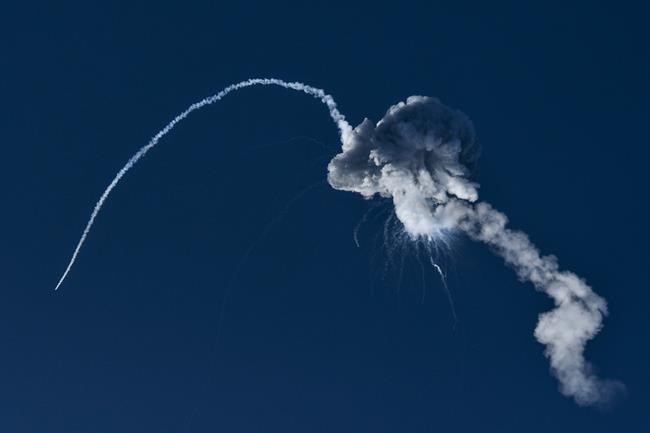
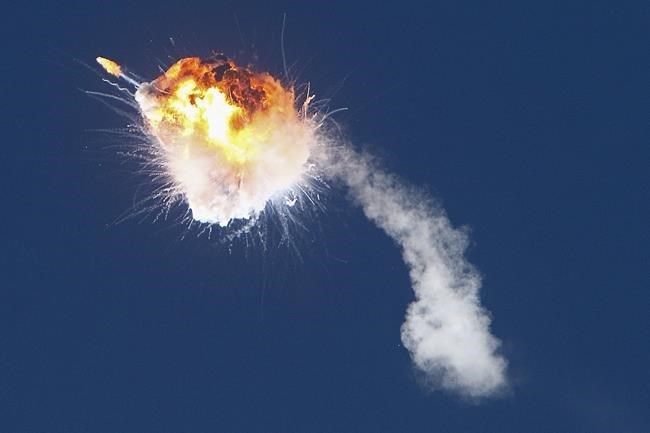
VANDENBERG SPACE FORCE BASE, Calif. (AP) — A privately designed, unmanned rocket built to carry satellites was destroyed in an explosive fireball after suffering an “anomaly” off the California coast during its first attempt at reaching Earth’s orbit.
Firefly Aerospace’s Alpha rocket was “terminated” over the Pacific Ocean shortly after its 6:59 p.m. Thursday liftoff from Vandenberg Space Force Base, according to a base statement. Video from the San Luis Obispo Tribune showed the explosion.
Firefly said an “anomaly” occurred during the first-stage ascent that “resulted in the loss of the vehicle” about two minutes, 30 seconds into the flight. Vandenberg said a team of investigators will try to determine what caused the failure.
The rocket was carrying a payload called DREAM, or the Dedicated Research and Education Accelerator Mission. It consisted of items from schools and other institutions, including small satellites and several demonstration spacecraft.
“While we did not meet all of our mission objectives, we did achieve a number of them: successful first stage ignition, liftoff of the pad, progression to supersonic speed, and we obtained a substantial amount of flight data,” Firefly said in a statement. The information will be applied to future missions.
Austin, Texas-based Firefly is developing various launch and space vehicles, including a lunar lander. Its Alpha rocket was designed to target the growing market for launching small satellites into Earth orbit.
Standing 95 feet (26 meters) high, the two-stage Alpha is designed to carry up to 2,200 pounds (1,000 kilograms) of payload into low orbit. The company wants to be capable of launching Alphas twice a month. Launches would have a starting price of $15 million, according to Firefly.
Firefly will have to catch up with two Long Beach, California-based companies that are ahead in the small satellite launch sector.

Rocket Lab has put 105 satellites into orbit with multiple launches from a site in New Zealand and is developing another launch complex in the U.S.
Virgin Orbit has put 17 satellites into space with two successful flights of its air-launched LauncherOne rocket, which is released from beneath the wing of a modified Boeing 747.