Study casts doubt on corporate contributions to fight against climate change
Advertisement
Read this article for free:
or
Already have an account? Log in here »
To continue reading, please subscribe:

Digital Subscription
One year of digital access for only $205*
- Enjoy unlimited reading on winnipegfreepress.com
- Read the E-Edition, our digital replica newspaper
- Access News Break, our award-winning app
- Play interactive puzzles
*First annual payment billed as $205.00 + GST for one year. This annual subscription will automatically renew at $233.00 + GST every 52 weeks (10% off the regular annual price of $259.35). Offer available to new and qualified returning subscribers only. Cancel any time.
To continue reading, please subscribe:
Add Free Press access to your Brandon Sun subscription for only an additional
$1 for the first 4 weeks*
- Enjoy unlimited reading on winnipegfreepress.com
- Read the E-Edition, our digital replica newspaper
- Access News Break, our award-winning app
- Play interactive puzzles
*Your next Brandon Sun subscription payment will increase by $1.00 and you will be charged $17.95 plus GST for four weeks. After four weeks, your payment will increase to $24.95 plus GST every four weeks.
Read unlimited articles for free today:
or
Already have an account? Log in here »
Hey there, time traveller!
This article was published 09/06/2022 (1570 days ago), so information in it may no longer be current.
Companies touting their use of renewable energy may be overstating their contributions to the fight against climate change, new research suggests.
“There’s a big role for scrutiny of companies’ claims about use of renewables,” said Anders Bjorn, a researcher at Montreal’s Concordia University School of Management who just published a study in the journal Nature Climate Change.
The paper examines how businesses increasingly report on their efforts to reduce the amount of greenhouse gases they emit.
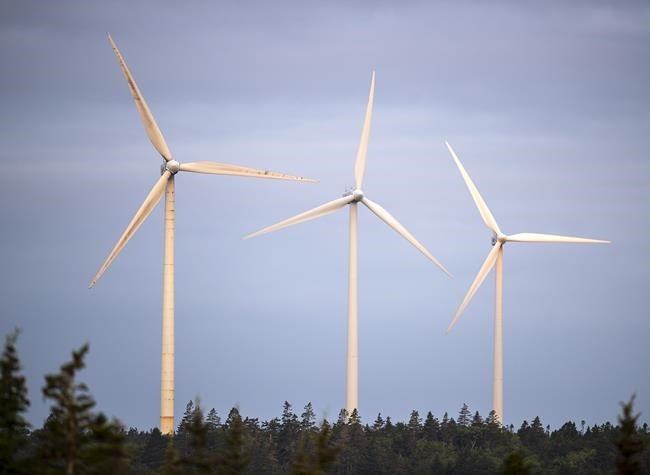
One of the common ways for companies to try and reduce their carbon footprint is to “buy” a certain amount of energy from a green producer. Although the power they consume still comes from the grid, the companies get a renewable energy certificate they can apply against their actual emissions.
The hope was that demand for those certificates would increase their value and encourage the growth of renewable power. But did it?
“In most cases, it has not happened,” Bjorn said.
Previous research has shown that the certificates add, at most, less than five per cent to the price of the power — not enough of a premium to drive investment and increase renewable generation.
That means buying the certificate has done little to promote the growth of renewable energy, Bjorn said. The details of who buys which kind of power shift, but the overall balance between renewable and fossil fuel generation doesn’t change.
“The certificate is not what caused the renewable energy to be produced. You are taking credit for something that would have happened anyway.”
Still, companies who buy the certificates claim full value for the reduced emissions.
Bjorn and his colleagues looked at 115 corporations around the world who have joined the Science Based Targets Initiative, sponsored by groups including the United Nations and the World Wide Fund for Nature. He found those corporations claimed to have reduced their emissions by an average of about 30 per cent between 2015 and 2019.
“If all emissions were reduced at that rate, we would meet our 1.5 degree Paris targets,” said Bjorn. “Everything looks good.”
But when the team dug into the numbers, they found that about two-thirds of those claimed reductions were from renewable certificates. When the certificates were taken out, the real-world emissions reductions from those companies was barely 10 per cent.
That’s well short of the pace needed to meet Paris Agreement goals, Bjorn said.

Bjorn said a better way to increase renewable energy generation is through the use of power purchase agreements — long-term contracts between green power generators and consumers that do provide the financial stability and income for growth.
“If you do it through power purchase agreements, there’s a lot of indication that it actually does lead to more renewables because of this long-term fixed price, which makes a difference on decisions on whether or not to build more renewables.”
Meanwhile, Bjorn urges people to view corporate claims of rapid emissions reductions with skepticism.
“When you look at all these companies that have reported emissions reductions, you would probably get the idea that total emissions from the grid are reducing really fast. That might not be the case.”
This report by The Canadian Press was first published June 9, 2022.