

Supply chain woes slashing Canadian manufacturing, hurting small businesses: surveys
Advertisement
Read this article for free:
or
Already have an account? Log in here »
To continue reading, please subscribe:

Digital Subscription
One year of digital access for only $205*
- Enjoy unlimited reading on winnipegfreepress.com
- Read the E-Edition, our digital replica newspaper
- Access News Break, our award-winning app
- Play interactive puzzles
*First annual payment billed as $205.00 + GST for one year. This annual subscription will automatically renew at $233.00 + GST every 52 weeks (10% off the regular annual price of $259.35). Offer available to new and qualified returning subscribers only. Cancel any time.
To continue reading, please subscribe:
Add Free Press access to your Brandon Sun subscription for only an additional
$1 for the first 4 weeks*
- Enjoy unlimited reading on winnipegfreepress.com
- Read the E-Edition, our digital replica newspaper
- Access News Break, our award-winning app
- Play interactive puzzles
*Your next Brandon Sun subscription payment will increase by $1.00 and you will be charged $17.95 plus GST for four weeks. After four weeks, your payment will increase to $24.95 plus GST every four weeks.
Read unlimited articles for free today:
or
Already have an account? Log in here »
Hey there, time traveller!
This article was published 09/03/2022 (1661 days ago), so information in it may no longer be current.
Canadian manufacturers say supply chain disruptions are cutting into their production while raising costs, putting the recovery of the sector and the overall economy at risk.
A new survey by Canadian Manufacturers and Exporters found nine out of 10 companies in the sector are grappling with supply chain issues.
More than half said the disruptions are having a major or severe effect on operations.
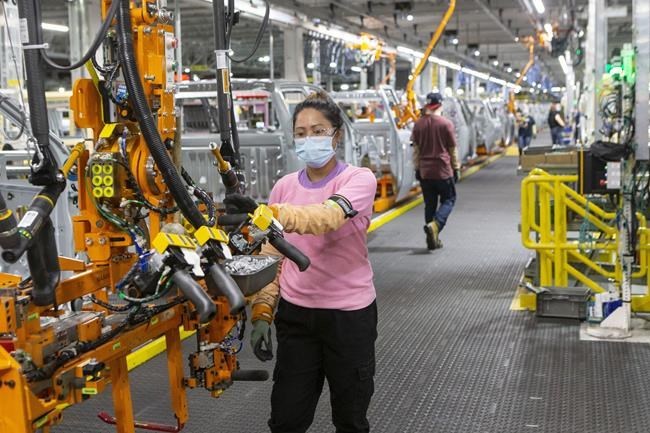
“We’re seeing long delays and higher costs,” said Dennis Darby, president and CEO of the manufacturing industry group. “There’s just no slack in the system.”
Demand for goods is strong but manufacturers just can’t keep up with orders, Darby said.
Indeed, Canadian manufacturers have lost more than $10 billion in sales as a result of supply chain disruptions and are facing nearly $1 billion in increased costs, the report said.
Eight in 10 said they have been forced to hike prices and delay fulfilling customer orders.
The situation risks stalling Canada’s economic recovery and could linger for several more months — or even longer, Darby said.
“There’s a fair degree of pessimism,” Darby said. “The majority of manufacturers don’t think the supply chain issues will be resolved until 2023 or later.”
He added: “We’re in for a continued hurt.”
Meanwhile, businesses in Canada are struggling to pay down debt amassed during pandemic shutdowns, with some considering bankruptcy even as restrictions lift.
The Canadian Federation of Independent Business said 67 per cent of small and medium-sized businesses took on an average of $158,000 in debt during the pandemic, according to a recent member survey.
Yet only 35 per cent have returned to normal sales, hurting their capacity to pay off debt and cope with higher costs.
The numbers are even worse for businesses in the hospitality sector. Nearly a third are considering bankruptcy or permanently winding down operations after amassing an average debt of more than $205,000, the CFIB found.
“The hurdle to get past the economic damage of the last two years is insurmountable for some,” said Dan Kelly, president of the business group.

It’s not just wrestling down debt that’s challenging businesses but also contending with supply chain issues and higher costs, he said.
“Every single line of a business owner’s budget is under severe pressure right now,” Kelly said.
“With costs rising fairly rapidly and the debt they have taken on … the math is not favourable for the future.”
The CFIB is calling on the federal government to extend its hiring program for businesses and halt tax hikes, including a planned increase in the alcohol excise tax and carbon tax.
This report by The Canadian Press was first published March 9, 2022.