

System unfairly favours Airbnb: hotels
Industry says owners don't follow safety, health standards; corporation escapes paying PST, GST
Advertisement
Read this article for free:
or
Already have an account? Log in here »
To continue reading, please subscribe:
Monthly Digital Subscription
$1 per week for 24 weeks*
- Enjoy unlimited reading on winnipegfreepress.com
- Read the E-Edition, our digital replica newspaper
- Access News Break, our award-winning app
- Play interactive puzzles
*Billed as $4.00 plus GST every four weeks. After 24 weeks, price increases to the regular rate of $19.95 plus GST every four weeks. Offer available to new and qualified returning subscribers only. Cancel any time.
Monthly Digital Subscription
$4.99/week*
- Enjoy unlimited reading on winnipegfreepress.com
- Read the E-Edition, our digital replica newspaper
- Access News Break, our award-winning app
- Play interactive puzzles
*Billed as $19.95 plus GST every four weeks. Cancel any time.
To continue reading, please subscribe:
Add Free Press access to your Brandon Sun subscription for only an additional
$1 for the first 4 weeks*
*Your next subscription payment will increase by $1.00 and you will be charged $16.99 plus GST for four weeks. After four weeks, your payment will increase to $23.99 plus GST every four weeks.
Read unlimited articles for free today:
or
Already have an account? Log in here »
Hey there, time traveller!
This article was published 24/10/2017 (3068 days ago), so information in it may no longer be current.
Airbnb is a global technology platform that is disrupting the hotel industry around the world.
But Winnipeg’s reputation as a place that’s just a step or two behind in adopting new trends in business may be working to its advantage this time, at least as far as the local hotel industry is concerned.
They have no problem with Winnipeg’s low ranking in Airbnb market penetration, cited in a new study released by the Hotel Association of Canada (HAC).
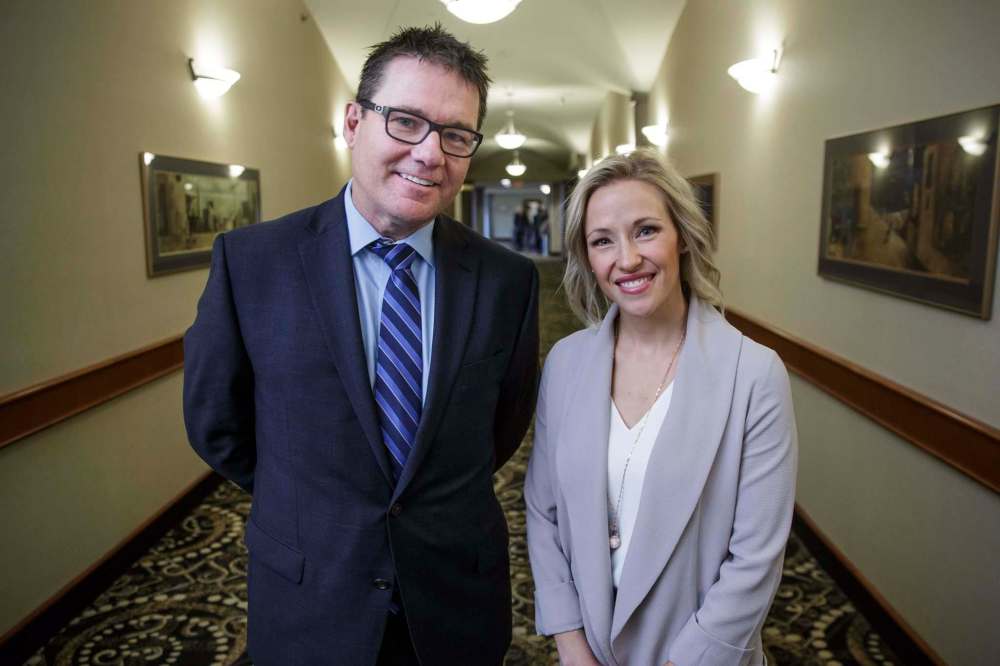
Winnipeg ranks 10th out of 11 Canadian cities covered in the study in terms of Airbnb revenue and most other market presence metrics.
“We’re not trying to get better,” said Scott Jocelyn, president and CEO of the Manitoba Hotel Association. “We’re pretty happy with where we are.”
But that doesn’t mean that industry is not working hard to make sure there is a level playing field.
At the association’s 89th annual meeting on Monday, Susie Grynol, president of the Hotel Association of Canada, outlined the findings of the first major study of Airbnb’s presence in Canada, released by the HAC on Sept. 27.
“Hotels just came off a really strong year and we have projected growth into next year,” she said. “Our concern here is that we have a new player in the market that’s not playing by the same rules as the established industry.”
The hotel industry’s beef is with the way the platform works: the corporation collects the rental fees and pays no GST or PST and the local owners of the accommodations that are being rented through Airbnb do not comply with health and safety standards, do not secure business licences and are not compelled to have the same kind of insurance that mainstream commercial hotels do.
“We can compete,” Jocelyn said. “If we have to do it (pay taxes and comply with regulations), they should have to do it and let the better man win. It’s not fair right now.”
Grynol is especially concerned with a growing number of commercial interests — those who own multiple units and who are renting them out for extended periods of time — participating in the Airbnb platform.
“It’s the biggest growth segment within Airbnb,” she said. “These are (accommodation) businesses running in the midst of communities. When people don’t even know who their neighbours are, that is a problem.”
In 2016, guests of Canada’s hotel properties contributed an estimated $2.2 billion in consumer taxes and fees based on room revenues alone. If the rates were to be applied to Airbnb revenues, Canada’s Airbnb sector has the potential to contribute $85 million in consumer taxes and fees to the Canadian economy.
The study estimates that Airbnb’s presence in Winnipeg deprived the city of about $410,000 in consumer taxes and fees.
Jocelyn said he’s not yet had much dialogue on the subject with Mayor Brian Bowman. He said he was waiting for the national study to be released.
The city’s hotels generate about $1 billion in revenue as compared to about $2.2 million last year from Airbnb. But Jocelyn said the sector has its challenges, especially rural hotels. Even though there have been a number of new properties constructed in Winnipeg over the past 10 years, the provincial association’s membership numbers remain stagnant mostly because of closures of rural hotels.

Grynol said that the industry has a focused approach now to make sure the Airbnb issue gets on the radar of municipal, provincial and federal governments.
“Bed and breakfasts have been around for years,” she said. “They need a business licence, they have to make sure guests are safe. Even though they are zoned in residential areas, they still have to comply with a set of regulations. They are important and they should be applied to everyone involved.”
She said the Airbnb corporate officials have a tradition of pushing back against regulations and, in some cases, have tried to sue governments when they attempt to rein the service in.
Other than a modest breakthrough in Quebec, where Airbnb fees now include a 3.5 per cent municipal tax, there are not really any jurisdictions in the country that have successfully imposed regulations.
martin.cash@freepress.mb.ca