Tesla recalls over 800K vehicles for seat belt chime problem
Advertisement
Read this article for free:
or
Already have an account? Log in here »
To continue reading, please subscribe:

Digital Subscription
One year of digital access for only $205*
- Enjoy unlimited reading on winnipegfreepress.com
- Read the E-Edition, our digital replica newspaper
- Access News Break, our award-winning app
- Play interactive puzzles
*First annual payment billed as $205.00 + GST for one year. This annual subscription will automatically renew at $233.00 + GST every 52 weeks (10% off the regular annual price of $259.35). Offer available to new and qualified returning subscribers only. Cancel any time.
To continue reading, please subscribe:
Add Free Press access to your Brandon Sun subscription for only an additional
$1 for the first 4 weeks*
- Enjoy unlimited reading on winnipegfreepress.com
- Read the E-Edition, our digital replica newspaper
- Access News Break, our award-winning app
- Play interactive puzzles
*Your next Brandon Sun subscription payment will increase by $1.00 and you will be charged $17.95 plus GST for four weeks. After four weeks, your payment will increase to $24.95 plus GST every four weeks.
Read unlimited articles for free today:
or
Already have an account? Log in here »
Hey there, time traveller!
This article was published 03/02/2022 (1685 days ago), so information in it may no longer be current.
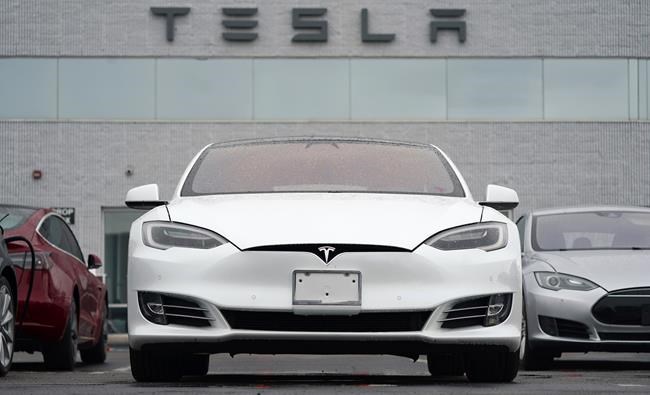
DETROIT (AP) — Tesla is recalling more than 817,000 vehicles in the U.S. because the seat belt reminder chimes may not sound when the vehicles are started and the driver hasn’t buckled up.
The recall covers the 2021 and 2022 Model S sedan and Model X SUV, as well as the 2017 through 2022 Model 3 sedan and 2020 through 2022 Model Y SUV, according to documents posted Thursday by safety regulators.
Federal motor vehicle safety laws require the chimes to sound when vehicles are started, and the sound stops when front belts are buckled.
The recall documents posted by the National Highway Traffic Safety Administration say the problem happens only if the driver left the vehicle in the previous drive cycle while the chime was sounding.
Tesla will fix the problem by sending out an over the air software update early this month. The safety agency says without the chime, a driver may not know their seat belt is unbuckled, increasing the risk of injury during a crash.
The company says in the documents that it’s not aware of any crashes or injuries due to the problem. A visual seat belt reminder is still displayed.
The problem was discovered by South Korea’s Automobile Testing and Research Institute on Jan. 6. Tesla investigated and determined that a recall was needed on Jan. 25, the documents say.
The chime still sounds if the vehicles go over 22 kilometers per hour (13.7 miles per hour) and the driver’s belt isn’t buckled.
The U.S. recall is the largest in the Austin, Texas, company’s history and comes as the company faces increasing scrutiny from NHTSA, the nation’s road safety agency.
The agency this week said that Tesla would recall nearly 54,000 cars and SUVs because their “Full Self-Driving” software lets them roll through stop signs without coming to a complete halt.

Recall documents posted Tuesday say that Tesla will disable the feature with a software update. The “rolling stop” feature allows vehicles to go through intersections with all-way stop signs at up to 5.6 miles (9 kilometers) per hour. The feature would work as long as the owner chose to activate it and the car didn’t detect any “relevant” moving cars, pedestrians or bicyclists.
Tesla’s “Full Self-Driving” software is being tested by selected owners on public roads. It cannot drive itself, and the company warns that drivers must be ready to intervene at any time.
NHTSA also is looking into a driver’s complaint that “Full Self-Driving” software caused a crash in California.
It’s also investigating why Teslas using the company’s less-sophisticated “Autopilot” driver-assist system have repeatedly crashed into emergency vehicles parked on roadways.
The newest recall covers all four models in its lineup. Estimates by Motorintelligence.com show Tesla has sold just over 1 million vehicles in the U.S. since 2013.