UK government backs Guaidó claim in Venezuelan gold fight
Advertisement
Read this article for free:
or
Already have an account? Log in here »
To continue reading, please subscribe:

Digital Subscription
One year of digital access for only $205*
- Enjoy unlimited reading on winnipegfreepress.com
- Read the E-Edition, our digital replica newspaper
- Access News Break, our award-winning app
- Play interactive puzzles
*First annual payment billed as $205.00 + GST for one year. This annual subscription will automatically renew at $233.00 + GST every 52 weeks (10% off the regular annual price of $259.35). Offer available to new and qualified returning subscribers only. Cancel any time.
To continue reading, please subscribe:
Add Free Press access to your Brandon Sun subscription for only an additional
$1 for the first 4 weeks*
- Enjoy unlimited reading on winnipegfreepress.com
- Read the E-Edition, our digital replica newspaper
- Access News Break, our award-winning app
- Play interactive puzzles
*Your next Brandon Sun subscription payment will increase by $1.00 and you will be charged $17.95 plus GST for four weeks. After four weeks, your payment will increase to $24.95 plus GST every four weeks.
Read unlimited articles for free today:
or
Already have an account? Log in here »
Hey there, time traveller!
This article was published 19/07/2021 (1841 days ago), so information in it may no longer be current.
LONDON (AP) — The British government sought Monday to prevent Venezuelan leader Nicolás Maduro from gaining access to nearly $2 billion of gold held by the Bank of England as the U.K. Supreme Court started hearing a case that hinges on the question of who should be considered the Latin American nation’s president.
Britain told the court that its recognition of opposition leader Juan Guaidó as president is clear and longstanding, and therefore he is the person authorized to decide how the gold held by Britain’s central bank should be used. The government’s statement came after a lower court said the U.K.’s recognition of Guaidó was “ambiguous.”
“The U.K. government has the right to decide who to recognize as the legitimate head of a foreign state,” the Foreign, Commonwealth and Development Office said in a statement. “The U.K. recognizes Juan Guaidó as president of Venezuela and consequentially he is the only individual recognized to have the authority to act on behalf of Venezuela as its head of state.”
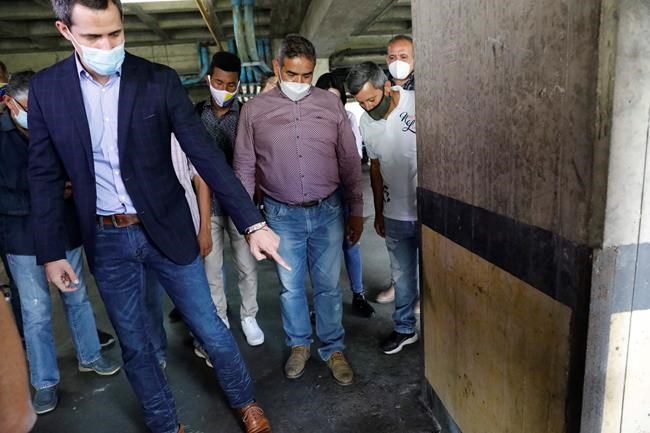
Maduro has demanded access to the gold to help his cash-starved nation fight the coronavirus pandemic. But the Bank of England has refused to hand it over, citing the British government’s recognition of Guaidó.
Guaidó has sought to preserve the gold stash at the Bank of England to keep it out of the hands of the Maduro government, which it contends is illegitimate and corrupt.
Guaidó, who was the leader of Venezuela’s National Assembly, challenged Maduro’s claim to the presidency, arguing that his 2018 election was rigged and invalid. Guaidó says he is the country’s interim president under provisions of the constitution that allow the head of the legislature to take power until free elections can be held.
Countries including the U.S. and the U.K. have recognized Guaidó as the legitimate president of Venezuela, although China, Russia and many others haven’t and Maduro holds effective power within Venezuela.

The battle over the gold is being fought out between two competing governing boards of the Central Bank of Venezuela, one appointed by Maduro and the other by Guaidó.
Guaidó, who is represented by the law firm Arnold & Porter, is arguing there is nothing ambiguous about the U.K. actions.
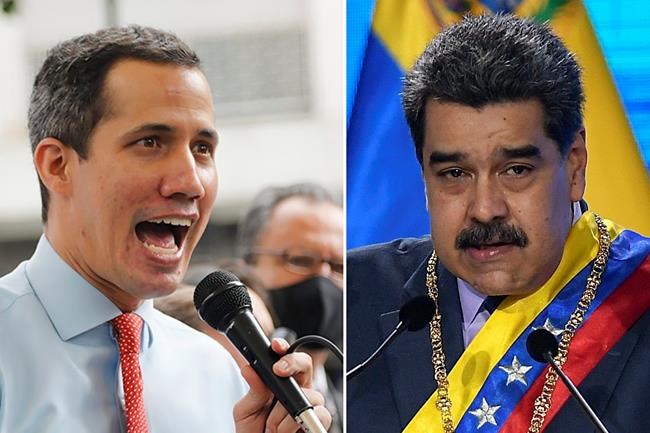
Maduro’s lawyers argue that he’s still president of Venezuela and that the U.K. has recognized this by continuing diplomatic relations with his government.
Leigh Crestohl, a lawyer representing the Maduro board, said the U.K. government’s position threatens the attractiveness of the City of London and the Bank of England as a secure place for foreign assets.
“International observers to this case may be surprised by the possibility that a unilateral statement of political recognition by the U.K. government can dispossess a foreign sovereign of assets deposited in London without any recourse in the English court,’’ Crestohl, a partner at the London-based law firm Zaiwalla & Co., said in a statement. “This is all the more so where that recognition ignores the reality on the ground.”