US regulators lay out plan for over-the-counter hearing aids
Advertisement
Read this article for free:
or
Already have an account? Log in here »
To continue reading, please subscribe:

Digital Subscription
One year of digital access for only $205*
- Enjoy unlimited reading on winnipegfreepress.com
- Read the E-Edition, our digital replica newspaper
- Access News Break, our award-winning app
- Play interactive puzzles
*First annual payment billed as $205.00 + GST for one year. This annual subscription will automatically renew at $233.00 + GST every 52 weeks (10% off the regular annual price of $259.35). Offer available to new and qualified returning subscribers only. Cancel any time.
To continue reading, please subscribe:
Add Free Press access to your Brandon Sun subscription for only an additional
$1 for the first 4 weeks*
- Enjoy unlimited reading on winnipegfreepress.com
- Read the E-Edition, our digital replica newspaper
- Access News Break, our award-winning app
- Play interactive puzzles
*Your next Brandon Sun subscription payment will increase by $1.00 and you will be charged $17.95 plus GST for four weeks. After four weeks, your payment will increase to $24.95 plus GST every four weeks.
Read unlimited articles for free today:
or
Already have an account? Log in here »
Hey there, time traveller!
This article was published 19/10/2021 (1802 days ago), so information in it may no longer be current.
WASHINGTON (AP) — Health regulators on Tuesday unveiled their proposal to allow Americans to buy hearing aids without a prescription, a long-awaited move intended to make the devices more accessible to millions of people with hearing problems.
The Food and Drug Administration said the proposed rule would cut red tape that currently requires hearing exams and a prescription for people with mild-to-moderate hearing loss. Under the plan, the devices could be ordered online or bought over-the-counter at pharmacies and other retail stores.
The move follows years of pressure from medical experts and consumer advocates to make the devices cheaper and easier to get.
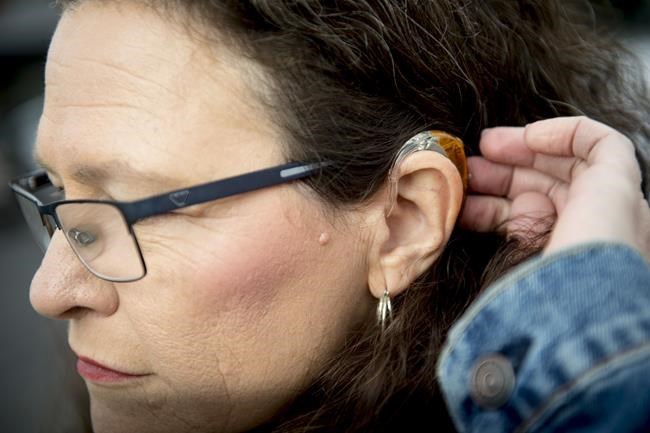
More than 37 million Americans, or 15% of adults, have trouble hearing, according to the FDA, but only about one-fifth of people who can benefit from a hearing aid use one.
Cost is a big obstacle. Between the device itself and fitting services, Americans can pay more than $5,000 to get a hearing aid. Insurance coverage is very limited, and Medicare doesn’t pay for hearing aids, only diagnostic tests.
U.S. officials said Tuesday that the FDA change, when finalized, should spur competition and bring down prices.
“Today we open the door to an easier process and a more affordable process,” Health and Human Services Secretary Xavier Becerra told reporters.
The agency will take public comments on its proposal for 90 days before finalizing the new rules. FDA officials wouldn’t speculate on when new devices would actually hit store shelves.
Consumer electronic companies for years have produced lower-cost “personal sound amplification” devices, but U.S. regulations bar them from being marketed as hearing aids and they do not undergo FDA review. Regulators said Tuesday that the new rules will make explicit that those devices are not alternatives to FDA-vetted hearing aids. Companies that market them inappropriately could face federal penalties, such as fines or product seizures.
For their part, makers of hearing aids have long argued that professional expertise is required to pick the right device and adjust its settings to work properly.
Once the FDA rules take effect, traditional manufacturers are expected to begin selling cheaper, direct-to-consumer models. Eventually, advocates predict the hearing aid market will resemble eye care, where consumers can choose between drugstore reading glasses or prescription bifocals.

The looser regulations would not apply to devices for people with severe hearing loss or for children. Also, the agency said over-the-counter devices would be required to have volume limits and other measures to help prevent injuries.
Companies making over-the-counter hearing aids generally wouldn’t be required to conduct studies in people. Instead, they would submit applications to the FDA showing they met its standards for the devices.
Tuesday’s announcement follows prodding from medical committees and Congress, which in 2017 instructed the agency to lay out a plan for over-the-counter hearing devices by August 2020. The agency missed that deadline, in part due to the workload of the COVID-19 pandemic. Additionally, an executive order by President Joe Biden earlier this year set a timetable for the agency to take action no later than mid-November.
___
The Associated Press Health and Science Department receives support from the Howard Hughes Medical Institute’s Department of Science Education. The AP is solely responsible for all content.