Vaccine alliance chief: Omicron could trigger ‘Inequity 2.0’

Advertisement

Advertise with us

CHAVANNES-DE-BOGIS, Switzerland (AP) — The head of vaccine alliance Gavi, which is leading a U.N.-backed push to get COVID-19 vaccines to developing countries, said that he’s seen early signs that rich countries are beginning to withhold donations out of fears about the omicron coronavirus variant — warning any new hoarding could lead to “Inequity 2.0.”

Read this article for free:


By clicking the button above, an account will be created and you will begin to receive some of our recommended newsletters. You may opt out of any newsletter by visiting your Email and Communication Preferences page or by clicking "unsubscribe" at the bottom of any email.

or

Already have an account? Log in here »

To continue reading, please subscribe:

Digital Subscription

One year of digital access for only $1.44 a week*

  • Enjoy unlimited reading on winnipegfreepress.com
  • Read the E-Edition, our digital replica newspaper
  • Access News Break, our award-winning app
  • Play interactive puzzles

*Billed as $5.77 plus GST every four weeks. After 52 weeks, price increases to the regular rate of $19.95 plus GST every four weeks. Offer available to new and qualified returning subscribers only. Cancel any time.

To continue reading, please subscribe:

Add Free Press access to your Brandon Sun subscription for only an additional

$1 for the first 4 weeks*

  • Enjoy unlimited reading on winnipegfreepress.com
  • Read the E-Edition, our digital replica newspaper
  • Access News Break, our award-winning app
  • Play interactive puzzles
Start now

*Your next Brandon Sun subscription payment will increase by $1.00 and you will be charged $17.95 plus GST for four weeks. After four weeks, your payment will increase to $24.95 plus GST every four weeks.

Hey there, time traveller!
This article was published 15/12/2021 (1770 days ago), so information in it may no longer be current.

CHAVANNES-DE-BOGIS, Switzerland (AP) — The head of vaccine alliance Gavi, which is leading a U.N.-backed push to get COVID-19 vaccines to developing countries, said that he’s seen early signs that rich countries are beginning to withhold donations out of fears about the omicron coronavirus variant — warning any new hoarding could lead to “Inequity 2.0.”

Gavi chief executive Dr. Seth Berkley took stock of the nearly two-year fight against the pandemic as the alliance released the latest update to its supply forecast for COVID-19 vaccines that it has repeatedly downscaled, largely because of export bans and vaccine hoarding by some producer countries that critics say it should have foreseen.

“With the omicron variant, what we’ve seen is panic in many countries that has led acceleration of boosters both to the numbers of people getting them, but also the timeline for getting them,” Berkley told The Associated Press in an interview late Tuesday at his home outside Geneva.
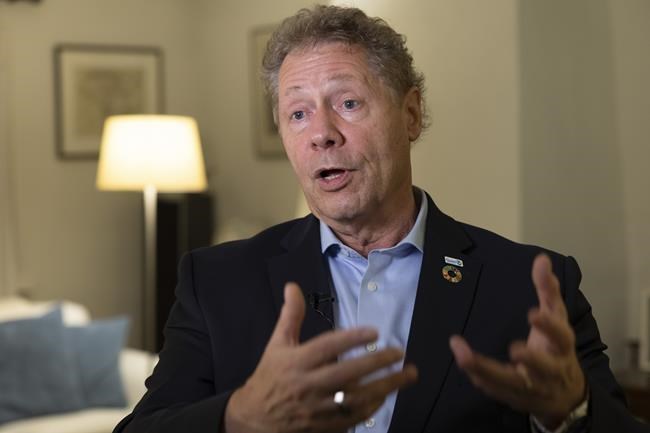
Dr. Seth Berkley, CEO of the vaccine alliance GAVI, gestures as he speaks to the Associated Press during an interview, in Chavannes-de-Bogis, Switzerland, Tuesday, Dec. 14, 2021. Berkley, the head of vaccine alliance Gavi, which is leading a U.N.-backed push to get COVID-19 vaccines to developing countries, said in the interview he's seen early signs that rich countries are beginning to withhold donations out of fears about the omicron variant, warning any new hoarding could lead to
Dr. Seth Berkley, CEO of the vaccine alliance GAVI, gestures as he speaks to the Associated Press during an interview, in Chavannes-de-Bogis, Switzerland, Tuesday, Dec. 14, 2021. Berkley, the head of vaccine alliance Gavi, which is leading a U.N.-backed push to get COVID-19 vaccines to developing countries, said in the interview he's seen early signs that rich countries are beginning to withhold donations out of fears about the omicron variant, warning any new hoarding could lead to "Inequity 2.0." (Salvatore Di Nolfi, Keystone via AP)

He was referring to extra doses given in rich countries to a broad swath of people — not just those at highest risk of contracting severe COVID-19.

The Geneva-based public-private partnership has been the lead manager of the U.N.-backed COVAX program that initially sought to get coronavirus vaccines to all countries but was pivoted after wealthier countries, and even some poorer ones, started striking their own deals to get jabs.

That locked down much of tight supplies and prompted vast inequality in access to jabs. Of the roughly 10 billion doses that have been delivered worldwide, the vast majority have gone to rich countries. COVAX has delivered just over 700 million.

“We also are beginning to see donors not wanting to donate their doses as fast as they might have because of the uncertainty now of where we are,” Berkley said, declining to specify. “Of course, our long-term concern is, if it turns out that new variant vaccines are required, that there may be an ‘Inequity 2.0’ where we see wealthy countries hoard those vaccines once again, like we saw at the beginning of the pandemic.”

While omicron’s transmissibility, severity and resistance to vaccines aren’t yet fully clear, the new variant could require revisions to existing vaccines or even production of new ones. Berkley says a COVID-19 vaccine from Novavax, which relies on a common technology in flu vaccines and has shown efficacy against variants, could be set to win emergency-use approval within “days” from the World Health Organization.

In recent weeks, global production of COVID-19 vaccines has taken off and supply is less of a problem than it once was. Now, a challenge is making sure countries can take in vaccines that sometimes require storage in very cold temperatures or are delivered in batches that need to be used at the same time once opened.

Wastage is a risk. Berkley said some is inevitable and insisted less than 1% of COVAX vaccines have gone to waste.

While he said it’s understandable, if potentially short-sighted, that politicians would want to serve their own people first with vaccines, one leading critic of Gavi’s handling of COVAX says a lot of the trouble can be pinned on wealthy-country governments who didn’t ensure steady sharing of vaccines. Now, an influx of vaccines in some developing countries could present problems.
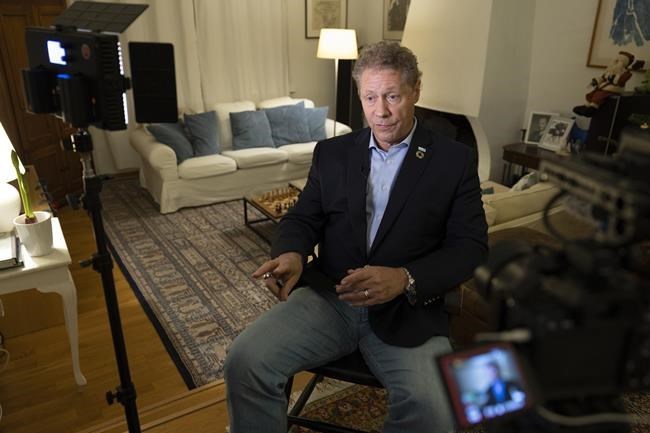
Dr. Seth Berkley, CEO of the vaccine alliance GAVI, speaks to the Associated Press during an interview, in Chavannes-de-Bogis, Switzerland, Tuesday, Dec. 14, 2021. Berkley, the head of vaccine alliance Gavi, which is leading a U.N.-backed push to get COVID-19 vaccines to developing countries, said in the interview he's seen early signs that rich countries are beginning to withhold donations out of fears about the omicron variant, warning any new hoarding could lead to
Dr. Seth Berkley, CEO of the vaccine alliance GAVI, speaks to the Associated Press during an interview, in Chavannes-de-Bogis, Switzerland, Tuesday, Dec. 14, 2021. Berkley, the head of vaccine alliance Gavi, which is leading a U.N.-backed push to get COVID-19 vaccines to developing countries, said in the interview he's seen early signs that rich countries are beginning to withhold donations out of fears about the omicron variant, warning any new hoarding could lead to "Inequity 2.0." (Salvatore Di Nolfi, Keystone via AP)

“Since high-income country governments hoarded vaccine and didn’t allow … distribution … to be paced, now we’re at this end-of-year dump, basically, and lo and behold, surprise, surprise, fragile health systems — some of them are having real difficultly accommodating it,” said Kate Elder, senior vaccines policy adviser at Médecins Sans Frontières, or Doctors Without Borders, which provides medical care around the world.

Gavi manages COVAX along with the Center for Epidemic Preparedness Innovations and U.N. health agency WHO, while UNICEF handles distribution of shots into arms.

Berkley said Gavi expects to have delivered between 800 million and 1 billion doses by the end of this year to the poorest developing countries, which he says was in line with targets. Where the alliance faced slippage in deliveries was with wealthier “self-financing countries” that were originally expected to get jabs through COVAX but didn’t use it as foreseen – many opting for direct deals with manufacturers.

Gavi expects to have 1.4 billion doses available by the end of his year. It had originally set a goal to deliver 2 billion doses by the end of 2021.

Berkley said Gavi expects another 800 million doses in the first quarter of next year, but not all of those are confirmed. Questions remain about supplies from manufacturers, regulatory approvals, and dose donations that are “somewhat more unpredictable.” Places like the United States and the European Union have been key donors.

As it has been forced to adapt and revise its strategies, donations from countries like “Team Europe” have grown increasingly important to COVAX — which was never planned to be a donation mechanism.

“In fact, we didn’t even have donations in the original framework and way of working,” Berkley said. “That only occurred because of the vaccine hoarding that was occurring in wealthy countries and because of the fact that we had export bans.”
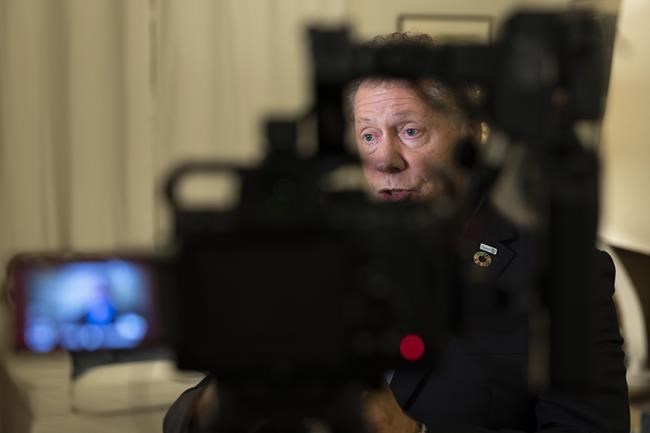
Dr. Seth Berkley, CEO of the vaccine alliance GAVI speaks to the Associated Press during an interview, in Chavannes-de-Bogis, Switzerland, Tuesday, Dec. 14, 2021. Berkley, the head of vaccine alliance Gavi, which is leading a U.N.-backed push to get COVID-19 vaccines to developing countries, said in the interview he's seen early signs that rich countries are beginning to withhold donations out of fears about the omicron variant, warning any new hoarding could lead to
Dr. Seth Berkley, CEO of the vaccine alliance GAVI speaks to the Associated Press during an interview, in Chavannes-de-Bogis, Switzerland, Tuesday, Dec. 14, 2021. Berkley, the head of vaccine alliance Gavi, which is leading a U.N.-backed push to get COVID-19 vaccines to developing countries, said in the interview he's seen early signs that rich countries are beginning to withhold donations out of fears about the omicron variant, warning any new hoarding could lead to "Inequity 2.0." (Salvatore Di Nolfi, Keystone via AP)

Critics say Gavi misjudged national self-interest and wrongly bet on trying to supply the whole world through a vast new program whose long-term impact is questionable. They say focus should have been on strengthening existing vaccine distribution systems, like one through WHO’s Americas regional body PAHO (Pan American Health Organization).

“Hindsight is 20/20 but there have been a tremendous number of shortcomings in the COVAX facility, probably many of them which could have been anticipated (by) understanding the environment and how countries with means were going to respond to this pandemic,” said MSF’s Elder.

___

Follow AP’s pandemic coverage at https://apnews.com/hub/coronavirus-pandemic

Report Error Submit a Tip

More Stories

Clay Stevenson credits therapeutic side of hockey in learning to live with mother’s suicide

Mike McIntyre 7 minute read Preview

Clay Stevenson credits therapeutic side of hockey in learning to live with mother’s suicide

Mike McIntyre 7 minute read Yesterday at 5:43 PM CDT

Hockey has always been more than just a game to Clay Stevenson. That was especially true after he suffered the biggest loss of his life: his mother, Holly, died by suicide seven years ago.

Read
Yesterday at 5:43 PM CDT

‘Make eye contact’: police urge extra caution amid spate of vehicle-pedestrian collisions

Scott Billeck 5 minute read Preview

‘Make eye contact’: police urge extra caution amid spate of vehicle-pedestrian collisions

Scott Billeck 5 minute read Updated: 8:40 AM CDT

Winnipeg police are urging motorists and pedestrians to exercise extra caution at intersections following a rash of collisions across the city, including one that claimed the life of a woman.

“Having the right of way does not make you safe,” Insp. Helen Peters of the Winnipeg Police Service’s traffic division said during a news conference Monday morning.

“This isn’t just about who’s at fault. This is about keeping each other safe and doing everything we can as drivers, motor vehicles or pedestrians to help each other out and navigate our roads.”

Police said a man in his 80s was struck by a vehicle that failed to stop at a stop sign while turning right onto eastbound Roblin Boulevard from Hunterspoint Road on Sept. 29.

Read
Updated: 8:40 AM CDT

Best move is to get honest, not ‘even’

Maureen Scurfield 4 minute read Yesterday at 2:01 AM CDT

DEAR MISS LONELYHEARTS: I just got a racy birthday card in the mail at work, with a letter inside it from an old girlfriend! Her praise of my body and intelligence was extravagant — almost poetic — but it felt really good.

I took it home and showed the card and letter to my wife, to make her jealous, I admit. All she said was, “Perhaps your old girlfriend’s getting into the booze in her old age!” That made me really mad.

Now I suddenly want to call up my ex and go visit her for a weekend. (She lives in another province.) I doubt if my wife would even suspect anything, as I travel a lot for my work.

Plus, when it comes to our own sex life, it seems like my wife couldn’t care less about being with me anymore. My wife’s big excitement is going out with girlfriends and flying to concerts with them. Things have gotten so petty between us now that I wouldn’t mind the feeling of evening things up! Please advise.

Accused used fuel-filled bottle to set blaze that killed two, court hears

Dean Pritchard 4 minute read Preview

Accused used fuel-filled bottle to set blaze that killed two, court hears

Dean Pritchard 4 minute read Yesterday at 5:27 PM CDT

Alex Courchene failed once to set a North End church ablaze, then returned a day later and tried again, starting a fire that killed two people living in an upstairs apartment suite, a jury was told Monday.

Read
Yesterday at 5:27 PM CDT

Katz ‘violated public trust,’ Sheegl lacked ‘moral compass,’ police HQ inquiry commissioner concludes

Joyanne Pursaga 8 minute read Preview

Katz ‘violated public trust,’ Sheegl lacked ‘moral compass,’ police HQ inquiry commissioner concludes

Joyanne Pursaga 8 minute read Updated: Yesterday at 7:29 PM CDT

The final report from the public inquiry into the scandal-plagued Winnipeg Police Service headquarters construction project concludes that former mayor Sam Katz and former city CAO Phil Sheegl broke public trust and engaged in unethical conduct.

And the report, released Monday by inquiry commissioner Garth Smorang, says the cost of the project — transforming a downtown Canada Post office tower and warehouse into the police HQ — soared, in part, because main contractor Caspian Projects overcharged the city by more than $40 million in expenses.

The project’s initial $135-million initial price tag rose to about $209 million in the end. The city purchased the complex in 2009; construction was completed in 2016.

Smorang’s report concludes Katz “violated the public trust” and council code of conduct, and Sheegl suffered from a “complete lack of a moral compass.”

Read
Updated: Yesterday at 7:29 PM CDT

Letters, Oct. 20

7 minute read Preview

Letters, Oct. 20

7 minute read Updated: 8:57 AM CDT

I attended the Winnipeg Symphony Orchestra’s 60 Years of Star Trek & Beyond concert on Oct. 15 with my brother, a devoted fan who had eagerly anticipated the evening. Despite moments of brilliance, we left disappointed.

Read
Updated: 8:57 AM CDT