

Waist not, want not
Fewer Canadians plan on changing their eating habits, but food bank donations have risen substantially
Advertisement
Read this article for free:
or
Already have an account? Log in here »
To continue reading, please subscribe:

Digital Subscription
One year of digital access for only $205*
- Enjoy unlimited reading on winnipegfreepress.com
- Read the E-Edition, our digital replica newspaper
- Access News Break, our award-winning app
- Play interactive puzzles
*First annual payment billed as $205.00 + GST for one year. This annual subscription will automatically renew at $233.00 + GST every 52 weeks (10% off the regular annual price of $259.35). Offer available to new and qualified returning subscribers only. Cancel any time.
To continue reading, please subscribe:
Add Free Press access to your Brandon Sun subscription for only an additional
$1 for the first 4 weeks*
- Enjoy unlimited reading on winnipegfreepress.com
- Read the E-Edition, our digital replica newspaper
- Access News Break, our award-winning app
- Play interactive puzzles
*Your next Brandon Sun subscription payment will increase by $1.00 and you will be charged $17.95 plus GST for four weeks. After four weeks, your payment will increase to $24.95 plus GST every four weeks.
Read unlimited articles for free today:
or
Already have an account? Log in here »
Hey there, time traveller!
This article was published 19/12/2020 (2102 days ago), so information in it may no longer be current.
When food wasn’t busy adding additional inches to Canadians’ waists this year, it eventually managed to find a salient home in charity.
An annual survey by leading supply chain experts reveals the number of people willing to support food banks has doubled just in time for the holiday season, even as one-third of Canadians say they will struggle to pay for food in 2021. But polling also shows a significant drop in people wanting to change their diets or eating healthier.
Those perplexing results from the Agri-Food Analytics Lab released Friday are all part of a long year of atypical consumption trends that, economists say, is highlighting the volatility of food habits amid COVID-19.
On top of that, philanthropic groups told the Free Press that even after “zigzagging” collection rates appear to be now normalizing, donations are by no means the same across the board and vary with different types of charities.
“If there’s one thing we’re realizing after 2020,” said Sylvain Charlebois, senior director of the Agri-Food Analytics Lab, “it’s that our relationship with food is now forever changed.”
Charlebois, who conducted the new study with polling firm Angus Reid out of Dalhousie University, said Canadians have adopted different shopping and eating habits this year that are quickly becoming part of their regular lives. He suspects those newfound routines will likely become routine for several years to come.
“It’s all about what you’re comfortable with and what makes you personally feel OK about your food,” he said in an interview Friday. “And frankly, there’s not much you really can be comfortable with when you’re dealing with a global pandemic — hence, the shifting trends.”
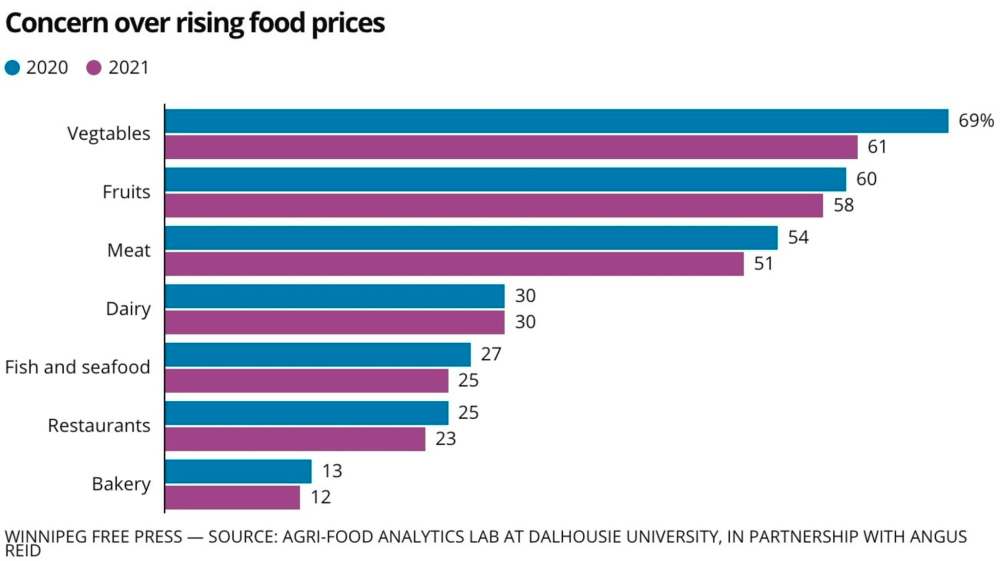
Part of those changes is getting used to rising prices for groceries like vegetables, fruits or meat, “and yet still being concerned about the dent on your pockets and food security or affordability overall,” said Charlebois. Only 43 per cent people said they would change their shopping habits.
Another aspect is how only 30 per cent of Canadians plan on changing their diet and eating healthier in 2021 (a 28 per cent plunge compared to results from last year), as the survey found, with 27 per cent people saying they would keep their “snacking schedule more wise.”
“The quarantine-15 or pandemic-15 is weight gain that probably won’t be going away,” said Charlebois.
And it also appears food “hoarding and wasting habits will also be staying for some time,” he added, citing how only 40 per cent of Canadians are planning to reduce the amount of waste they generate.
“But what was most surprising and yet really nice to see was the impact this is all having on food banks and charities,” said Charlebois.
Donation sentiment for local food pantries doubled in percentage across the country in late 2020, according to the survey.
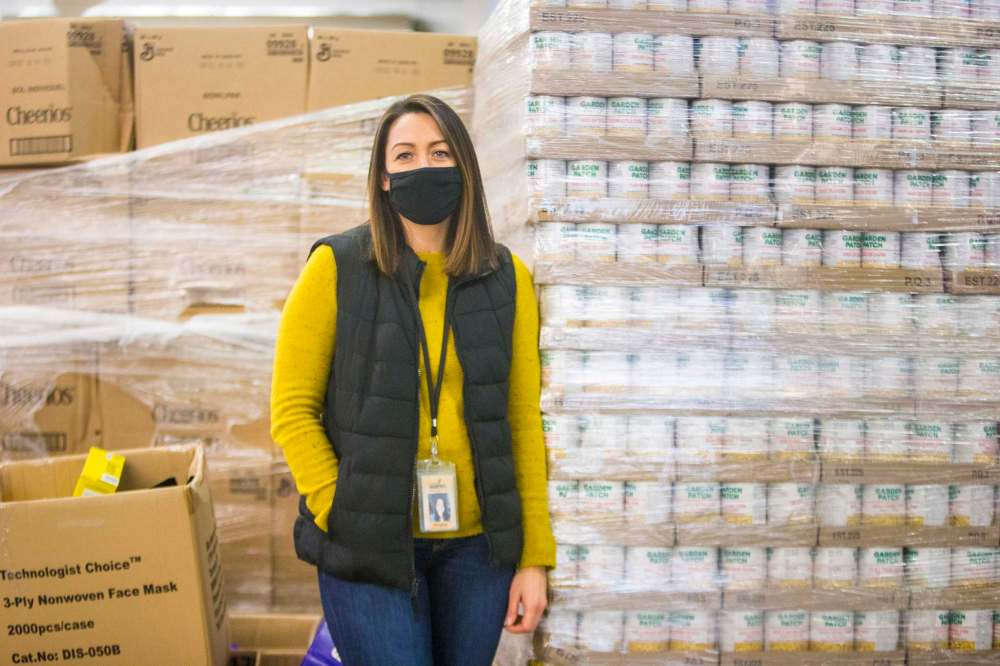
At Harvest Manitoba in Winnipeg, that’s definitely been the case. “We’ve received much more collections during Christmas than was previously expected,” said Meaghan Erbus, advocacy and impact manager at the food bank and philanthropic organization.
“While I wouldn’t necessarily say it’s doubled, it’s definitely on par with last year and maybe even higher,” she said Friday. “And that’s more than we’d hoped for after we saw inventory for our perishable and non-perishable items consistently downhill throughout the rest of the year.”
Erbus believes much of the shifting donations this year has to do with the “changing course” of COVID-19 and socio-economic supports from the provincial and federal government.
“When people feel secure about their personal income and employment, they’ll obviously donate more,” said Erbus. “And with where people are now economically, compared to earlier this year, they’re not only donating food which would’ve been wasted in their shelves, but they’re also going out of their way to buy it specifically to be donated.”
Rob Moquin, executive director of Food Matters Manitoba, said the many organizations he works with have told him much the same. “But there’s a flip side to the government help,” he said.
“While it obviously increases donations from people, it also decreases the use of food banks from the vulnerable communities that rely on them,” said Moquin. “That can likely be the reason we’re not seeing the stocking issues we did earlier this year.”
But while food banks are seeing a rise in donations, other charities are facing “historically meagre” support from the broader public, said Bruce MacDonald, president and CEO of Imagine Canada — a non-profit that provides programs, assistance and resources for philanthropic organizations across the country.
“It’s interesting because your organizations like the YMCA are shutting down and not many people are helping the arts sector charities,” said MacDonald.
“And yet, we’ve seen certain groups like those fighting food insecurity or domestic violence are doing much better because people think they are simply more important during this time.”

Statistics from Imagine Canada show 48 per cent of Manitobans will donate to charities this holiday season. That’s much lower than previous years when, for example, the organization found 70 per cent Manitobans donated to charities in 2014.
“It’s hard not to be more worried about food than other things though,” said Charlebois.
“When you’re stuck in your homes and spending more time in your kitchen than ever before, you’re definitely going to understand that there are far too many people out there who need help to be fed and stay healthy during this extraordinary crisis.”
Twitter: @temurdur
Temur.Durrani@freepress.mb.ca