WHO: No ‘doomsday,’ but malaria fight disrupted by pandemic

Advertisement

Advertise with us

GENEVA (AP) — The World Health Organization said Monday that the global response to the longtime threat of malaria has taken a hit as the coronavirus pandemic disrupted health services in many countries, leading to tens of thousands more deaths worldwide last year — as questions remain on the possible fallout this year.

Read this article for free:


or

Already have an account? Log in here »

To continue reading, please subscribe:

Subscribe and receive a limited-edition Free Press branded hat or tote.

Digital Subscription

One year of digital access for only $205*

  • Enjoy unlimited reading on winnipegfreepress.com
  • Read the E-Edition, our digital replica newspaper
  • Access News Break, our award-winning app
  • Play interactive puzzles

*First annual payment billed as $205.00 + GST for one year. This annual subscription will automatically renew at $233.00 + GST every 52 weeks (10% off the regular annual price of $259.35). Offer available to new and qualified returning subscribers only. Cancel any time.

To continue reading, please subscribe:

Add Free Press access to your Brandon Sun subscription for only an additional

$1 for the first 4 weeks*

  • Enjoy unlimited reading on winnipegfreepress.com
  • Read the E-Edition, our digital replica newspaper
  • Access News Break, our award-winning app
  • Play interactive puzzles
Start now

*Your next Brandon Sun subscription payment will increase by $1.00 and you will be charged $17.95 plus GST for four weeks. After four weeks, your payment will increase to $24.95 plus GST every four weeks.

Hey there, time traveller!
This article was published 06/12/2021 (1742 days ago), so information in it may no longer be current.

GENEVA (AP) — The World Health Organization said Monday that the global response to the longtime threat of malaria has taken a hit as the coronavirus pandemic disrupted health services in many countries, leading to tens of thousands more deaths worldwide last year — as questions remain on the possible fallout this year.

The U.N. health agency, in the latest edition of its World Malaria Report, cited a total of 241 million cases of the disease in 2020, up 14 million from the year before, and 627,000 deaths — an increase of 69,000.

“Approximately two-thirds of these additional deaths (47,000) were linked to disruptions in the provision of malaria prevention, diagnosis and treatment during the pandemic,” WHO said in a statement.
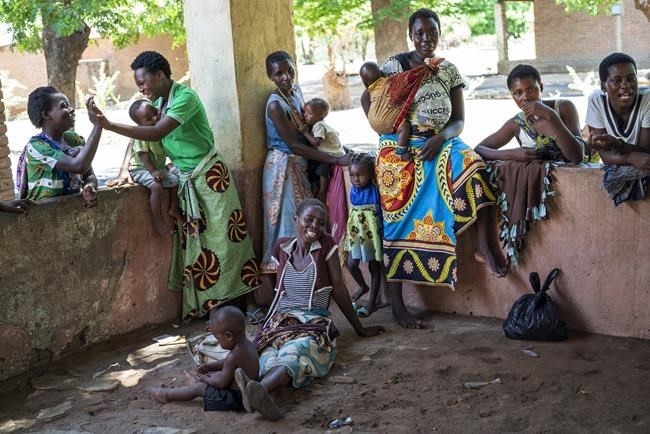
FILE - In this photo taken on Dec. 11, 2019, residents of the Malawi village of Tomali wait to have their young children become test subjects for the world's first vaccine against malaria. The U.N. health agency said Monday, Dec. 6, 2021, that the global response to the longtime threat of malaria has taken a hit as the coronavirus pandemic disrupted health services in many countries, leading to 47,000 more deaths worldwide last year – as questions remain on the possible fallout this year. The World Health Organization, in the latest edition of its World Malaria Report, cited a total of 241 million cases of malaria in 2020, up 14 million from the year before, and 627,000 deaths – an increase of 69,000.(AP Photo/Jerome Delay)

Sub-Saharan Africa accounted, roughly, for at least 95% of all malaria cases and deaths in 2020, the agency said.

The figures for last year could have been much worse though, with WHO saying its original projection anticipated a possible doubling of malaria-related deaths in 2020, and many countries sought to ramp up their programs to fight malaria.

“The first message, in many ways, is a good news message: Due or thanks to the strenuous efforts of malaria-endemic countries — partners and others — I think we can claim that the world has succeeded in averting the worst-case scenario of malaria deaths that we’d contemplated as a likely or possible scenario a year ago,” Dr. Pedro Alonso, director of WHO’s Global Malaria Program, told reporters.

The “doomsday scenario has not materialized,” he added.

Over the last 15 years, a dozen countries — including China and El Salvador this year — have joined the ranks of countries that WHO has classified as malaria-free.

But it cautioned that progress against malaria has leveled off in recent years, and two dozen countries have tallied increases in deaths related to malaria since 2015, the baseline year for WHO’s malaria strategy.

In the 11 hardest-hit countries, annual cases of malaria grew by 13 million to 163 million between 2015 and 2020, and deaths rose more than 54,000 to nearly 445,000 annually as of last year, WHO said.

Overall, though, the agency pointed to successes over the last generation. A revised methodology in tallying the deaths from mortality, said to be more precise, found that more than 10 million malaria deaths have been averted since the year 2000, Alonso said.

But in recent years, “we are not on a trajectory to success,” he added, cautioning that it’s hard to tell what the impact will be in 2021 and beyond.

“How things will evolve over the coming weeks and months I wouldn’t dare to say at this point,” Alonso said.
Report Error Submit a Tip

More Stories

Tory health critic ‘disappointed’ after being rebuffed by health officials

Carol Sanders 4 minute read Preview

Tory health critic ‘disappointed’ after being rebuffed by health officials

Carol Sanders 4 minute read Yesterday at 11:53 AM CDT

The health critic for the Progressive Conservative party says her ability to get information about the accelerated reopening of Dauphin’s emergency department was stymied by Prairie Mountain Health officials because they refused to meet with her.

“I wanted to meet with PMH staff to discuss the status of the facility and the challenges they’re facing and getting services back online,” Kathleen Cook said Friday.

“I was very disappointed that Prairie Mountain Health declined me that opportunity.”

Cook said she asked for a meeting a few days after the Sept. 7 reopening of a temporary ER at the hospital, that was severely damaged by flooding.

Read
Yesterday at 11:53 AM CDT

Is Trump about to poke Quebec’s political beehive?

Peter McKenna 5 minute read Preview

Is Trump about to poke Quebec’s political beehive?

Peter McKenna 5 minute read Yesterday at 2:00 AM CDT

When was the last time that a U.S. president seriously stirred the hornet’s nest of Quebec politics?

My best recollection is former U.S. president Bill Clinton. During the 1994 Quebec referendum campaign, Clinton made clear that the U.S. wholly endorsed a united and strong federal Canada — as opposed to a dismembered one. He went on to add that an independent Quebec would have no guarantee of joining the North American Free Trade Agreement as a full-fledged member.

Today, we see U.S. President Donald Trump inserting himself — unwittingly or wittingly — into the electoral and sovereignty politics of Quebec. It’s pretty clear that the resurgent Coalition Avenir Québec government is trying to make the Oct. 5 provincial election about anything other than its own governmental record and more about Trump’s economic coercion against Canada. Of course, the Parti Québécois, the odds-on-favourite, wants to make the electoral contest a referendum on the CAQ and its party leader, Christine Fréchette.

But what if Trump really wanted to make his presence felt in Quebec’s political life? How much influence could he have on shaping political outcomes in Quebec? How much of an “X factor” could he be?

Read
Yesterday at 2:00 AM CDT

Fallis’s comic thriller infiltrates book club

Ben Sigurdson 3 minute read Preview

Fallis’s comic thriller infiltrates book club

Ben Sigurdson 3 minute read Yesterday at 6:00 AM CDT

The Free Press Book Club and McNally Robinson Booksellers are pleased to welcome Toronto author Terry Fallis to the next virtual meeting on Tuesday, September 29 at 7 p.m. to read from and discuss his novel The Marionette.

Fallis, a former lawyer, bureaucrat and political consultant, is the author of 10 bestselling novels and the two-time winner of the Stephen Leacock Medal for Humour (in 2015 for No Relation and in 2008 for The Best Laid Plans, which also won CBC’s Canada Reads in 2011).

His 11th novel, An End In Itself, will be published in November by McClelland & Stewart, who also published The Marionette in October 2025 (and which was also longlisted for the Leacock medal).

The Marionette follows James Norval, bestselling author of a series of thrillers featuring fictional CIA agent Hunter Chase. While in Tajikistan researching his next Hunter Chase novel, Norval is detained by local officials and subsequently freed and ferried away by the Canadian Security Intelligence Service (CSIS).

Read
Yesterday at 6:00 AM CDT

Puzzles Palace

1 minute read Monday, Jul. 27, 2026

To solve our puzzles, please subscribe with this special offer: |

Contact Us

6 minute read Monday, Jul. 27, 2026

Contact UsJUMP: Editorial

Delivery

Promotions

Advertising |Photo Reprints

Privacy Inquiries

Newsmedia Council

By TelephoneIf the number you need is not listed below, call the Winnipeg Free Press main switchboard, at 204-697-7000, it's open Monday to Friday 8 a.m. to 4 p.m. All numbers are area code204 unless otherwise noted.

E-Mailfpcirc@freepress.mb.ca |

Child hospitalized after being hit in Walmart parking lot

1 minute read Yesterday at 3:46 PM CDT

Police are investigating after a child was struck by a vehicle in a Walmart parking lot on Kenaston Boulevard Friday evening.

At 9 p.m. officers from the Winnipeg Police Service traffic division attended to a motor vehicle-pedestrian collision in the 1600 block of Kenaston, police said Saturday.

A school-aged child was taken to hospital in unstable condition, police said, but the child was later upgraded to stable condition.

Police said the child sustained minor injuries and an investigation is ongoing.