

Workplace aggression and the case for calm
With one in five employees experiencing threats, managers must be masters in conflict resolution
Advertisement
Read this article for free:
or
Already have an account? Log in here »
To continue reading, please subscribe:

Digital Subscription
One year of digital access for only $205*
- Enjoy unlimited reading on winnipegfreepress.com
- Read the E-Edition, our digital replica newspaper
- Access News Break, our award-winning app
- Play interactive puzzles
*First annual payment billed as $205.00 + GST for one year. This annual subscription will automatically renew at $233.00 + GST every 52 weeks (10% off the regular annual price of $259.35). Offer available to new and qualified returning subscribers only. Cancel any time.
To continue reading, please subscribe:
Add Free Press access to your Brandon Sun subscription for only an additional
$1 for the first 4 weeks*
- Enjoy unlimited reading on winnipegfreepress.com
- Read the E-Edition, our digital replica newspaper
- Access News Break, our award-winning app
- Play interactive puzzles
*Your next Brandon Sun subscription payment will increase by $1.00 and you will be charged $17.95 plus GST for four weeks. After four weeks, your payment will increase to $24.95 plus GST every four weeks.
Read unlimited articles for free today:
or
Already have an account? Log in here »
Hey there, time traveller!
This article was published 23/07/2022 (1527 days ago), so information in it may no longer be current.
I was interested to read last week’s Free Press editorial on Premier Heather Stefanson’s Twitter-finger criticism of the city’s police chief and the furor it has caused. Was her interference a political calculation to win votes or was she simply taking up someone else’s cause and promoting their aggression?
While we don’t have a specific answer, her very public interference in a city issue has literally surprised and stumped other key leaders and stakeholders. What was the purpose? Quite frankly, her behaviour could be seen as a form of workplace aggression but one that is being played out at the highest level and in the media.
Yet this level of tension and aggression is also playing out in very ordinary workplaces. In fact, a recent survey by Lifeworks, a global leader in employee well-being services, identified that 20 per cent of Canadians have experienced conflict or aggression, especially when dealing with the public and/or clients. The study also reports that aggression is 60 per cent more likely to happen to managers. While this can be partially explained by COVID-19 stressors over the past two years and/or the desire of many employees to retain their remote work status, new workplace factors such as staff shortages, staff burnout, the demand for higher wages and general recruitment difficulties are all playing a role. Add to that our economic challenges such as the supply chain, inflation and gas prices.
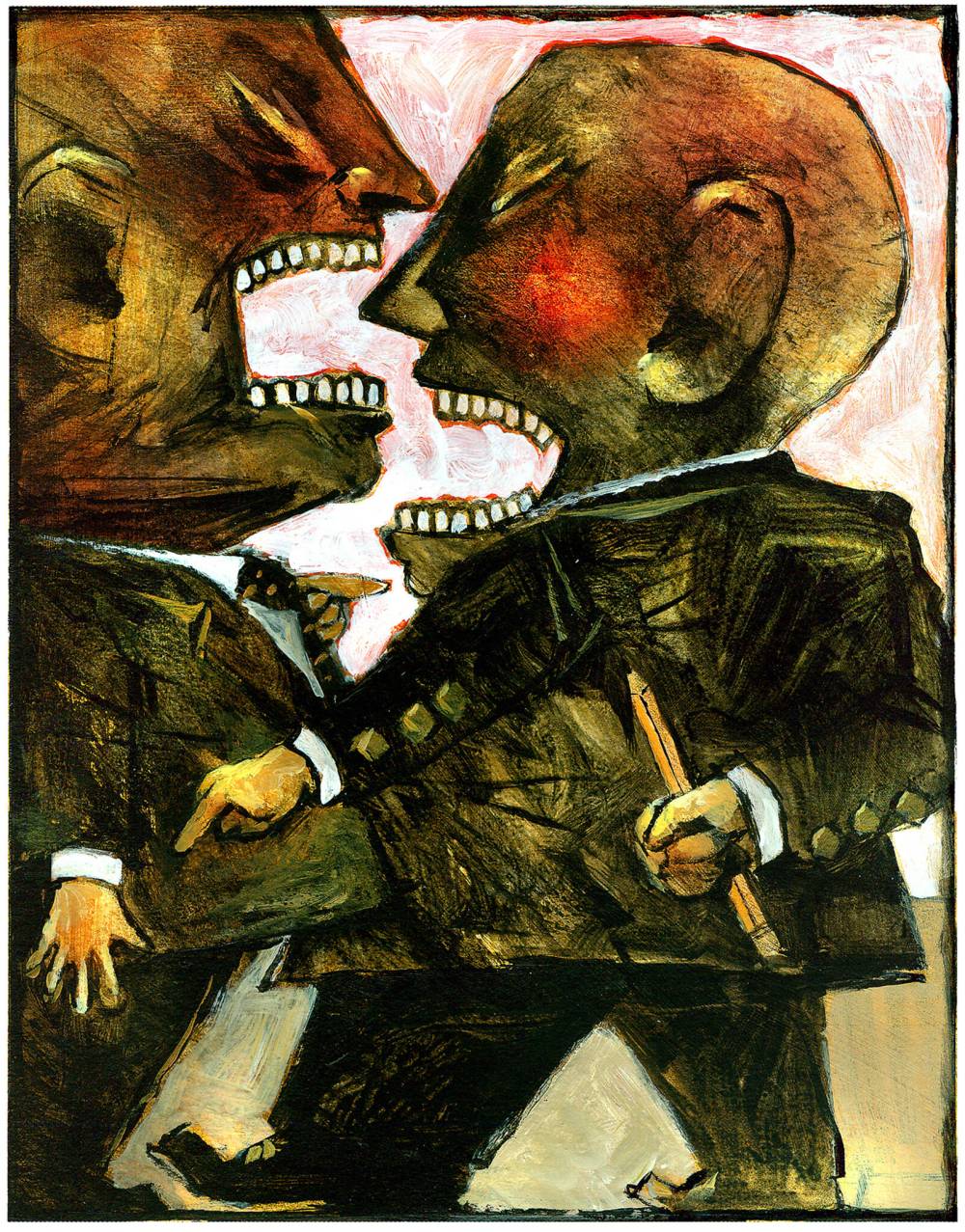
However, let’s stop and take a moment for a definition. Workplace aggression includes obstructionist activities such as trying to stop an individual from doing their job and/or an organization from achieving its goals. In other words, it is a deliberate attempt to create harm. Aggression can be covert where an individual tries to disguise their intentions and/or it can be quite out in the open where the person is actively and directly attempting to do harm and/or create pressure. It includes workplace incivility, abuse and bullying as well as any behaviour that undermines organizational norms and therefore threatens the well-being of an individual, an organization and/or its employees.
From an organizational perspective, workplace aggression usually arises from employee dissatisfaction. This could include a perceived lack of fair treatment, job insecurity, downsizing activities, management disrespect, organizational culture, control over one’s work and/or other operational issues such as pay and contract negotiations.
Workplace aggression can also occur when employee overtime is high because this usually leads to fatigue and frustration. In today’s world, aggression is now often seen through cyber activity where an individual takes their message to the public through their own social networking or political action. In addition, personal emails and text messages could be used to frighten and/or threaten.
As one might expect, there are definite consequences for aggression in the workplace. This could include social, emotional and physical harm to an individual and/or harm to one’s total organization including customers, clients and colleagues. As well, aggression can cause a general decline in morale as well as additional stress and anxiety, and depression amongst employees. Finally, it can cause a general decline in team performance.
Managers in every organization today are familiar with workplace aggression and most organizations have implemented several prevention strategies. These include employee training as well as the development of policies and procedures to deal with the issue when it arises. Yet when aggression does occur, it is important that a manager apply strong conflict-management and communication skills to deal with the situation. These include the following:
Stay calm and take control of your response
Management’s reaction to a conflict can either escalate or de-escalate the intensity of the issue. Keep in mind that aggression can cause you to lose balance. Therefore, try to avoid reacting with a flight/fight response, and/or replying with a spontaneous comment that causes even more trouble. Work through how you feel and control your response by taking a few deep breaths, close your eyes for a few seconds to calm down and regain composure. Sometimes writing down a quick synopsis of the situation will help to see things clearly and rationally.
Assess the situation
Examine the “players” and their business relationship with your organization. Determine the potential risk or harm arising from the behaviour. Assess if there is a history of workplace bullying by the specific individual involved. If able, determine if the individual is disgruntled, overly attached to an issue, is experiencing mental health issues and/or has nothing to lose by his/her behaviour. Finally, try to determine the individual’s personal interests and if there are any political motivations as was suspected the premier’s Twitter-trigger behaviour.
Depersonalize the behaviour
Keep in mind the old saying that some people try to be tall by cutting off the heads of others, and that what others say and do is a projection of their reality not yours. Reflecting on the aggressive individual’s own struggle might help you to become detached from his/her issues. Recognize as well that bullies are actually often cowards.

Review policies and procedures
Refamiliarize yourself with organizational policies and procedures related to aggressive behaviour and your role in their implementation. Determine if the policies are sufficient and/or if adjustments need to be made.

Determine a response
Keep in mind that not all confrontational or aggressive individuals are worth engaging with. In this case, silence might be the best option as the first response. However, if a more formal management response is required, determine who should respond and specifically how to respond. Be sure to apply neutral language so as to reduce any negative emotional responses and to avoid escalating the situation.
Dealing with aggressive people is never easy, especially when there is the potential for damage to an individual and/or an organization’s brand and when the rationale for the behaviour and the appropriate response is not clear. Yet, it is well known that leadership and conflict go hand in hand. In fact, leadership is often called a “full-contact” sport. Frankly, it requires someone to be a master in the art of conflict management, communication and knowing how to pick battles to avoid conflict for the sake of conflict.
Source: One in five workers face increased aggression at work, Jim Wilson, HR Reporter, June 23, 2022; Understanding and preventing workplace aggression, Universalclass.com; 9 keys to handling hostile and confrontational people, Kaja Perina, Psychology Today, Oct. 18, 2015.
Barbara J. Bowes, FCPHR, B.Ed, M.Ed, CCP is a human resource professional, author, radio personality, speaker, executive coach and workshop leader. She can be reached at barb@bowesleadership.com.