
English Language Arts
Please review each article prior to use: grade-level applicability and curricular alignment might not be obvious from the headline alone.

Former MLA details early years, struggles with alcohol and his path forward in earnest new memoir
5 minute read Preview Saturday, Sep. 5, 2026Trump: Ozymandias revisited?
5 minute read Monday, Aug. 31, 2026In 1818, Percy Bysshe Shelley, inspired by the shattered statue of the most powerful Egyptian Pharaoh, Ramses II, wrote the sonnet Ozymandias as a comment on human hubris and impermanence. It provides a fitting epithet for the imperialistic forays of the current United States’ president and would-be autocrat, Donald J. Trump.

Summer Reading Challenge concludes with more musings from young readers
8 minute read Preview Saturday, Aug. 29, 2026
The silent stalker overtaking our sidewalks
5 minute read Preview Saturday, Aug. 29, 2026
Emily Wilson’s ‘Odyssey’ became a cultural flashpoint. Now, she’s retranslating the whole thing
8 minute read Preview Wednesday, Sep. 2, 2026
Manitoba Hydro’s strategy: Deny, deny, deny
5 minute read Preview Friday, Aug. 28, 2026All for one — except for one
5 minute read Friday, Aug. 28, 2026Danielle Smith needs to read the room, knock off her cheesy and destructive political posturing, set aside her grievances and stand with the rest of us to fight this thing.
NDP should explain Shared Health’s value to Manitobans waiting for promised ‘fix’
4 minute read Thursday, Aug. 27, 2026Eight years after Shared Health was created, the revolving door in its executive ranks should prompt a more fundamental question than who gets the next job.

Try these veggie burger options around Winnipeg
7 minute read Preview Wednesday, Aug. 26, 2026
Residents fear mailbox crime sprees
4 minute read Preview Saturday, Aug. 22, 2026Educated people vote
5 minute read Friday, Aug. 21, 2026I add my voice to Erna Buffie’s Think Tank piece “Democracy is a civic election issue” (Aug. 13) by asserting that democracy is a public education issue. Put another way, this fall’s municipal and school board elections are a test of public education — educating democratic citizens who appreciate our democratic inheritance enough to take responsibility for renewing it.
Private governance or public good
5 minute read Friday, Aug. 21, 2026The Manitoba government recently held public forums to discuss regulations for Bill 51, the Public Sector Artificial Intelligence and Cybersecurity Governance Act. I was able to participate in the meeting in Brandon and there was also a session in Winnipeg.
I was a bit fired up, ready to rail about data centres and phone terms and conditions and generally give it to big tech. The discussion, however, was focused on what the public sector responses should be regarding cybersecurity, data and privacy protections, and AI usage in government.
With all the recent attention on social media bans, the harms of AI, misinformation and the like, I was somewhat disappointed that these would not be tackled directly in this meeting. Those issues may be discussed at future forums.
At this event, as focus groups developed responses, the discussion between private companies and public governance kept getting mixed in, pointing out the reliance of government services on private companies in running their digital operations. As government operations become more dependent on digital infrastructure and towards AI agency and control, rethinking how technology is implemented may be crucial to our democracy.

Truckload of squid spills into the street in Rhode Island, creating a smelly mess in the summer heat
2 minute read Preview Friday, Sep. 11, 2026The common abuse of ‘common sense’
5 minute read Wednesday, Aug. 19, 2026If you spend any amount of time having deep conversations on sensitive subject matters, you will undoubtedly encounter patterns of thought and speech peppered into the discourse as if certain people were helpless but to utter them.
Perhaps you are trying to get to the heart of a complicated matter and the disagreement with your conversational partner starts to get a little heated. Often somebody will dust off the old diplomatic gem of “let’s agree to disagree” to extinguish further argument.
Or perhaps you are trying to console a grief-stricken person who has gone through a traumatic event. People in such a state will often rail against the state of the universe with powerful philosophical sentiments, demanding to know how such injustice could be permitted. You would not be the first person to misguidedly try to soothe them with something like “everything happens for a reason.” Or, less secularly, “God works in mysterious ways.”
These are known as thought-terminating clichés. Pithy little sayings that sound like folksy wisdom but serve mostly to sever a train of thinking, often because it is either uncomfortable or more complicated than the person is willing to engage. Admittedly, they often come from a good-natured place of keeping the peace, though it could easily be argued that they mostly serve to preserve to comfort or indulge the intellectual laziness of those who speak them.
A grand jeté of climate-change denial
5 minute read Preview Tuesday, Aug. 18, 2026The moral courage of public dissent
5 minute read Tuesday, Aug. 18, 2026As a non-Jewish Canadian, I have watched our public conversation about Israel and Palestine become increasingly polarized. One feature of that debate has particularly caught my attention—not the disagreements themselves, but the moral courage required of Jewish Canadians who publicly dissent from influential voices within their own community.
Ironically, many non-Jewish Canadians who may have little familiarity with Jewish history assume that disagreement is somehow un-Jewish. The opposite is true. Debate has been central to Jewish intellectual life for centuries. The Talmud itself preserves arguments rather than erasing them.
To outsiders, minority communities can easily appear to speak with one voice. In Canada, organizations such as the Centre for Israel and Jewish Affairs (CIJA), Jewish Federations of Canada (UIA) and B’nai Brith are often perceived as representing the Jewish perspective on Israel and antisemitism. They undoubtedly represent many Canadian Jews. But they do not represent them all.
There are also Jewish organizations and individuals — including Independent Jewish Voices Canada, the United Jewish People’s Order, the recently formed Jewish Faculty Network and others — who reject the notion that any single institution or political perspective can define what it means to speak as a Jew in Canada. They frequently offer perspectives that differ from those advanced by many established Jewish organizations about Israel; defend the importance of free expression on university campuses; and argue that criticism of the actions of the Israeli government should not automatically be equated with antisemitism.
Rise of social media reflects rise of self-promotion — to the detriment of genuine storytelling
4 minute read Preview Saturday, Aug. 15, 2026
Human cost of AI bubble outweighs tech’s potential
4 minute read Preview Saturday, Aug. 15, 2026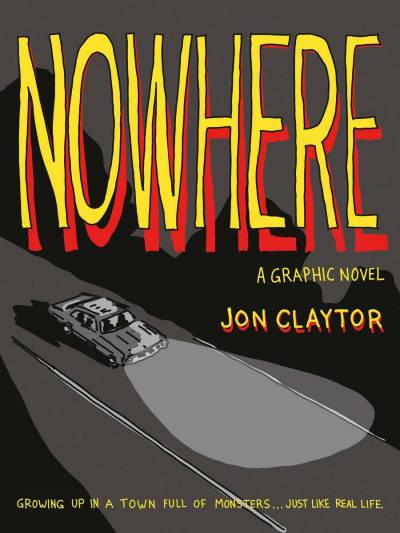
Creepy, poignant graphic novel a small-town coming-of-age horror story
4 minute read Preview Saturday, Aug. 15, 2026
An elegy for the smalls
5 minute read Preview Saturday, Aug. 15, 2026
Revered Broadway rail anchors Winnipeg’s resilient skateboarding scene
11 minute read Preview Friday, Aug. 14, 2026Let’s move forward on disability rights
5 minute read Thursday, Aug. 13, 2026Tyson Sylvester wants to study computer science.
He has the intelligence, the determination, and the ambition to succeed in post-secondary education. Like thousands of young Manitobans graduating from high school, he wants to pursue higher education and build a career.
Instead, he is spending his young adult life fighting the provincial government to simply receive the supports he needs to get there.
Tyson lives with cerebral palsy, is blind and uses a wheelchair. The irony here is that Tyson can’t get government support because he scored too high on an IQ test.
Democracy is a civic election issue
5 minute read Preview Thursday, Aug. 13, 2026Differing goals of religion, politics
5 minute read Thursday, Aug. 13, 2026Kudos to David Driedger for modelling a more appropriate and constructive role for religion in politics than the one that has become commonplace today (Take care of them; there is enough, Think Tank, July 27).
Resisting the temptation to preach, coerce and control, he has chosen to remind, persuade and challenge. It could hardly more different to what we are witnessing everyday to the south of us. I thank him for his humility, courage and sense of responsibility to humanity.
Our recent experiences with religion’s forays into the political realm, both in the U.S. and parts of Canada have done little to endear us to either one. Religious fundamentalism, in its many forms, has wrought untold havoc on governments across the globe, with some of the most toxic iterations being right on our doorsteps — we might even call it a form of domestic terrorism.
In the U.S., Christian nationalism, represented by MAGA, has contaminated government and ordinary lives like a hazardous toxin escaping containment — corroding and poisoning the presidency, the legislature, the court system and law enforcement, and in the process threatening the very relationships which make a civilized society possible. Simply put, the positive ideal of godliness in the American constitution, which emphasized tolerance for, acceptance of and upheld the equal worth of all peoples is in peril.