See Spot… sit WPS has used robot ‘dog’ for law-enforcement just once since $257,000 purchase in 2021, Free Press learns
Read this article for free:
or
Already have an account? Log in here »
To continue reading, please subscribe:

Digital Subscription
One year of digital access for only $205*
- Enjoy unlimited reading on winnipegfreepress.com
- Read the E-Edition, our digital replica newspaper
- Access News Break, our award-winning app
- Play interactive puzzles
*First annual payment billed as $205.00 + GST for one year. This annual subscription will automatically renew at $233.00 + GST every 52 weeks (10% off the regular annual price of $259.35). Offer available to new and qualified returning subscribers only. Cancel any time.
To continue reading, please subscribe:
Add Free Press access to your Brandon Sun subscription for only an additional
$1 for the first 4 weeks*
- Enjoy unlimited reading on winnipegfreepress.com
- Read the E-Edition, our digital replica newspaper
- Access News Break, our award-winning app
- Play interactive puzzles
*Your next Brandon Sun subscription payment will increase by $1.00 and you will be charged $17.95 plus GST for four weeks. After four weeks, your payment will increase to $24.95 plus GST every four weeks.
Read unlimited articles for free today:
or
Already have an account? Log in here »
Hey there, time traveller!
This article was published 13/12/2024 (650 days ago), so information in it may no longer be current.
The Winnipeg Police Service has deployed its controversial robot dog — purchased in 2021 to respond to dangerous incidents involving barricaded and armed suspects — for its intended purpose just once, the Free Press has learned.
The service spent $257,000 to buy the four-legged robot, outfit it with an arm and cameras and cover taxes, shipping and training, police said at the time.
The money came from the province’s civil forfeiture fund, which seizes cash and other assets obtained through alleged criminal activity via the civil courts. It was shipped in February 2022 and ready for service a short time later.
The one time the police drone and tactical units deployed the robot was in September 2023, according to records obtained by the Free Press under freedom-of-information legislation.
Prof. Frank Cormier, who teaches criminology and sociology at the University of Manitoba, said the lack of deployment suggests the device was not worth the cost.
“More than a quarter of a million dollars is a significant amount of money for anything,” he said. “The fact that it came out of the forfeiture fund, it might be seen as being extra money… however, like anything else, that’s a quarter-million dollars that was not spent on something else, that was not available for something that is perhaps tried and true and that we know will have good results.”
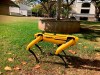
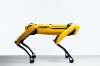
BOSTON DYNAMICS The Winnipeg Police Service bought 'Spot' the robotic dog from Boston Dynamics in 2021.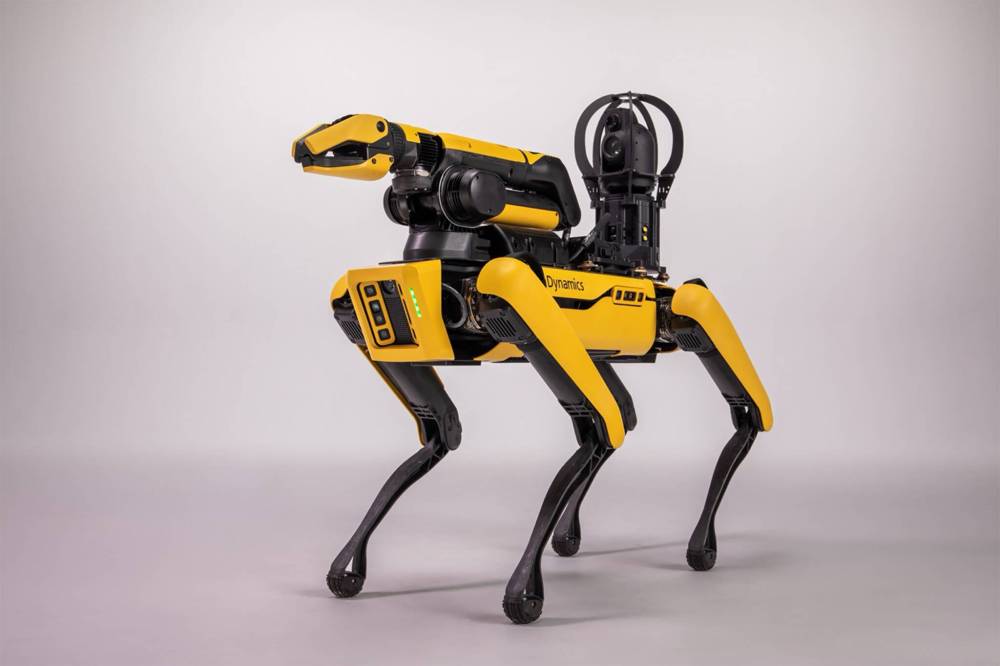
The robotic dog is meant to navigate obstacles and uneven terrain — stepping over clothing on the floor of a home, for example — unlike robots with wheels or tracks that Winnipeg police and other law enforcement have long used. It has the ability to walk up and down stairs, open doorknobs, facilitate a conversation remotely and carry items on a harness.
WPS Supt. Brian Miln, who oversees operational support, defended the purchase, saying it was “absolutely” money well spent.
“At the end of the day, and this is no secret, this tool, this tactic, like many of our tactics, it substitutes having to place one of our officers into a volatile, very dangerous situation where we have armed individuals looking to cause harm,” Miln said.
“If we have a reasonable tactic, tool, ability to replace a human life with something like this — absolutely, that’s a no-brainer for me.”
Boston Dynamics, which manufactures the robots, calls the 32-kilogram device “Spot.”
It has also been called creepy and dystopian and has raised controversy among law enforcement critics who argued it was an example of increasing surveillance of civilians — and militarism in police departments.
“It just doesn’t look good; they’re trying to be more police services than police forces and when you send a mechanized dog, which I think most people find pretty creepy-looking, it’s not really sending that nice message that we’re here to protect and serve,” Cormier said.
“But I’ve also heard stories that they fall down stairs, they don’t work as well as advertised.”
Miln said the fact it has been deployed just the one time should be viewed as a positive.
“I’m not going to get into the tactics and places where Spot would be used and deployed by our tac team, but it’s going to be in situations that present high risk and high danger to our officers, and it’s going to be deployed where there is a very specific set of circumstances that are present,” he said.
“I would call it good news, because those specific circumstances simply don’t present themselves that often. It is a mistake to say, though, that the conclusion that can be drawn from that is it isn’t required.”
JESSICA LEE / FREE PRESS FILES WPS Supt. Brian Miln said the fact it has been deployed just the one time should be viewed as a positive.

The robot has been out and about five other times, the Freedom of Information and Protection of Privacy Act records show: a 2022 incident command training day at the Royal Canadian Air Force base 17 Wing, and four community-relations events, three of which were conducted internally for families of police employees.
Miln said operators of the robot train with it multiple times each month, which isn’t reflected in the records.
The community relations events were a family day for West District station employees in October 2022, a take-your-kid-to-work event in November 2022 at WPS headquarters, a demonstration for parents and kids who are home-schooled in December 2023 and a family day at the East District station in May this year, records show. The robot was also on display at the Winnipeg Police Service half marathon earlier this year, according to YouTube video footage.
Cormier was surprised by the Free Press findings.
“Either there aren’t any more of these (armed-and-barricaded) situations, which I don’t believe to be the case — we know that there have been those kinds of situations — or they discovered that the dog just isn’t useful, it’s not the right tool for the situation. Maybe it takes too long to deploy it from wherever they keep it.”
Miln said there are typically about 100 such incidents in Winnipeg a year, but the service has determined it will use the robot only in very narrow sets of circumstances. He said he could not elaborate further.
“I would love to be able to answer the question in detail because if I did, it would be incredibly apparent as to why it has only been deployed in one situation, but I would be disclosing our tactics if I did that, and I can’t do that,” he said.
“…But you go, ‘Maybe, if they can get it to go in somewhere and it gets shot at instead of a cop,’ but what does it do? The ‘dog’ can’t go in and apprehend a suspect.”–Prof. Frank Cormier
He compared the robot’s purchase to the fire department’s ladder trucks which, while critical, are used infrequently.
“It’s tools that we have to provide to our officers,” he said. “We don’t have an option with this; when we know that there is a reasonable solution, a response to something which greatly enhances officer safety and there is a reasonable tool that can bridge that gap, we have to provide these tools to our members.”
Cormier, however, is unconvinced.
“It’s one of those that sounds questionable, but you go, ‘Maybe, if they can get it to go in somewhere and it gets shot at instead of a cop,’ but what does it do? The ‘dog’ can’t go in and apprehend a suspect,” he said.
“And if you’re looking to negotiate with a suspect, or a barricaded person or an upset person, a robotic dog is probably not the way to go. It’s not going to calm somebody down, I don’t think.”
There has been backlash over police use of the four-legged robot in the United States, where it has been put to use by a many American law enforcement agencies, including the U.S. Secret Service, the Los Angeles Police Department, Massachusetts State Police and the Houston Police Department.
BOSTON DYNAMICS / YOUTUBE The robot has been out at a 2022 incident command training day at the Royal Canadian Air Force base 17 Wing, and at four community-relations events, three of which were conducted internally for families of police employees.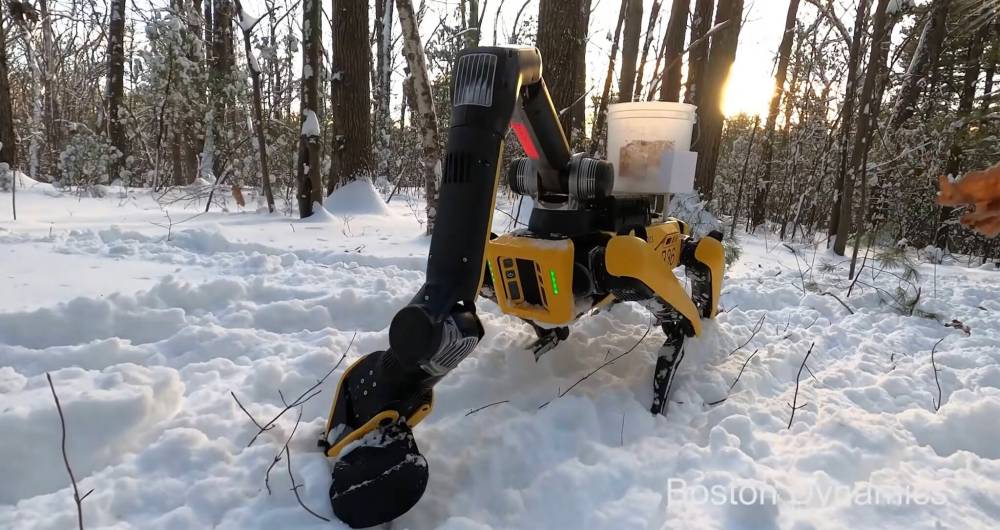
The New York Police Department, after an outcry from law enforcement critics and some politicians amid the height of the police reform and defunding movement that followed the police killing of George Floyd in Minneapolis, cancelled its contract for the device in April 2021.
“It’s creepy, alienating and sends the wrong message to New Yorkers,” a spokesperson for then-mayor Bill de Blasio told ABC News at the time. Current Mayor Eric Adams, a former NYPD captain, brought the robots back in 2023, saying the technology was here “and we cannot be afraid of it.”
But Cormier said it’s hard to ignore the robot dog’s chillingly futuristic vibe.
“They have that feel about them that feels like robots being turned loose on the population,” he said. “There’s that whole dystopian — whether deserved or not — dystopian perception of mechanized devices being used by authorities to control populations.”
Miln stressed the service would never let the robot dog “loose” on the public; it will be used only in situations where officers are being put in harm’s way.
The WPS has been criticized — including as recently as last month — for making big-ticket purchases of expensive technology and surveillance equipment with money provided from the forfeiture fund, which is meant to support both law enforcement agencies and services for victims of crime.
In November, police announced plans to buy a second armoured vehicle with forfeiture cash.
Related Articles
WPS shopping for second armoured vehicle



It’s not clear whether any other Canadian law enforcement agencies have purchased a robot dog of their own, though others in the public sector — including the Ontario Crown corporation that produces wind power and Montreal’s public transit agency — have made use of, or tested, the robots for certain tasks.
In 2021, Miln noted WPS was the first Canadian police department to acquire the four-legged robot.
NDP Justice Minister Matt Wiebe wouldn’t say Friday whether buying the robot was the best use of the forfeiture money, given the funding decision was made under the prior Progressive Conservative government.
But he said he supports the work of the criminal property forfeiture office, calling it a useful tool to go after organized crime. The government recently brought forward an amendment to beef up forfeiture legislation.
“Overall, the program is good,” he said. “In terms of what comes across my desk… I’m willing to listen to law enforcement, work with them and give them the tools they need to keep themselves safe and ultimately keep our communities safe.”
— with files from Katrina Clarke
erik.pindera@freepress.mb.ca

Erik Pindera is a reporter for the Free Press, mostly focusing on crime and justice. The born-and-bred Winnipegger attended Red River College Polytechnic, wrote for the community newspaper in Kenora, Ont. and reported on television and radio in Winnipeg before joining the Free Press in 2020. Read more about Erik.
Every piece of reporting Erik produces is reviewed by an editing team before it is posted online or published in print — part of the Free Press‘s tradition, since 1872, of producing reliable independent journalism. Read more about Free Press’s history and mandate, and learn how our newsroom operates.
Our newsroom depends on a growing audience of readers to power our journalism. If you are not a paid reader, please consider becoming a subscriber.
Our newsroom depends on its audience of readers to power our journalism. Thank you for your support.