Six migrants caught trying to sneak into Manitoba from U.S. Group from multiple countries found with ‘no gloves, no mittens, no nothing’
Read this article for free:
or
Already have an account? Log in here »
To continue reading, please subscribe:

Digital Subscription
One year of digital access for only $205*
- Enjoy unlimited reading on winnipegfreepress.com
- Read the E-Edition, our digital replica newspaper
- Access News Break, our award-winning app
- Play interactive puzzles
*First annual payment billed as $205.00 + GST for one year. This annual subscription will automatically renew at $233.00 + GST every 52 weeks (10% off the regular annual price of $259.35). Offer available to new and qualified returning subscribers only. Cancel any time.
To continue reading, please subscribe:
Add Free Press access to your Brandon Sun subscription for only an additional
$1 for the first 4 weeks*
- Enjoy unlimited reading on winnipegfreepress.com
- Read the E-Edition, our digital replica newspaper
- Access News Break, our award-winning app
- Play interactive puzzles
*Your next Brandon Sun subscription payment will increase by $1.00 and you will be charged $17.95 plus GST for four weeks. After four weeks, your payment will increase to $24.95 plus GST every four weeks.
Read unlimited articles for free today:
or
Already have an account? Log in here »
Hey there, time traveller!
This article was published 22/01/2025 (605 days ago), so information in it may no longer be current.
Six people were apprehended as they tried to sneak into Manitoba from the U.S. last week, amid tightened security at the border in the face of threats by U.S. President Donald Trump to clamp down on illegal migrants and drugs.
An aircraft equipped with thermal imaging technology guided officers on the ground to find the six people who were travelling in frigid temperatures in the dark on Jan. 14, RCMP said Wednesday.
“They were from multiple countries of origin,” said RCMP Assistant Commissioner Lisa Moreland, who said the investigation is ongoing.
Moreland said the aircraft’s ability to respond quickly was instrumental in ensuring the migrants weren’t harmed by the freezing temperatures, which dipped below -20 C.
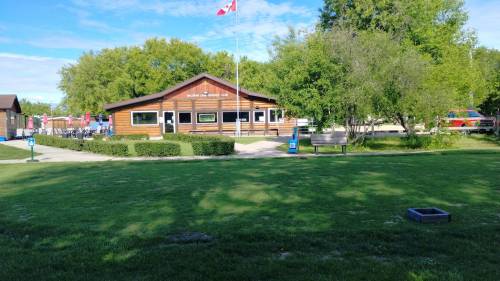
Several ambulances were stationed at the RCMP detachment in Emerson, close to the border, if needed.
“The people who were arrested at the location were not equipped to deal with the weather conditions that night,” she said. “No gloves, no mittens, no nothing.”
RCMP PHOTO The RCMP Federal Policing Northwest Region has increased security by adding regular Black Hawk helicopter flights along the Manitoba border with the United States. The first of these regular flights began on Sunday.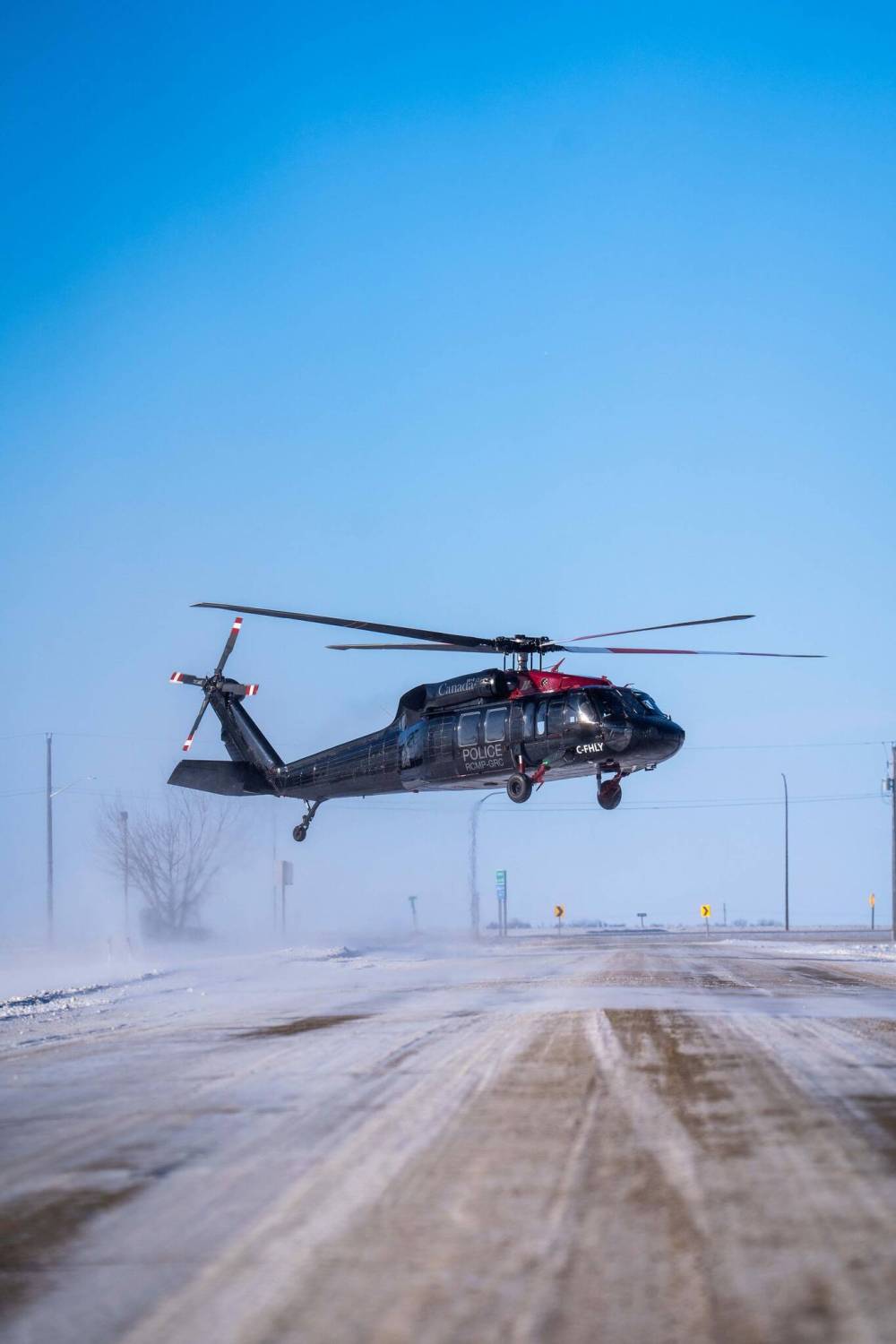
Canada recently bolstered border security by $1.3 billion after Trump, who was president-elect at the time, blamed the country for the influx of migrants and fentanyl into the U.S. He also vowed to impose a 25 per cent tariff on goods from Canada to the U.S.
The border strategy includes aerial surveillance, Black Hawk helicopters and drones.
On Sunday, a Black Hawk helicopter set off on its first flight to patrol the border for illegal migrants and drug smugglers; it’s capable of moving swiftly along Manitoba’s stretch of the border, which is about 450 kilometres long.
Moreland worked in Manitoba during the surge of migrants from the U.S. in 2017, during Trump’s first presidency. She said Mounties here have the necessary resources to address a potential deluge in crossings that could result from Trump’s threatened deportation of illegal migrants in the U.S. The Manitoba government recently announced an unspecified number of conservation officers assigned to the region would be available to respond to border incidents.
David Carlson, reeve of Emerson-Franklin, said there’s a sense in his community that Manitoba is doing its part to stem the flow of illegal migrants and illicit drugs on both sides of the border.
“It’s good that we have a deterrent,” he said. “If it deters any criminal activity, it’s good for the community.”
There’s heightened anxiety about the prospect of a surge in border crossings now that Trump is back in power.
He said the community is relieved by the increase in RCMP presence.
Carlson said no one wants to see a repeat of crossings that proved fatal, such as the 2022 incident in which a family from India died after they flew to Canada and were dropped off near the border with North Dakota.
Jagdishkumar Patel, 39; his wife, Vaishaliben Patel, 37; their 11-year-old daughter Vihangi; and their three-year-old son Dharmik, were found frozen to death in a field about 10 kilometres east of Emerson after trying to sneak into the U.S. as temperatures dipped to -35 C during a mid-January blizzard.
The family was among nearly a dozen Indian nationals who had paid traffickers to get into the U.S.
Reeve David Carlson said the community is relieved by the increase in RCMP presence.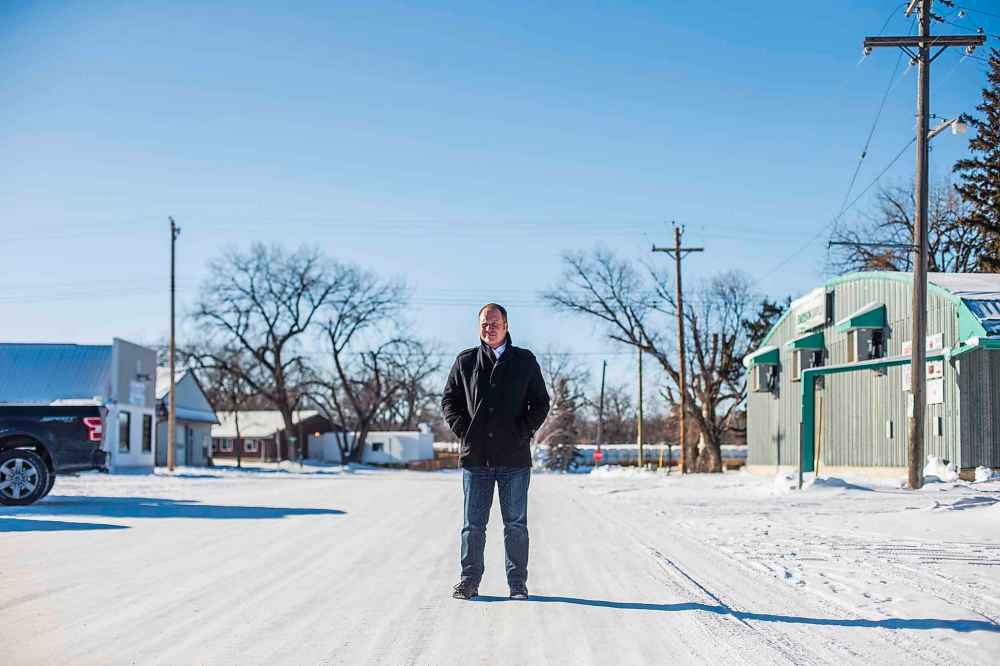
“We don’t want any more tragedies as we’ve had in the past,” Carlson said. “So if it’s a deterrent or these helicopters can intercept and locate somebody quicker, possibly on the ground, we can avoid tragedies in the future.”
Not everyone agrees the beefed-up security measures will stem the flow of illegal crossings.
Lori Wilkinson, a professor in the sociology and criminology department at the University of Manitoba who holds a Canada research chair in migrant futures, said the strategy will only prompt migrants to take bigger risks.
“We’re just going to see more people die,” she said.
“Anything we do to try and stem the flow is actually just going to put people’s lives in danger. It’s not going to stem the flow. People just don’t wake up one day and say, ‘I’m going to move to Canada.’ That’s not how that happens.”
From a human rights perspective, Wilkinson said, nothing will change until the world really starts to care about the issue.
“People won’t move if conditions in their home give them hope, give them a job or feed their kids,” she said.
“We’re just going to see more people die.”–Lori Wilkinson
Wilkinson acknowledged part of this is out of Canada’s hands, pointing to what she called Trump’s absurd claim on Tuesday that “millions” of immigrants are pouring over the Canada-U.S. border.
“He’s lying,” she said. “But the average person doesn’t know that. They don’t eat, breathe and sleep this stuff.”
She said that for every immigrant who comes to Canada, 1.1 jobs are created; and for every refugee the country takes in, that number climbs to 1.9 jobs created, in addition to the jobs filled by refugees.
“It pushes more Canadians into better jobs in most cases because immigrants take lower-level jobs and people in lower-level jobs get moved into higher-level jobs,” Wilkinson said. “It’s a perfect storm, and Canada created some of it, too. We’ve had 40 years to fix our housing crisis, and we’ve done nothing.”
She said the provincial government must shoulder the blame because it is responsible for housing.
Alastair Clarke, an immigration lawyer in Winnipeg, said there’s a hefty amount of anxiety south of the border.
“We’ve got an influx of people in the United States that are seeking to come to Canada.”–Immigration lawyer Alastair Clarke
“We’ve got an influx of people in the United States that are seeking to come to Canada,” Clarke said. “These are both Americans and non-Americans.”
Clarke said he has fielded calls from people in Florida, California and Minnesota who are considering relocating to Canada.
“Generally, I’d say a lot of those calls end in frustration because Canada has cut the numbers and the programs and increased the restrictions,” he said.
Last week, he received a call from a family in Wisconsin who have a transgender child and are afraid of Trump’s presidency.
“They talked to me about coming to Canada and filing a refugee claim,” he said.
In October, Prime Minister Justin Trudeau announced Canada would pause population growth by reducing the number of international students, foreign workers and permanent residents allowed into the country.
In 2025, Ottawa will accept 395,000 new permanent residents, a reduction from 500,000 last year. Public support for immigration has waned owing to concerns about the stress on housing and social services.
Immigration, Refugees and Citizenship Canada announced Monday it plans to cut about 3,300 jobs, or about one-quarter of its workforce, over the next three years.
Wilkinson maintained that cutting immigration won’t solve the housing crisis.
“This war on immigrants we helped create, and it’s around the world, and they just become easy scapegoats that allow politicians to do nothing,” she said.
scott.billeck@freepress.mb.ca
Related Articles
Everything Trump did in the first executive orders and actions of his presidency















Scott Billeck is a general assignment reporter for the Free Press. A Creative Communications graduate from Red River College, Scott has more than a decade’s worth of experience covering hockey, football and global pandemics. He joined the Free Press in 2024. Read more about Scott.
Every piece of reporting Scott produces is reviewed by an editing team before it is posted online or published in print — part of the Free Press‘s tradition, since 1872, of producing reliable independent journalism. Read more about Free Press’s history and mandate, and learn how our newsroom operates.
Our newsroom depends on a growing audience of readers to power our journalism. If you are not a paid reader, please consider becoming a subscriber.
Our newsroom depends on its audience of readers to power our journalism. Thank you for your support.
History
Updated on Wednesday, January 22, 2025 6:42 PM CST: Updates headline, deck