Welcome to the dark side Artemis II crew captures eclipse, Earthrise, far side of moon during lunar flyby

NASA released new photos Tuesday captured by the Artemis II astronauts.

Read this article for free:

or

Already have an account? Log in here »

To continue reading, please subscribe:

Subscribe and receive a limited-edition Free Press branded hat or tote.

Digital Subscription

One year of digital access for only $205*

  • Enjoy unlimited reading on winnipegfreepress.com
  • Read the E-Edition, our digital replica newspaper
  • Access News Break, our award-winning app
  • Play interactive puzzles

*First annual payment billed as $205.00 + GST for one year. This annual subscription will automatically renew at $233.00 + GST every 52 weeks (10% off the regular annual price of $259.35). Offer available to new and qualified returning subscribers only. Cancel any time.

To continue reading, please subscribe:

Add Free Press access to your Brandon Sun subscription for only an additional

$1 for the first 4 weeks*

  • Enjoy unlimited reading on winnipegfreepress.com
  • Read the E-Edition, our digital replica newspaper
  • Access News Break, our award-winning app
  • Play interactive puzzles
Start now

*Your next Brandon Sun subscription payment will increase by $1.00 and you will be charged $17.95 plus GST for four weeks. After four weeks, your payment will increase to $24.95 plus GST every four weeks.

NASA released new photos Tuesday captured by the Artemis II astronauts.

Artemis II’s lunar fly-around and intense observation period lasted seven hours.

A total solar eclipse greeted the three Americans and one Canadian as the moon temporarily blocked the sun from their perspective.
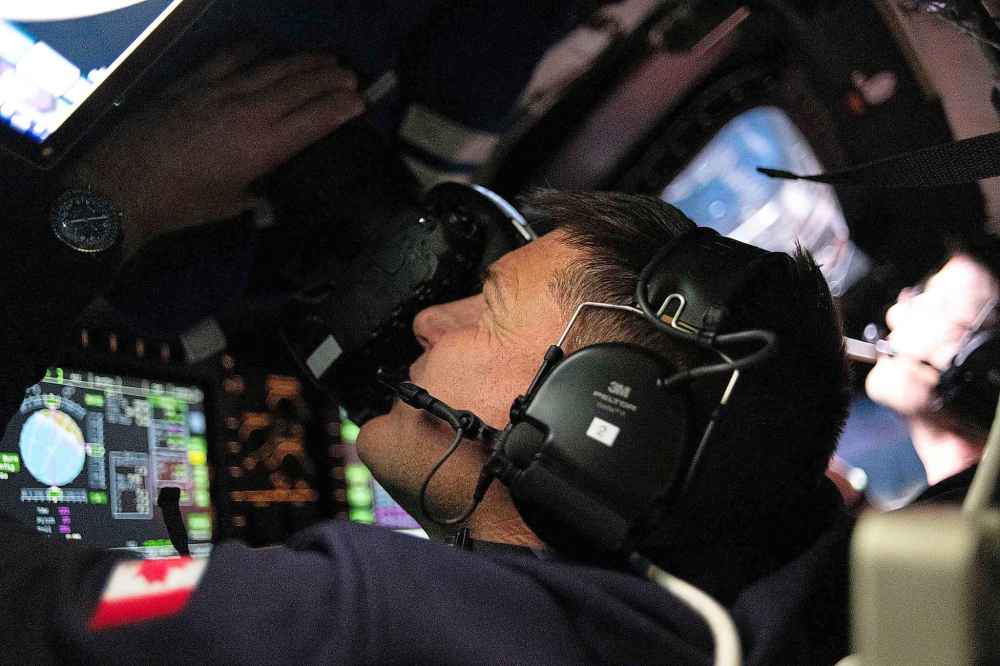
Canadian astronaut Jeremy Hansen takes images through the Orion spacecraft window early in teh Artemis II lunar flyby. (NASA)

Venturing as close as 4,067 miles (6,545 kilometers) to the gray dusty surface, the astronauts zipped through a list of more than two dozen photo targets, using powerful Nikon cameras as well as their iPhones to zoom in on impact craters and other intriguing lunar features.

The U.S.-Canadian crew has now begun their return to Earth. They will splashdown in the Pacific near San Diego on Friday.

With files from The Associated Press
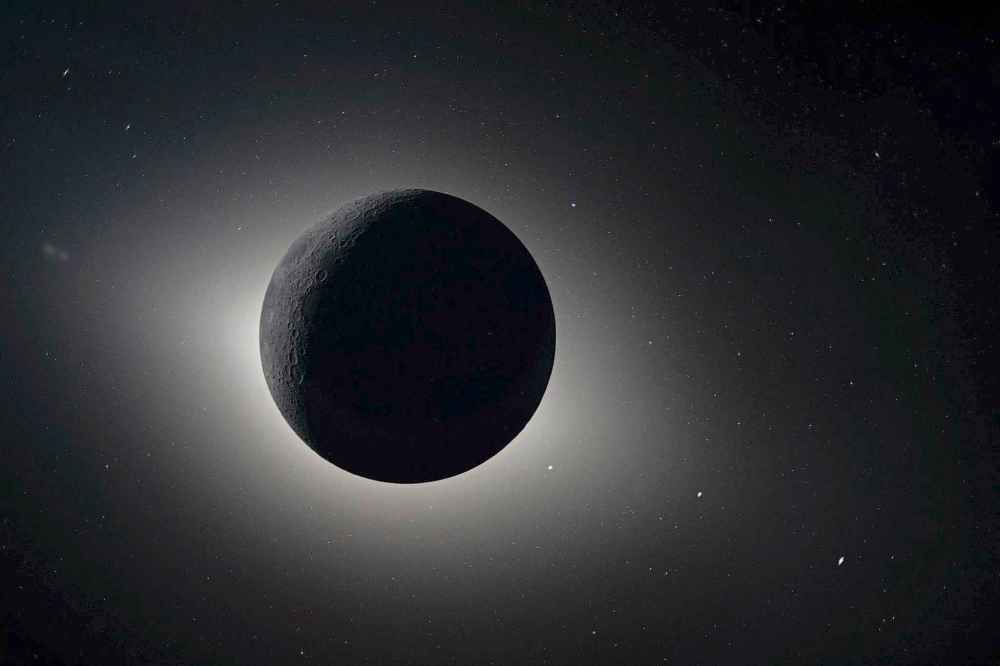


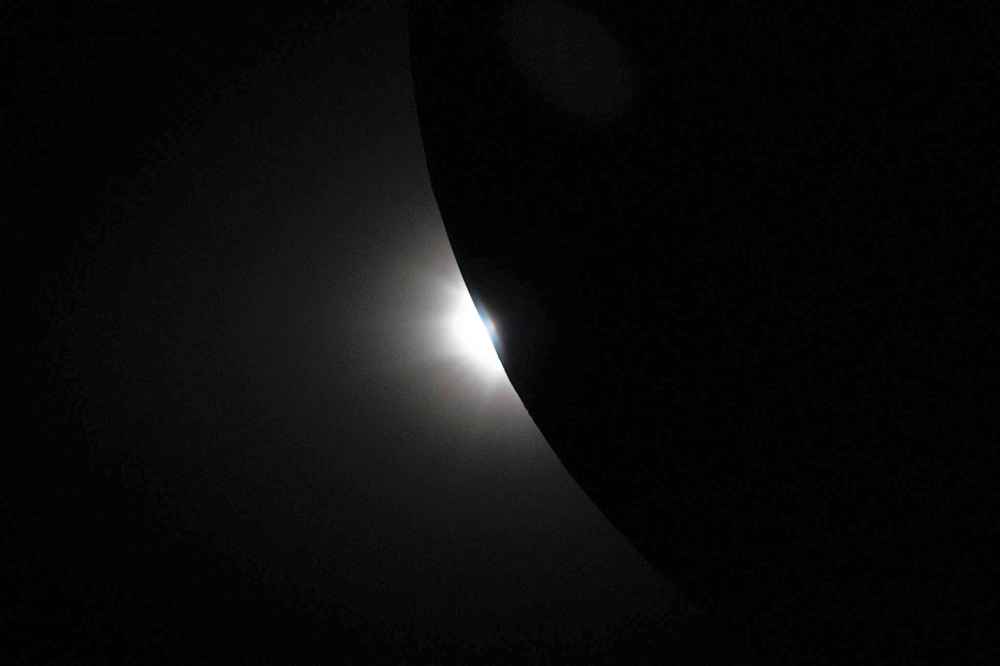
The moon eclipses the sun as seen from the Artemis II mission lunar flyby on Monday, April 6, 2026. (NASA / The Associated Press)


From this deep-space vantage point, the moon appeared large enough to sustain nearly 54 minutes of eclipse totality, far longer than total solar eclipses typically seen from Earth. The bright silver glint on the left edge of the image is the planet Venus. (NASA)
The sun begins to peek out from behind the moon as the eclipse transitions out of totality. (NASA / The Associated Press)
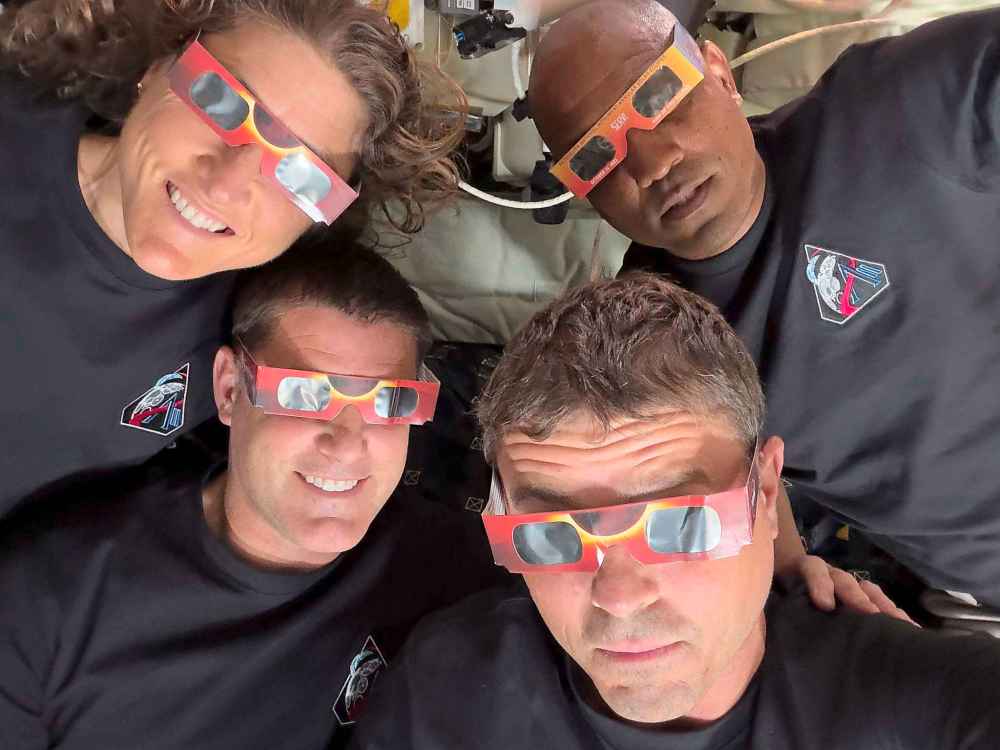
The Artemis II crew pose with eclipse viewers. Counterclockwise from top left: Mission Specialist Christina Koch, Mission Specialist Jeremy Hansen, Commander Reid Wiseman, and Pilot Victor Glover. (NASA / The Associated Press)
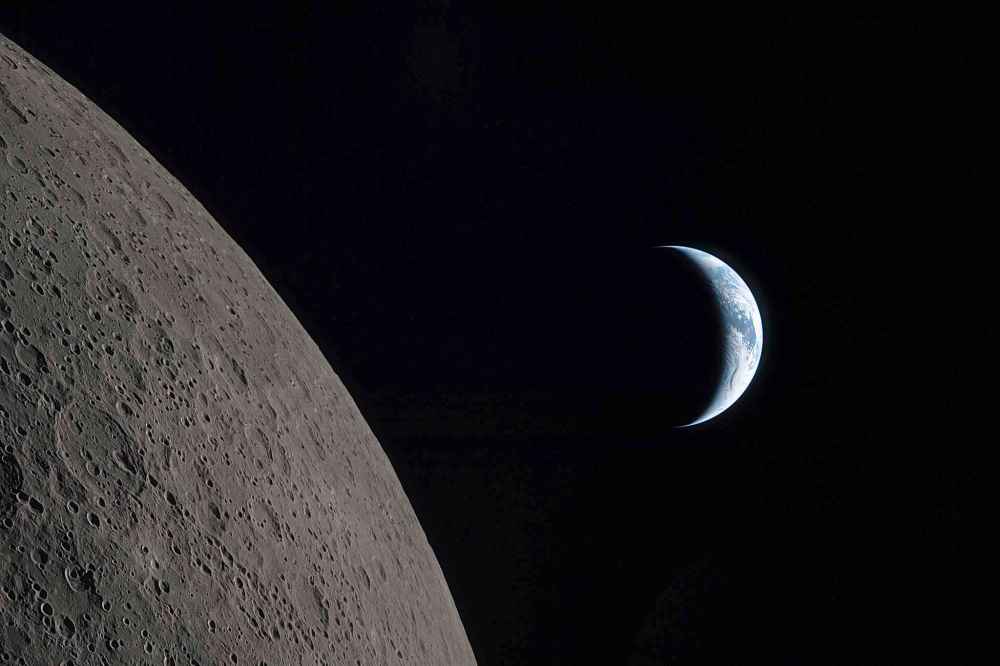
Earth next to the moon before Earthset. (NASA / The Associated Press)
This image was captured at 6:41 p.m. EDT, on April 6, 2026, just three minutes before the Orion spacecraft and its crew went behind the Moon and lost contact with Earth for 40 minutes before emerging on the other side. (NASA)
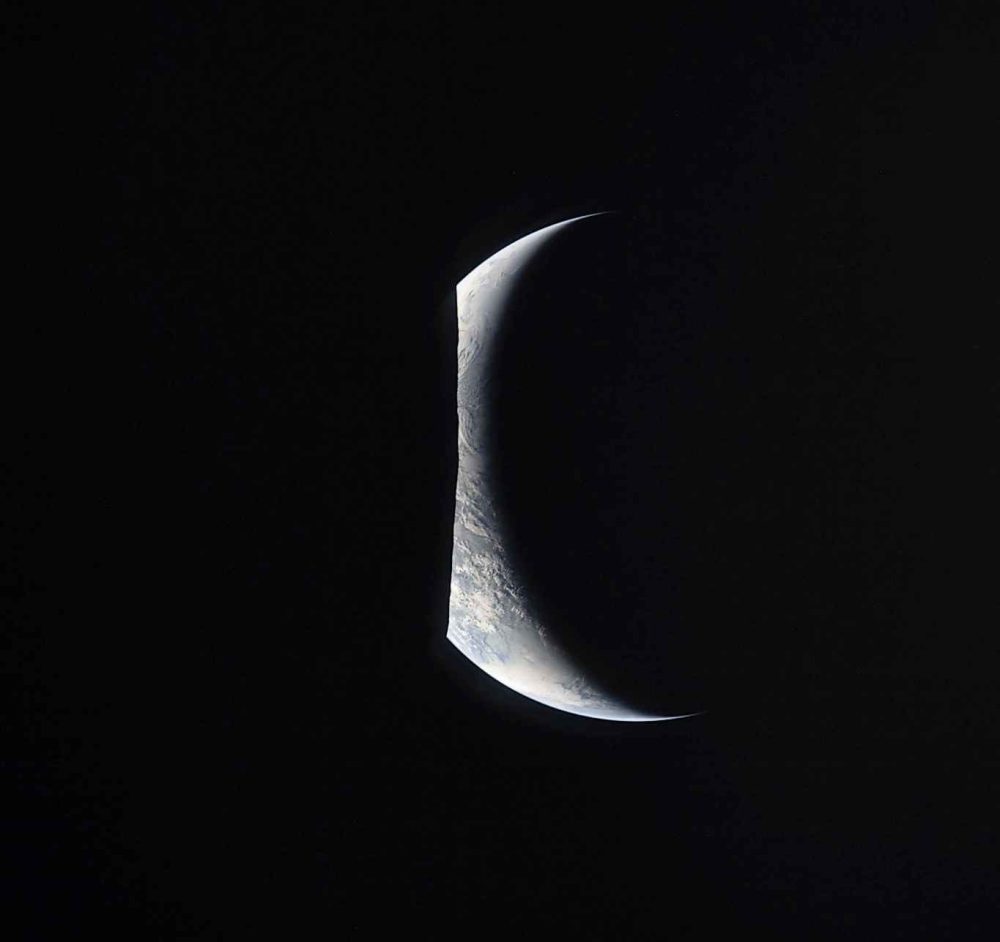
Earthset captured through the Orion spacecraft window. The dark portion of Earth is experiencing nighttime. On Earth’s day side, swirling clouds are visible over Australia and Oceania. (NASA / The Associated Press)
Another view of Earthset. (NASA)
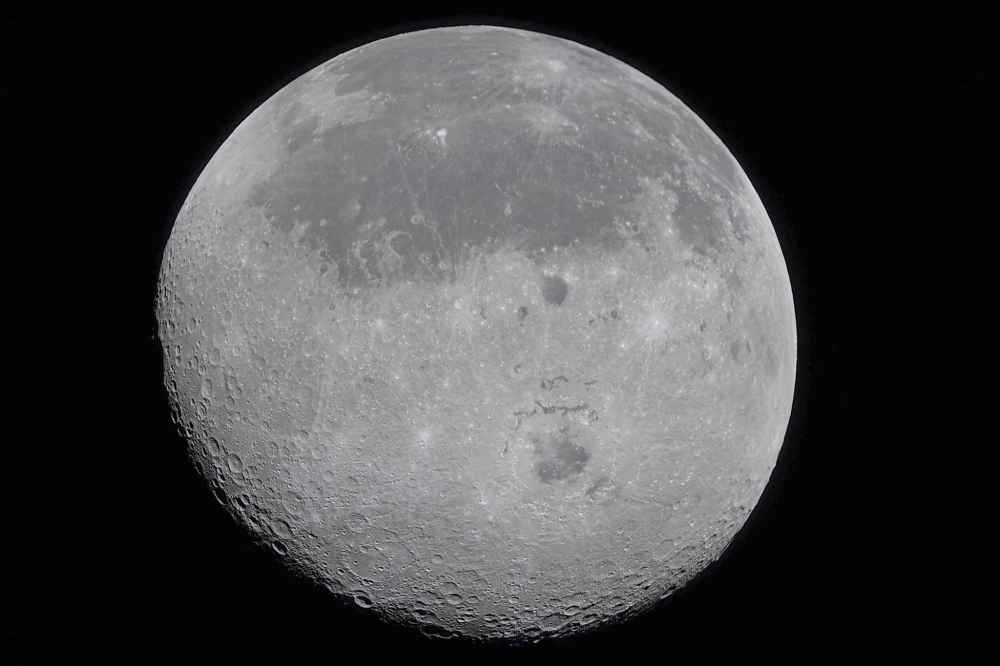
The near side of the moon (the hemisphere we see from Earth) is visible at the top half of the disk, identifiable by the dark splotches that are ancient lava flows. At the lower center is Orientale basin, a nearly 600-mile-wide crater that straddles the Moon’s near and far sides. Everything below the crater is the far side, not visible from Earth. (NASA / The Associated Press)
The Orientale basin has a black patch of ancient lava in the center that punched through the Moon’s crust in an eruption billions of years ago. (NASA)
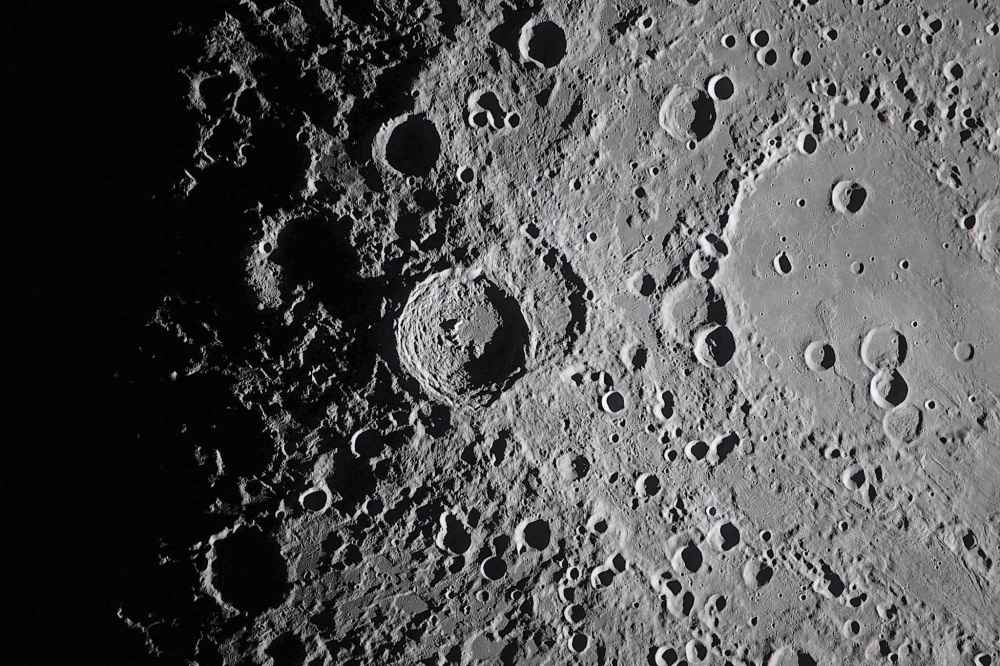
Vavilov Crater on the rim of the older and larger Hertzsprung basin. (NASA / The Associated Press)
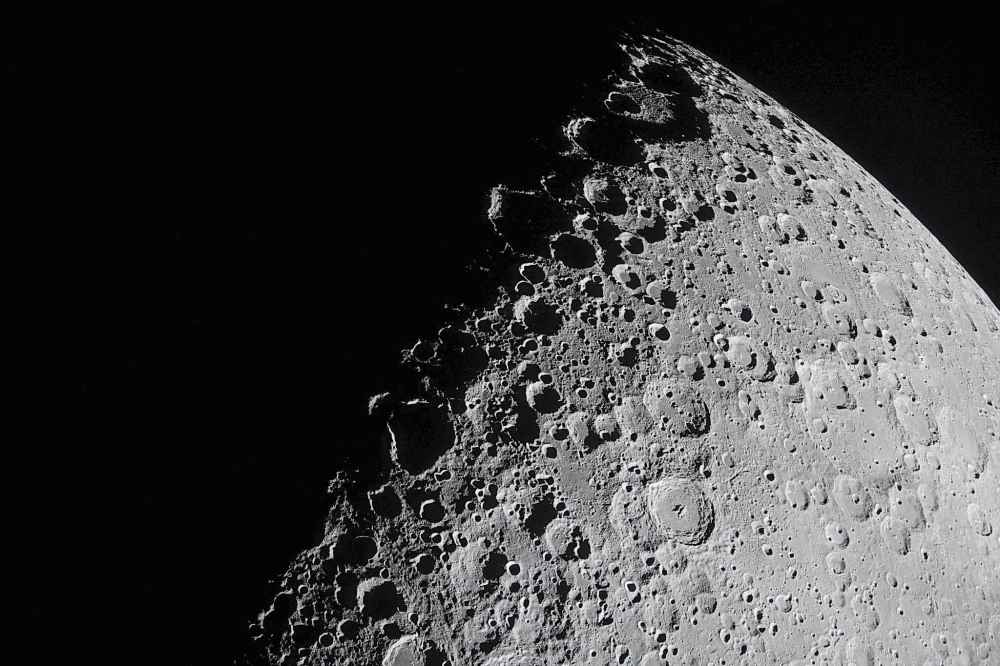
Part of the moon comes into view along the terminator -- the boundary between lunar day and night. (NASA / The Associated Press)
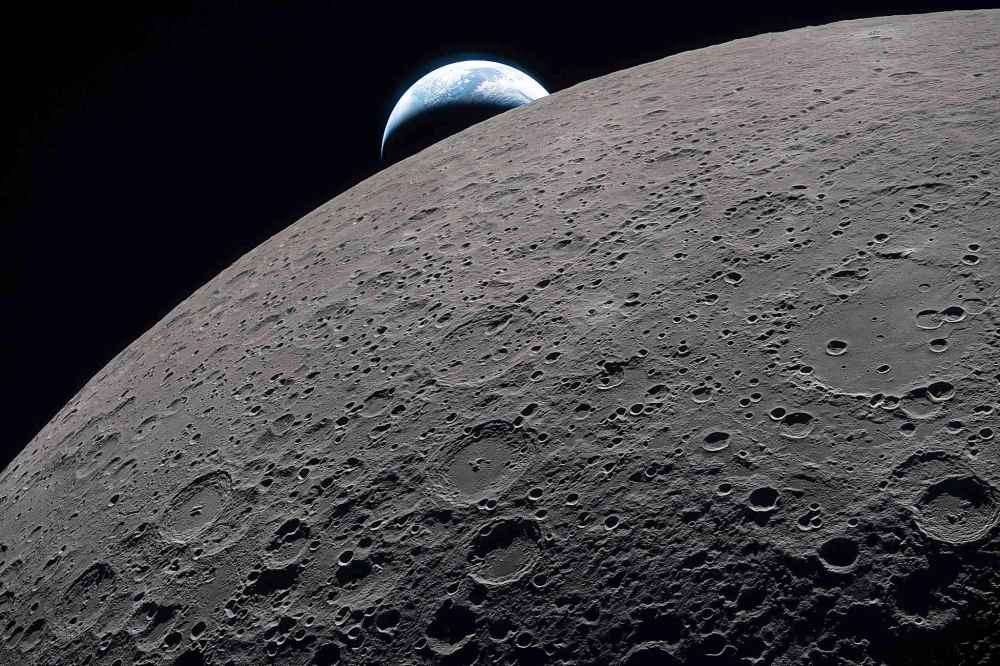
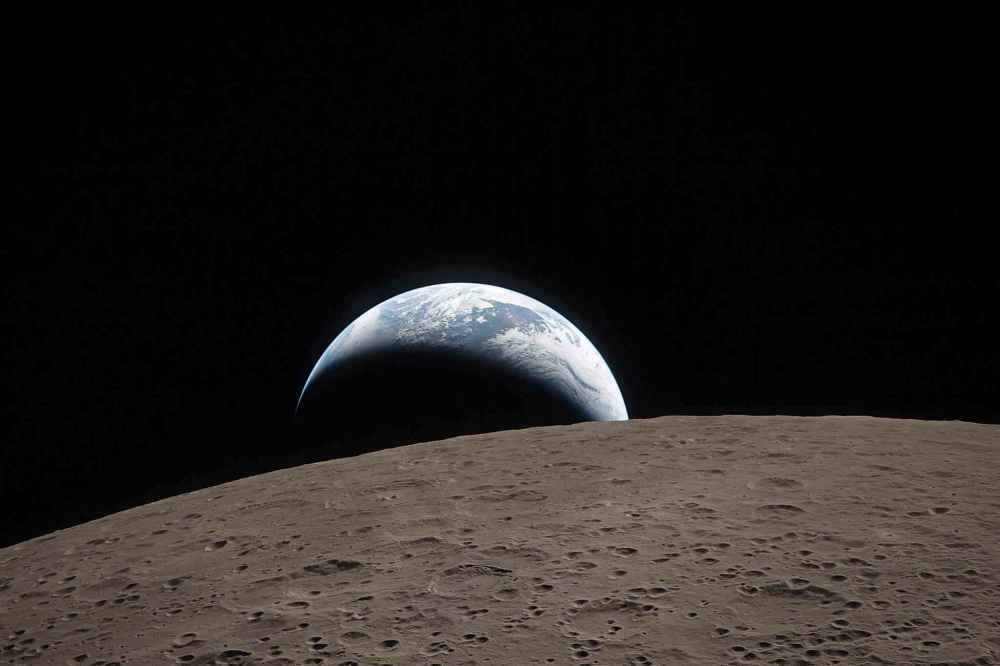
Earthrise captured through the Orion spacecraft window at 7:22 p.m. ET during the Artemis II crew’s flyby of the moon’s far side.  (NASA)
Earthrise captured through the Orion spacecraft window at 7:22 p.m. ET during the Artemis II crew’s flyby of the moon’s far side. (NASA)
Report Error Submit a Tip

More Stories

Fringe reviews #13: Achievement unlocked, levelling up

Free Press review team 9 minute read Preview

Fringe reviews #13: Achievement unlocked, levelling up

Free Press review team 9 minute read Yesterday at 12:35 PM CDT

Black Fish, East of Berlin, Green Grab, Rowena Riddle, On Tidy Endings, Saving the Station, The Taming of the Shrew, Nat King Cole, Where We Fly From Hospital Beds

Read
Yesterday at 12:35 PM CDT

Fringe reviews #15: Button-mashing mayhem

Free Press review team 10 minute read Preview

Fringe reviews #15: Button-mashing mayhem

Free Press review team 10 minute read Yesterday at 3:36 PM CDT

Babel, Chase Padgett, Dirk Darrow, The Glass Between Us, K-Tel Demon Hunters, Mr. Richard, Penny Ashton, Grant Canyon, Rocky Horror Show, Wisecracks for Weirdos

Read
Yesterday at 3:36 PM CDT

Fringe reviews #12: Game over? Not even close

Free Press review team 8 minute read Preview

Fringe reviews #12: Game over? Not even close

Free Press review team 8 minute read Updated: Yesterday at 9:34 AM CDT

52 STORIES 

Dave Morris

Théâtre Cercle Molière (Venue 3), to July 26

👾👾👾👾 ½

Read
Updated: Yesterday at 9:34 AM CDT

Fringe reviews #7: Quicksave before the next show

Free Press review team 9 minute read Preview

Fringe reviews #7: Quicksave before the next show

Free Press review team 9 minute read Friday, Jul. 17, 2026

50% Nonverbal, Brilliantly Awkward, A Curated Exit, Four Hearts, A Kid Napping, A Life in 60 Minutes, Love is Blank, Lover Girl, Somewhere Up There, Tango After Midnight.

Read
Friday, Jul. 17, 2026

Animal rescue worker reportedly killed in dog attack

Morgan Modjeski 4 minute read Preview

Animal rescue worker reportedly killed in dog attack

Morgan Modjeski 4 minute read Friday, Jul. 17, 2026

Police are investigating after a woman died on the Sandy Bay First Nation, reportedly after being attacked by dogs.

The woman was identified by family as 37-year-old Amanda Nobiss.

“It’s just disbelief,” said Sherri Nobiss, her mother, in a phone call. Her family is devastated by the loss. “You just want to know what has happened.”

She said Amanda was a dedicated animal advocate who was volunteering with K9 Advocacy Manitoba in the community at the time. Amanda, who was from Winnipeg, is pictured with a dog in almost all of her photos on social media.

Read
Friday, Jul. 17, 2026

Outreach centre rife with drug use, needles, but daycare, community members say safety concerns go unheard

Scott Billeck 7 minute read Preview

Outreach centre rife with drug use, needles, but daycare, community members say safety concerns go unheard

Scott Billeck 7 minute read Friday, Jul. 17, 2026

Children at an Osborne Village daycare are routinely exposed to discarded needles, human feces and drug use, prompting growing safety concerns from parents, residents and business owners.

The concerns centre on Augustine Centre at River Avenue and Osborne Street, where SPLASH Child Care shares the building with Oak Table, a drop-in operated by 1JustCity that provides meals, wellness and addiction supports, along with programs that help people build skills, and secure housing and employment.

The daycare looks after 132 children, from just a few months old to age 12.

Lesley Massey, executive director of the daycare, said parents fear for their children’s safety.

Read
Friday, Jul. 17, 2026