Artemis II astronauts return from moon with a splashdown to close out a record-breaking lunar voyage

Advertisement

Advertise with us

HOUSTON (AP) — Artemis II’s astronauts returned from the moon with a dramatic splashdown in the Pacific on Friday to close out humanity’s first lunar voyage in more than a half-century.

Read this article for free:


or

Already have an account? Log in here »

To continue reading, please subscribe:

Subscribe and receive a limited-edition Free Press branded hat or tote.

Digital Subscription

One year of digital access for only $205*

  • Enjoy unlimited reading on winnipegfreepress.com
  • Read the E-Edition, our digital replica newspaper
  • Access News Break, our award-winning app
  • Play interactive puzzles

*First annual payment billed as $205.00 + GST for one year. This annual subscription will automatically renew at $233.00 + GST every 52 weeks (10% off the regular annual price of $259.35). Offer available to new and qualified returning subscribers only. Cancel any time.

To continue reading, please subscribe:

Add Free Press access to your Brandon Sun subscription for only an additional

$1 for the first 4 weeks*

  • Enjoy unlimited reading on winnipegfreepress.com
  • Read the E-Edition, our digital replica newspaper
  • Access News Break, our award-winning app
  • Play interactive puzzles
Start now

*Your next Brandon Sun subscription payment will increase by $1.00 and you will be charged $17.95 plus GST for four weeks. After four weeks, your payment will increase to $24.95 plus GST every four weeks.

HOUSTON (AP) — Artemis II’s astronauts returned from the moon with a dramatic splashdown in the Pacific on Friday to close out humanity’s first lunar voyage in more than a half-century.

It was a triumphant homecoming for the crew of four whose record-breaking lunar flyby revealed not only swaths of the moon’s far side — never seen before by human eyes — but a total solar eclipse.

Commander Reid Wiseman, pilot Victor Glover, Christina Koch and Canada’s Jeremy Hansen hit the atmosphere traveling Mach 33 — or 33 times the speed of sound — a blistering blur not seen since NASA’s Apollo moonshots of the 1960s and 1970s. Their Orion capsule, dubbed Integrity, made the plunge on automatic pilot.

The tension in Mission Control mounted as the capsule became engulfed in red-hot plasma during peak heating and entered a planned communication blackout.

All eyes were on the capsule’s life-protecting heat shield that had to withstand thousands of degrees during reentry. On the spacecraft’s only other test flight — in 2022, with no one on board — the shield’s charred exterior came back looking as pockmarked as the moon.

Like so many others, lead flight director Jeff Radigan anticipated feeling some of that “irrational fear that is human nature,” especially during the six-minute blackout that preceded the opening of the parachutes. The recovery ship USS John P. Murtha awaited the crew’s arrival off the San Diego coast, along with a squadron of military planes and helicopters.

The last time NASA and the Defense Department teamed up for a lunar crew’s reentry was Apollo 17 in 1972. Artemis II was projected to come screaming back at 36,170 feet (11,025 meters) per second — or 24,661 mph (39,668 kph) — just shy of the record before slowing to a 19 mph (30 kph) splashdown.

“A perfect bull’s-eye splashdown,” reported Mission Control’s Rob Navias.
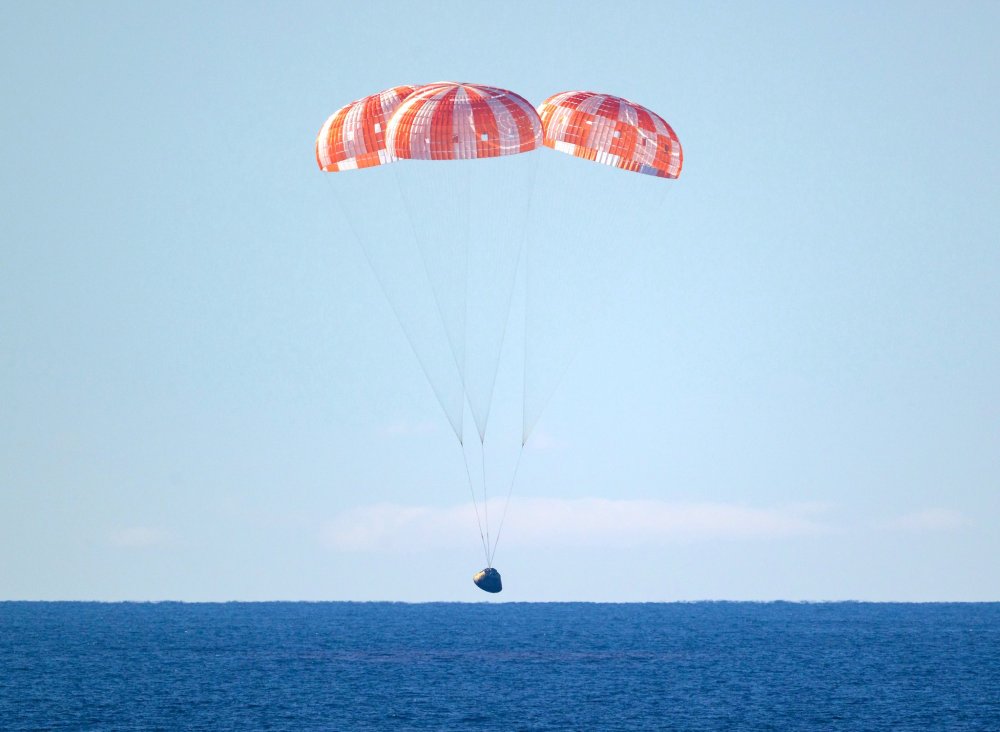
In this photo provided by NASA, the Orion spacecraft with Artemis II crewmembers aboard approaches the surface of the Pacific Ocean for splashdown off the coast of California, Friday, April 10, 2026. (Bill Ingalls/NASA via AP)

Artemis II’s record flyby and views of the moon

Launched from Florida on April 1, the astronauts racked up one win after another as they deftly navigated NASA’s long-awaited lunar comeback, the first major step in establishing a sustainable moon base.

Artemis II didn’t land on the moon or even orbit it. But it broke Apollo 13’s distance record and marked the farthest that humans have ever journeyed from Earth when the crew reached 252,756 miles (406,771 kilometers). Then in the mission’s most heart-tugging scene, the teary astronauts asked permission to name a pair of craters after their moonship and Wiseman’s late wife, Carroll.

During Monday’s record-breaking flyby, they documented scenes of the moon’s far side never seen before by the human eye along with a total solar eclipse. The eclipse, in particular, “just blew all of us away,” Glover said.

Their sense of wonder and love awed everyone, as did their breathtaking pictures of the moon and Earth. The Artemis II crew channeled Apollo 8’s first lunar explorers with Earthset, showing our Blue Marble setting behind the gray moon. It was reminiscent of Apollo 8’s famous Earthrise shot from 1968.
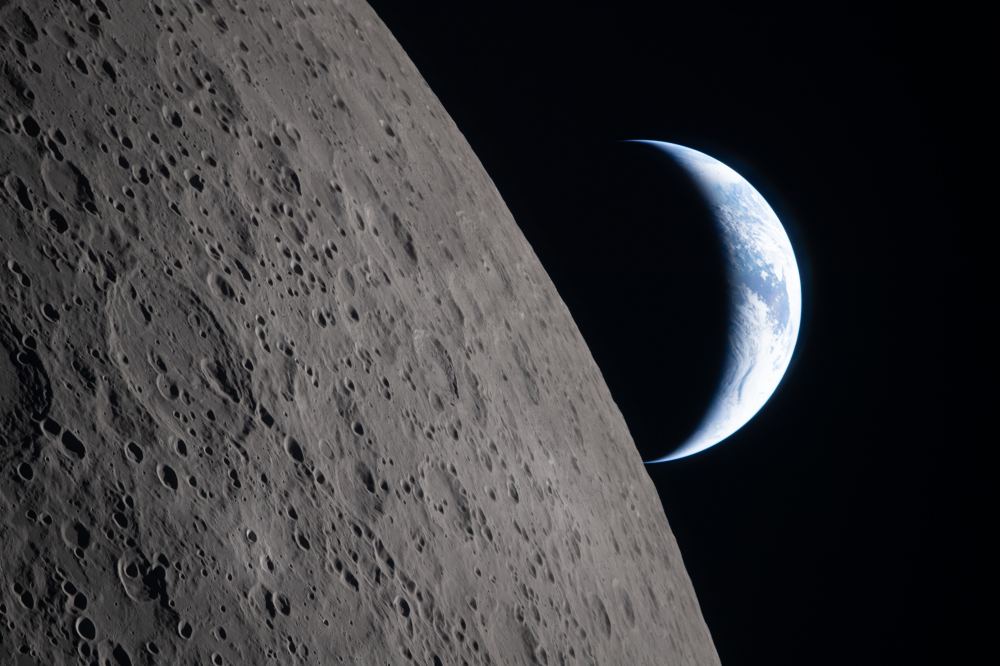
In this image provided by NASA, the Artemis II crew captured this view as the Earth sets behind the Moon during a lunar flyby, Monday, April 6, 2026. NASA via AP)

“It just makes you want to continue to go back,” Radigan said on the eve of splashdown. “It’s the first of many trips and we just need to continue on because there’s so much” more to learn about the moon.

Their moonshot drew global attention as well as star power, earning props from President Donald Trump; Canadian Prime Minister Mark Carney; Britain’s King Charles III; Ryan Gosling, star of the latest space flick “Project Hail Mary”; Scarlett Johansson of the Marvel Cinematic Universe; and even Captain Kirk himself, William Shatner of TV’s original “Star Trek.”

Artemis II was a test flight for future moon missions

Despite its rich scientific yield, the nearly 10-day flight was not without technical issues. Both the capsule’s drinking water and propellant systems were hit with valve problems. In perhaps the most high-profile predicament, the toilet kept malfunctioning, but the astronauts shrugged it all off.

“We can’t explore deeper unless we are doing a few things that are inconvenient,” Koch said, “unless we’re making a few sacrifices, unless we’re taking a few risks, and those things are all worth it.”
This image from video provided by NASA shows the Artemis II crew, from left, Canadian astronaut and mission specialist Jeremy Hansen, Commander Reid Wiseman, mission specialist Christina Koch and pilot Victor Glover as they speak with NASA Mission Control in a video conference while en route to the moon, Thursday, April 2, 2026. (NASA via AP)

Added Hansen: “You do a lot of testing on the ground, but your final test is when you get this hardware to space and it’s a doozy.”

Under the revamped Artemis program, next year’s Artemis III will see astronauts practice docking their capsule with a lunar lander or two in orbit around Earth. Artemis IV will attempt to land a crew of two near the moon’s south pole in 2028.

The Artemis II astronauts’ allegiance was to those future crews, Wiseman said.

“But we really hoped in our soul is that we could for just for a moment have the world pause and remember that this is a beautiful planet and a very special place in our universe, and we should all cherish what we have been gifted,” he said.

___

In this image provided by NASA, the Artemis II crew captured this image of Orion spacecraft pictured from one of the cameras mounted on its solar array wings on Tuesday, April 7, 2026. (NASA via AP)

The Associated Press Health and Science Department receives support from the Howard Hughes Medical Institute’s Department of Science Education and the Robert Wood Johnson Foundation. The AP is solely responsible for all content.

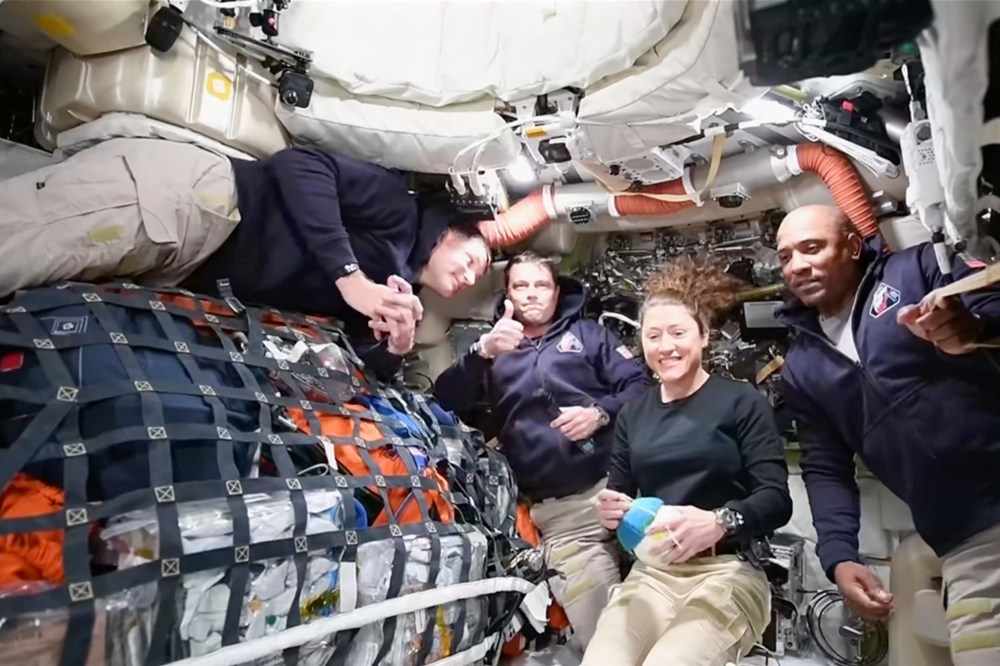
In this image provided by NASA, Artemis II crew members, from left, Victor Glover Jeremy Hansen, Victor Glover, Reid Wiseman and Christina Koch, pause to turn the camera around for a selfie midway through their lunar observation period of the Moon during a lunar flyby, Monday, April 6, 2026. NASA via AP)
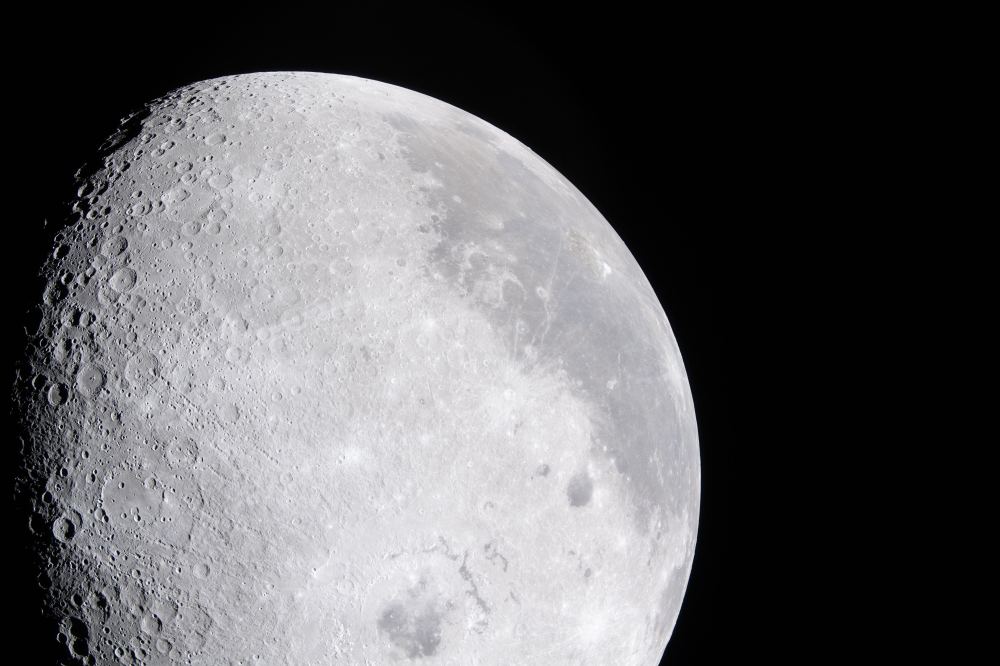
In this image provided by NASA, the Artemis II crew photographed a bright portion of the Moon on April 6, 2026. (NASA via AP)
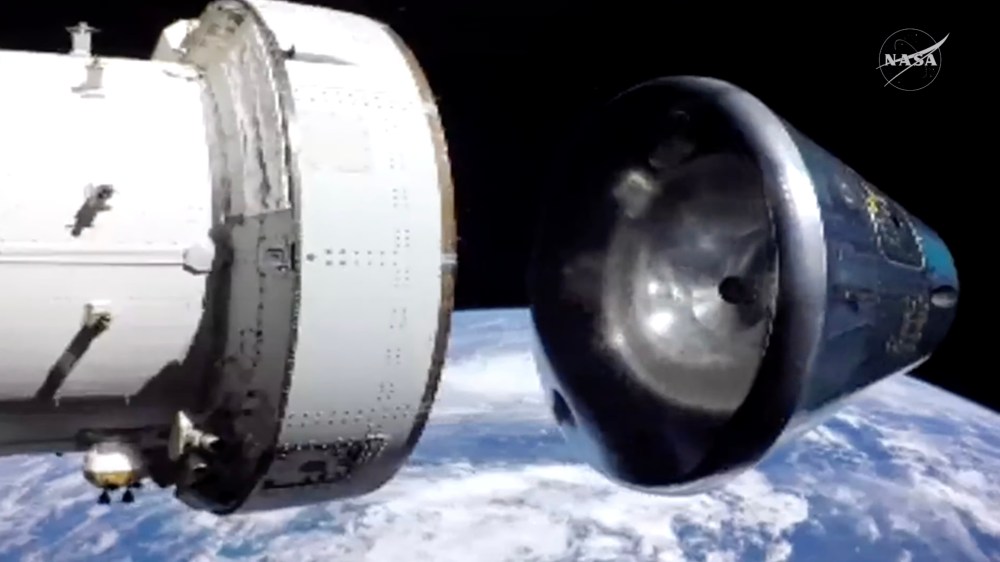
In this image from video provided by NASA, the Artemis II Orion capsule, right, separates from the service module above the Earth in preparation for splash down in the Pacific Ocean. (NASA via AP)
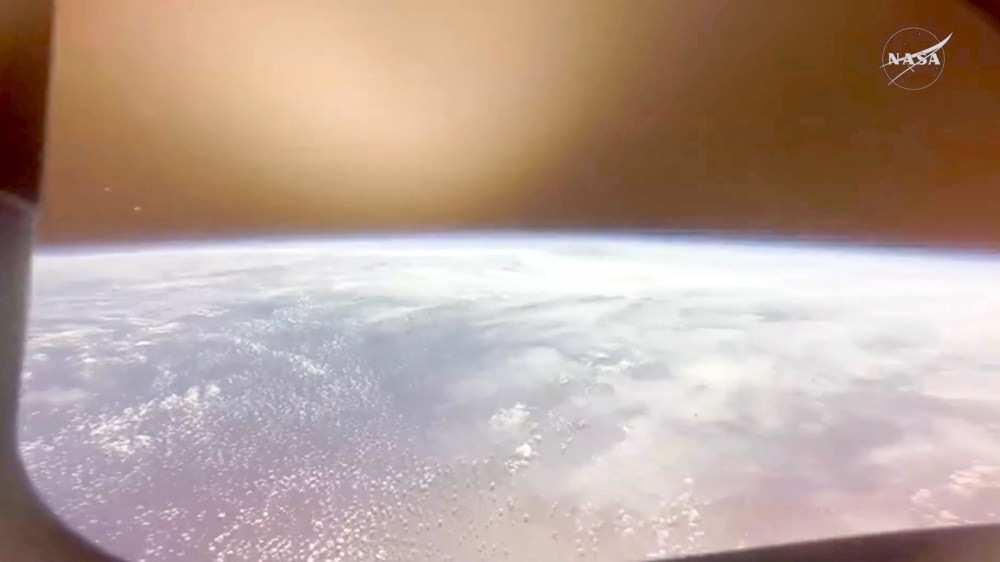
In this image from video provided by NASA, the Earth is seen from the Artemis II Orion capsule as it enters the atmosphere for splashdown in the Pacific Ocean, on Friday, April 10, 2026. (NASA via AP)
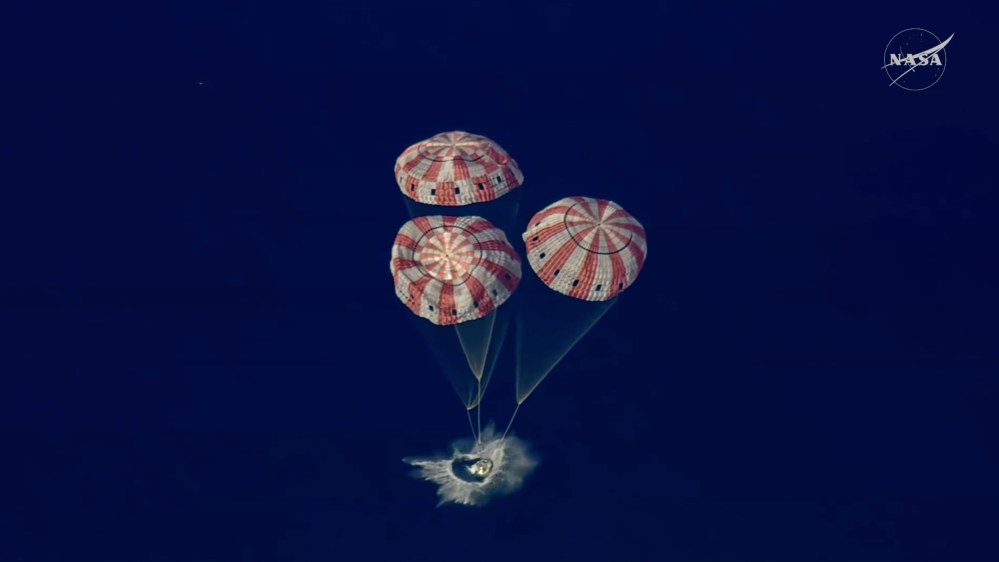
In this image from video provided by NASA, the Artemis II Orion capsule splashes down in the Pacific Ocean, on Friday, April 10, 2026. (NASA via AP)
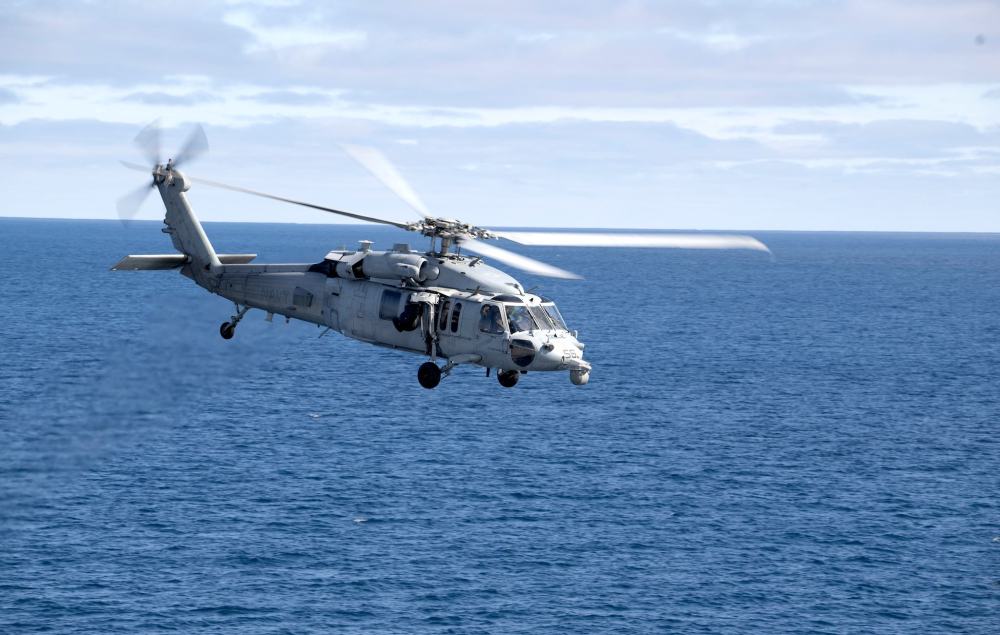
A U.S. Navy MH-60 Seahawk from Helicopter Sea Combat Squadron (HSC) 23 departs from the flight deck of USS John P. Murtha as NASA and U.S. military teams deploy in preparation for the the return of the Artemis II crewmembers to Earth, Friday, April 10, 2026, in the Pacific Ocean off the coast of California. (Joel Kowsky/NASA via AP)
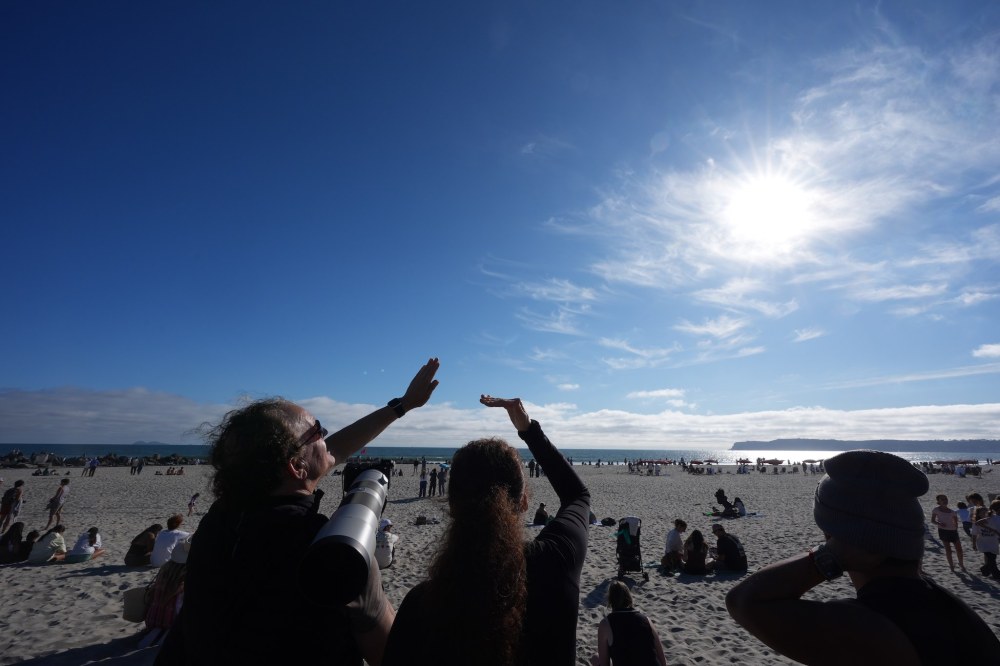
People look up at the sky during a watch party for the return of NASA's Artemis II in Coronado, Calif., Friday, April 10, 2026. (AP Photo/Gregory Bull)
People look on during a watch party for the return of NASA's Artemis II Friday, April 10, 2026, in Coronado, Calif. (AP Photo/Gregory Bull)
History

Updated on Friday, April 10, 2026 8:04 PM CDT: Adds photos

Updated on Friday, April 10, 2026 10:58 PM CDT: Updates video

Report Error Submit a Tip

More Stories

Province announces phys-ed curriculum overhaul

Maggie Macintosh 6 minute read Preview

Province announces phys-ed curriculum overhaul

Maggie Macintosh 6 minute read Thursday, Aug. 27, 2026

Manitoba is overhauling phys-ed class and requiring all high school students to regularly work up a sweat on school grounds to graduate.

Premier Wab Kinew announced on Thursday that a new curriculum is being piloted across the kindergarten to Grade 12 system this fall.

Changes to phys-ed and health education — which apply to all grades, but Grade 11 and 12 students, in particular — will ensure these mandatory subjects are delivered entirely in-person, starting in the 2028-29 school year.

The policy is called “Every Body, Every Day.”

Read
Thursday, Aug. 27, 2026

Police chief pulls plug on security shifts at supermarkets, stores

Chris Kitching 8 minute read Preview

Police chief pulls plug on security shifts at supermarkets, stores

Chris Kitching 8 minute read Wednesday, Aug. 26, 2026

The Winnipeg Police Service is ending its years-long practice of allowing officers to pick up overtime shifts to provide additional security in supermarkets and other stores at retailers’ expense.

Read
Wednesday, Aug. 26, 2026

New businesses start to creep up in former Winnipeg Slurpee shops

Tiago Resko 5 minute read Preview

New businesses start to creep up in former Winnipeg Slurpee shops

Tiago Resko 5 minute read Thursday, Aug. 27, 2026

The remnants of 7-Eleven can still be seen as new businesses move into spaces where Slurpee machines and taquitos once ruled.

As fresh paint dries on several new ventures — such as a pizza place and a convenience store with a name that might make a customer do a double-take — holes across Winnipeg once occupied by the international convenience chain are slowly being filled.

Business at a Domino’s Pizza in Elmwood, formerly a 7-Eleven, has been booming since it opened June 1, the store manager said.

“The issues that 7-Eleven would have had might be different than what we would have. They were dealing with a lot of theft where people can just walk in and out, but Domino’s isn’t set up that way,” said Paul Hemmerling.

Read
Thursday, Aug. 27, 2026

Five exceptional Manitobans reflect on what it means to be Canadian while bracing against Trump’s vitriol and economic upheaval

Aaron Epp 11 minute read Preview

Five exceptional Manitobans reflect on what it means to be Canadian while bracing against Trump’s vitriol and economic upheaval

Aaron Epp 11 minute read Yesterday at 1:35 PM CDT

Canadians have been trying to make sense of a new reality since Canada-United States trade talks broke down on Aug. 21.

The following day, President Donald Trump’s administration imposed 50 per cent tariffs on US$20 billion worth of Canadian exports to the U.S.

The federal government responded in kind a few days later, rolling out tariffs on $27.6 billion worth of imports from the U.S.

The Free Press contacted five Manitobans who have been appointed to the Order of Canada and asked them for their thoughts on the status of Canada-U.S. relations and what is means to be a Canadian today. Their responses have been edited for length and clarity.

Read
Yesterday at 1:35 PM CDT

Late founder of Canad Inns celebrated with honorary street name

Joyanne Pursaga 3 minute read Preview

Late founder of Canad Inns celebrated with honorary street name

Joyanne Pursaga 3 minute read Thursday, Aug. 27, 2026

The founder of Canad Inns will be remembered through an honorary street name, alongside his homegrown hotel chain’s Garden City location.

Read
Thursday, Aug. 27, 2026

‘Not his best work,’ Kinew says of Trump’s order to rename Lake Ontario

Carol Sanders 3 minute read Preview

‘Not his best work,’ Kinew says of Trump’s order to rename Lake Ontario

Carol Sanders 3 minute read Thursday, Aug. 27, 2026

An executive order by U.S. President Donald Trump to rename Lake Ontario as Lake America is “sad,” Premier Wab Kinew says.

Read
Thursday, Aug. 27, 2026