

Technology blooms in Ag education
Advertisement
Read this article for free:
or
Already have an account? Log in here »
To continue reading, please subscribe:
Monthly Digital Subscription
$0 for the first 4 weeks*
- Enjoy unlimited reading on winnipegfreepress.com
- Read the E-Edition, our digital replica newspaper
- Access News Break, our award-winning app
- Play interactive puzzles
*No charge for 4 weeks then price increases to the regular rate of $19.00 plus GST every four weeks. Offer available to new and qualified returning subscribers only. Cancel any time.
Monthly Digital Subscription
$4.75/week*
- Enjoy unlimited reading on winnipegfreepress.com
- Read the E-Edition, our digital replica newspaper
- Access News Break, our award-winning app
- Play interactive puzzles
*Billed as $19 plus GST every four weeks. Cancel any time.
To continue reading, please subscribe:
Add Free Press access to your Brandon Sun subscription for only an additional
$1 for the first 4 weeks*
*Your next subscription payment will increase by $1.00 and you will be charged $16.99 plus GST for four weeks. After four weeks, your payment will increase to $23.99 plus GST every four weeks.
Read unlimited articles for free today:
or
Already have an account? Log in here »
Hey there, time traveller!
This article was published 15/09/2021 (1545 days ago), so information in it may no longer be current.
This article was curated by editors from the Free Press advertising department.
The agriculture field reaps the rewards of new forms of technology that continue to crop up.
Technology has always been part of education and research offered through the Faculty of Agricultural and Food Sciences at the University of Manitoba. However, in recent years, the use of on-farm technology is a topic that’s become more rooted in the Diploma in Agriculture program.
Easton Sellers is a farm management instructor in this program, and he also runs a U-pick fruit farm and orchard in the Interlake. He enjoys learning about new technology and finding ways to implement it on his own farm.

“From developing effective seed varieties to growing crops and caring for animals to processing and preparing, technology is used in some way or another throughout every step of the agricultural process,” he said.
“Each step within this process requires precise decision making and implementation in order to provide the world with nutritious food. Technological tools, both tangible and digital, allow primary producers and the entirety of the industry to accomplish this goal of supporting a growing population.”
This incredible level of creativity and innovation in the agricultural industry is often overlooked by the public as well as by students looking for careers, he added.
“I wouldn’t say the image of a farmer working hard with hand tools is inaccurate, but it misses the magnitude of progress that has been built to complement this classic foundation,” Sellers said.
“It’s certainly an oversimplification of what it means to be a farmer and completely misses the reality of modern-day production and processing.”
Coming from an urban background, Sellers took over Plum Ridge Farm, a retired U-pick fruit farm and orchard, in 2017.
“I learned the practices and processes that the old farmers implemented to grow non-conventional fruit for 40 years as I established strawberry fields and managed the orchards with their guidance,” he explained.
“I’ve definitely adapted some of those practices to fit the modern world’s technological state, with the internet and social media being one of the biggest tools available to direct marketers.”
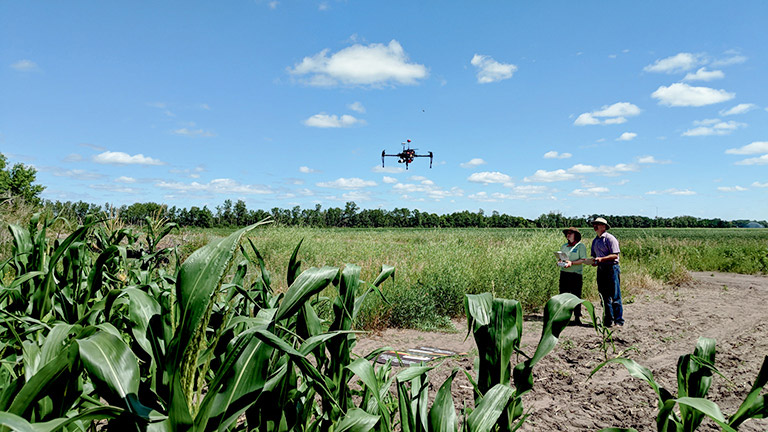
During his studies in the Diploma in Agriculture program at the University of Manitoba, Sellers learned how to build and code an irrigation switch that he could control from his phone to automatically activate or de-activate his irrigation system on a timer.
“These experiential learning opportunities offered by the Faculty of Agricultural and Food Sciences opened the door for me to explore an entire realm of technological possibilities for my farm,” he said.
“This year, I’ll be testing out an in-field weather station with soil moisture and temperature probes in order to improve my ability to react to and prevent damage during the varying spring and fall conditions that are critical for successful fruit production. This precise data collection and analysis is what’s currently empowering farm managers to make impactful decisions.”
In fact, that’s the theme of a new pilot course that Sellers will be teaching this summer, called “Assessing Agricultural Technologies for Farm Management Decision Making.”
“The new summer ag tech course is designed to give our students the chance to connect with leading agricultural tech companies to implement and evaluate the uses of this modern data collection capability and digital analysis platforms on their own farms,” he said.
“Modern equipment has been capable of collecting data for years, but the economic and environmental implications of how producers can use their collected data is what’s driving the current transformation of new agricultural technologies and practices. It’s critical for producers to be involved in these technological developments in order to manage their operations sustainably now and for future generations of farmers to come.”
Looking ahead, Sellers sees a bright future as the industry continues to implement technology to minimize inefficiencies and reduce waste.
“Through a combination of mechanical, robotic and digital tools and platforms,” he said, “I’m confident that we can come together as an industry and develop a system that supports its people and maintains its natural resources effectively.”
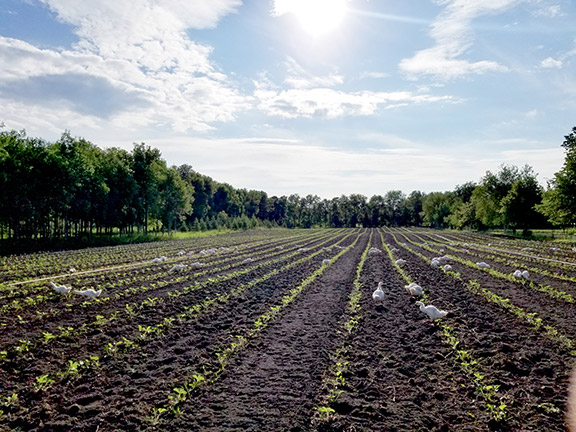
And for students with an affinity for technology, they might discover a satisfying and successful career stemming from agriculture.
“Agriculture is a vast and meaningful industry that is always welcoming of bright students with curious minds and new ideas,” Sellers said.
“There will always be a necessity for innovation and experimentation, so if you’re keen to learn about impressive technologies with beneficial applications, agriculture can be an extremely rewarding field of study and work. There is inspiring work being done on all scales and in all areas within the sector with only an increasing demand for novel contribution.”
In addition to the two-year Diploma in Agriculture program, the University of Manitoba also offers five options for degrees through the same faculty. These degree programs typically span four years and range from agribusiness, agroecology, agriculture, food science, and human nutritional sciences.
More information about all these programs is available at https://umanitoba.ca/agricultural-food-sciences/programs-study.