

Reflecting on the benefits of foil insulation
Advertisement
Read this article for free:
or
Already have an account? Log in here »
To continue reading, please subscribe:

Digital Subscription
One year of digital access for only $205*
- Enjoy unlimited reading on winnipegfreepress.com
- Read the E-Edition, our digital replica newspaper
- Access News Break, our award-winning app
- Play interactive puzzles
*First annual payment billed as $205.00 + GST for one year. This annual subscription will automatically renew at $233.00 + GST every 52 weeks (10% off the regular annual price of $259.35). Offer available to new and qualified returning subscribers only. Cancel any time.
To continue reading, please subscribe:
Add Free Press access to your Brandon Sun subscription for only an additional
$1 for the first 4 weeks*
- Enjoy unlimited reading on winnipegfreepress.com
- Read the E-Edition, our digital replica newspaper
- Access News Break, our award-winning app
- Play interactive puzzles
*Your next Brandon Sun subscription payment will increase by $1.00 and you will be charged $17.95 plus GST for four weeks. After four weeks, your payment will increase to $24.95 plus GST every four weeks.
Read unlimited articles for free today:
or
Already have an account? Log in here »
Hey there, time traveller!
This article was published 08/10/2011 (5472 days ago), so information in it may no longer be current.
What about reflective foil insulation? What are the advantages of reflective insulations? What are conduction, convection and radiation? These are three ways that heat moves from warm to cool regions.
— Conduction: Heat flows through material, i.e. from a stove element to your cooking pots and pans.
— Convection: Heat flow is transferred by movement of air, i.e. your modern convection oven.
— Radiation: Electromagnetic transfer of energy through space, i.e. your microwave oven.
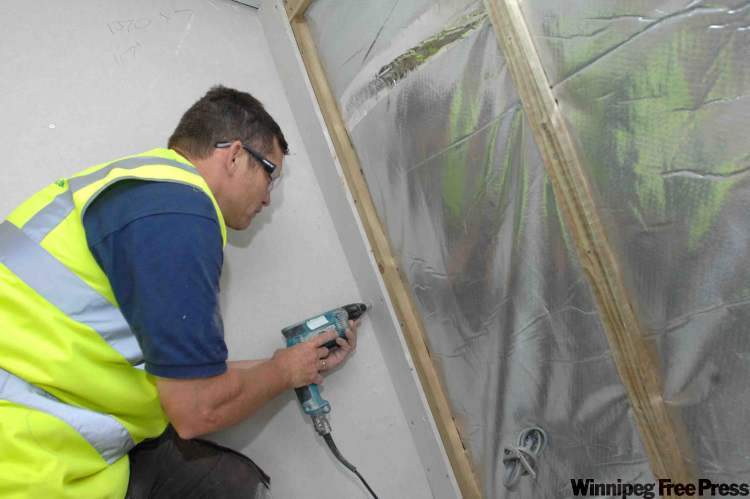
Let’s look at common applications for reflective foil insulation, keeping in mind we want to cut down the conductive heat that may occur in locations we don’t address with common insulation applications.
Roof structure: Under the roof deck plywood, you will have conductive heat being transferred from the roof shingles to the plywood/roof decking material into the attic cavity, causing heat gain in the attic. This is transferred by conduction from the hot insulation batts to your drywall ceiling. Now the ceiling is radiating heat to the living area of your home.
By applying reflective foil insulation to the underside of the roof plywood, you are going to reflect 95 per cent of the radiant heat that is encountered by the heat conduction transfer from the shingles, producing a cooler attic cavity, thus giving you a more comfortable living area below. In addition, this may produce a saving of up to 10 per cent on your air conditioning costs.
Floor applications: Floors suspended over crawl spaces can be very cold in the winter months; batt insulation will help give you comfort, but not as well as a reflective surface or foil insulation suspended under the floor joist system. Warm air seeking out those cold areas below will be interrupted by a shiny surface of foil reflecting the energy back to where you want it, on the floor surface, adding comfort and dollar savings.
Other applications for foil insulation would be cantilevers, retrofit insulation for walls, ceilings, garage, workshops, sunrooms and anywhere radiant heat is being generated by conduction or convection. Products commonly found in your local building centres under the EnergyStarÆ brand, such at Reflective Foil, IE Reflectix are easy for the do-it-yourselfer to install.
— Postmedia News
For more home-improvement information, contact Shell Busey’s HouseSmart Home Services. Go to www.AskShell.com