

Going out to turn up the furnace
Outdoor wood boilers from Manitoba Hutterite colony offer renewable, affordable heating
Advertisement
Read this article for free:
or
Already have an account? Log in here »
To continue reading, please subscribe:

Digital Subscription
One year of digital access for only $205*
- Enjoy unlimited reading on winnipegfreepress.com
- Read the E-Edition, our digital replica newspaper
- Access News Break, our award-winning app
- Play interactive puzzles
*First annual payment billed as $205.00 + GST for one year. This annual subscription will automatically renew at $233.00 + GST every 52 weeks (10% off the regular annual price of $259.35). Offer available to new and qualified returning subscribers only. Cancel any time.
To continue reading, please subscribe:
Add Free Press access to your Brandon Sun subscription for only an additional
$1 for the first 4 weeks*
- Enjoy unlimited reading on winnipegfreepress.com
- Read the E-Edition, our digital replica newspaper
- Access News Break, our award-winning app
- Play interactive puzzles
*Your next Brandon Sun subscription payment will increase by $1.00 and you will be charged $17.95 plus GST for four weeks. After four weeks, your payment will increase to $24.95 plus GST every four weeks.
Read unlimited articles for free today:
or
Already have an account? Log in here »
Hey there, time traveller!
This article was published 24/03/2012 (5305 days ago), so information in it may no longer be current.
As energy prices rise and the full environmental impact of fossil-fuel use comes into focus, more and more Canadians are looking to wood as a sustainable, affordable source of heat.
This makes sense given the landscape that surrounds many of us, and while firewood can be burned in a free-standing stove, a masonry heater or a basement furnace, outdoor wood furnaces are a little-known option that’s worth looking at.
Just before Christmas, I fired up an outdoor furnace I installed at my own place and it addresses the kind of energy issues more and more Canadians are concerned about.
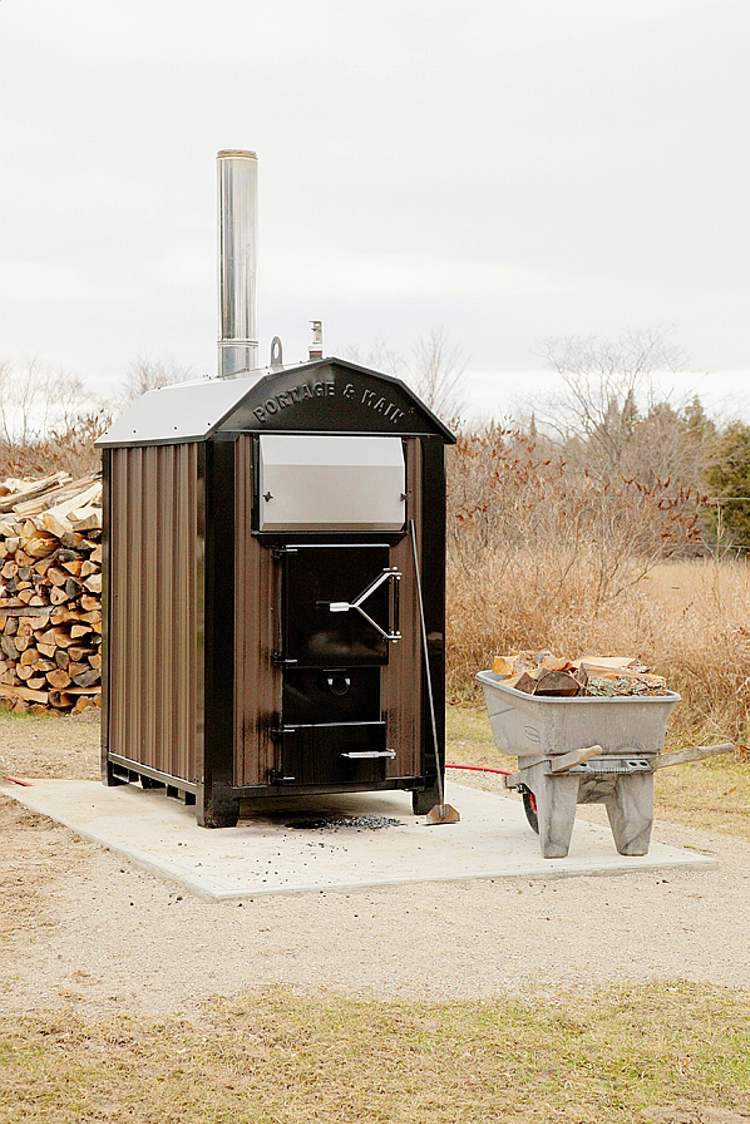
Outdoor wood furnaces look like a metal garden shed with a short chimney. Feed wood into the firebox behind a door on one end and the fire heats water in an insulated tank that’s also inside the structure. Pipe this hot water to a building through insulated underground pipes, extract the heat, then use it for space heating and hot water. This is the outdoor wood furnace proposition in a nutshell and it offers unique advantages.
By moving the fire outside, you sidestep the work of bringing firewood inside, the potential hazards of burning it there and the work of hauling ash back out. Canada is at the leading edge of this technology and, as I’m discovering for myself, this heating option offers a range of benefits.
Outdoor boilers make wood cutting and splitting more efficient, because the work can happen right next to the place where the wood will be burned. The best setups include a wood storage shelter near the furnace, creating an all-weather place to keep wood as dry as possible over winter. Some users even have their wood splitter permanently parked in the shelter. Splitting and stacking happens all in one place, minimizing the chore of handling wood.
The fireboxes on most wood boilers are larger than what you’ll find on even the largest indoor wood stoves. The smallest outdoor models can accommodate wood half a metre long, but many larger boilers burn wood twice that long. Bigger wood makes for much less cutting time and more efficient use of your wood splitter. The bigger your wood, the less time it takes to prepare it.
Heat output is another feature of outdoor wood boilers, and this offers another efficiency. Even the smallest models are capable of heating a full-sized home, with larger units capable of heating multiple buildings as well as heating domestic water, all from a single location. The work of tending one centrally located fire is safer and easier than maintaining two or three fires and makes it practical to handle more of your overall energy needs with wood.
Life so far with my outdoor furnace has been great, in part because of the design of the unit I chose to buy. I opted for a model made by a Canadian company called Portage & Main (portageandmainboilers.com; 800-561-0700). It features a clean-burning design that extracts more heat from a given amount of wood than other models. These units are built in a Hutterite colony in Manitoba, and the fit, finish and design impressed me more than the many other models I considered.
The unit I chose creates a process called wood gasification and the results I’ve seen are pretty surprising. Instead of letting smoke waft upwards through the chimney, the gases are directed downward, through burning coals in the bottom of the firebox and into a secondary chamber. Here the gases burn at close to 1,100 C, looking like a large, blue natural-gas flame. The result is performance that’s clean enough to meet U.S. Environmental Protection Agency Phase 2 standards for wood-burning appliances, some of the toughest in North America.
Outdoor wood furnaces aren’t for everyone, but they do have a growing place in the rural and semi-rural Canadian heating scene. They make direct use of an energy resource that’s abundant and renewable across a large part of Canada, and the fact wood is likely to stay that way may be the best benefit of all.
Postmedia News