

ASK THE INSPECTOR: More is better with drywall screws
Advertisement
Read this article for free:
or
Already have an account? Log in here »
To continue reading, please subscribe:

Digital Subscription
One year of digital access for only $205*
- Enjoy unlimited reading on winnipegfreepress.com
- Read the E-Edition, our digital replica newspaper
- Access News Break, our award-winning app
- Play interactive puzzles
*First annual payment billed as $205.00 + GST for one year. This annual subscription will automatically renew at $233.00 + GST every 52 weeks (10% off the regular annual price of $259.35). Offer available to new and qualified returning subscribers only. Cancel any time.
To continue reading, please subscribe:
Add Free Press access to your Brandon Sun subscription for only an additional
$1 for the first 4 weeks*
- Enjoy unlimited reading on winnipegfreepress.com
- Read the E-Edition, our digital replica newspaper
- Access News Break, our award-winning app
- Play interactive puzzles
*Your next Brandon Sun subscription payment will increase by $1.00 and you will be charged $17.95 plus GST for four weeks. After four weeks, your payment will increase to $24.95 plus GST every four weeks.
Read unlimited articles for free today:
or
Already have an account? Log in here »
Hey there, time traveller!
This article was published 22/03/2014 (4586 days ago), so information in it may no longer be current.
QUESTION: I am helping my niece finish her basement. The outside walls are Logix ICF forms. The inside walls are floating two by fours, 24 inches on centre. I am getting many different opinions on how many screws to use to fasten the drywall sheets. We are using eight-foot sheets vertically. I am planning on fastening screws every 16 inches, and more on the edges.
Some people say that is plenty of screws, some say use more. Could I please have your opinion on this, and is there a minimum amount of screws per sheet required?
Thank you, Marcel Girardin
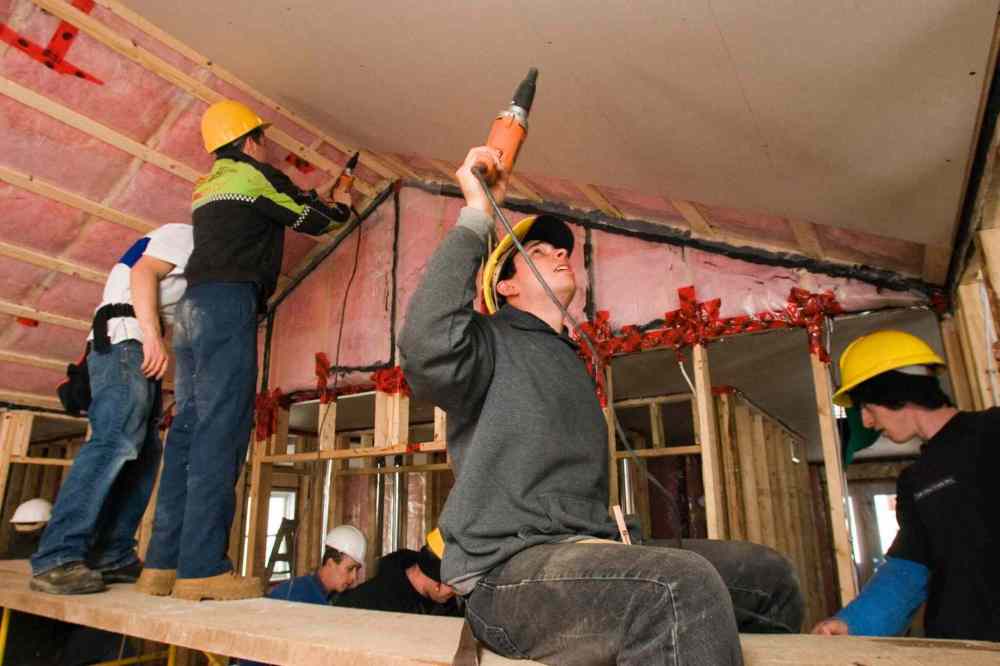
ANSWER: It’s very nice of you to help your niece with the labour-intensive job of finishing her basement. And it’s wise to seek advice when you’re unsure of the proper installation methods, even something as straightforward as drywall.
While there may be specific building-material requirements in the National Building Code (NBC) or manufacturer’s specs, that doesn’t always translate into the typical methods used by contractors. So I checked out a couple of online forums for drywall installer/finishers, and the range of answers was shocking.
Although some of these contractors were likely from south of the border, where standards may not be as high, that doesn’t explain all the discrepancies. No doubt many of these opinions were based on tried-and-true contractor experience, but few offered any technical details to back up them up, and many seemed to recommend the minimum they could get away with. That’s a dangerous approach, and I recommend that you err on the side of caution and always go the extra step if you’re unsure during your renovations.
While they don’t always constitute “best practices”, manufacturer recommendations are a good place to start. One of the most common drywall supplier’s/manufacturer’s in our area is CGC. According to their website you should “space screws maximum of 300 mm (12″) apart on ceilings and 400 mm (16″) apart on walls and at least 10 mm (3/8″) from the ends and edges of the panels”.
This procedure appears to be similar to the advice you have received, but there’s another factor to consider. Most walls in new construction are built with studs 16 inches on centre, not 24 inches like your basement. CGC’s recommendations are likely based on these closer studs, adding considerably more screws per sheet.
That may also be one of the reasons that ceilings have a closer recommended minimum spacing of 12 inches. Placing the screws closer together on a horizontal surface makes perfect sense since traditional roof trusses are often spaced at 24 inches to provide the support for insulated ceilings.
One of the issues when you install drywall over insulated stud walls that are spaced 24 inches apart rather than 16 inches is a slight bowing out between studs. This is usually more visible when only one set of screws is used between the edges, rather than two. The difference between 16-inch and 24’inch spacing is one full row of fasteners.
Fibreglass batt insulation also has a tendency to expand after it’s removed from its packaging, which can cause some visible bulging of wall coverings if the studs are two feet apart. Using additional fasteners may not completely prevent the bowing, but it will help minimize the chance of the drywall pulling away from the studs, making the problem worse.
The simple answer to your direct question is that you should follow the manufacturer’s recommendations and install the fasteners no further apart than 16 inches. We should also recognize that is a minimum standard and there is no reason, other than a little more time and expense, not to install the drywall screws closer together. Since your niece’s basement has been framed/strapped on 24-inch centres, a few extra fasteners per sheet will only help to prevent any problems with the drywall coming loose.
Despite what some overly-thrifty or lazy handymen/contractors have suggested, more is better when it comes to installation of drywall screws.