

Gladioli more than a supermarket selection
Agricultural society demonstration will offer tips on growing the flower

Advertisement
Read this article for free:
or
Already have an account? Log in here »
To continue reading, please subscribe:

Digital Subscription
One year of digital access for only $205*
- Enjoy unlimited reading on winnipegfreepress.com
- Read the E-Edition, our digital replica newspaper
- Access News Break, our award-winning app
- Play interactive puzzles
*First annual payment billed as $205.00 + GST for one year. This annual subscription will automatically renew at $233.00 + GST every 52 weeks (10% off the regular annual price of $259.35). Offer available to new and qualified returning subscribers only. Cancel any time.
To continue reading, please subscribe:
Add Free Press access to your Brandon Sun subscription for only an additional
$1 for the first 4 weeks*
- Enjoy unlimited reading on winnipegfreepress.com
- Read the E-Edition, our digital replica newspaper
- Access News Break, our award-winning app
- Play interactive puzzles
*Your next Brandon Sun subscription payment will increase by $1.00 and you will be charged $17.95 plus GST for four weeks. After four weeks, your payment will increase to $24.95 plus GST every four weeks.
Read unlimited articles for free today:
or
Already have an account? Log in here »
Hey there, time traveller!
This article was published 04/08/2018 (2965 days ago), so information in it may no longer be current.
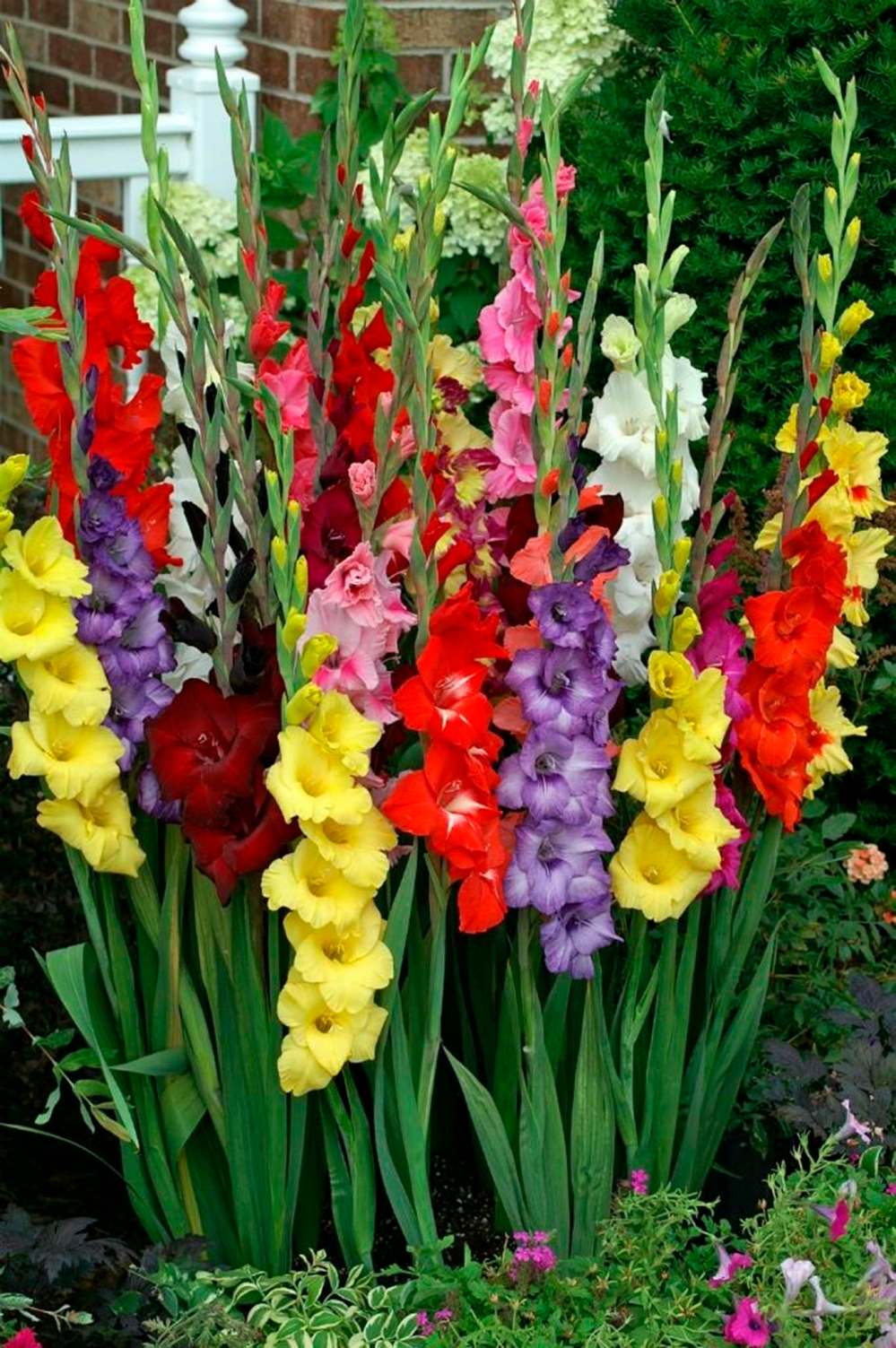
Over the years, I’ve visited many gardens and admired countless varieties of plants. I’ve only rarely encountered gladioli, however. Is it an old-fashioned flower that has long since disappeared from our gardens? It would be a mistake to think of gladioli as a once-important flower that grew at the back of the border alongside other tall, dramatic beauties such as hollyhocks, but is now relegated to plastic buckets at grocery stores in August.
Gorgeous glads are in such abundance at August flower shows throughout the province that clearly there are many among us who are growing these statuesque, spear-shaped bulbous plants in our growing spaces.
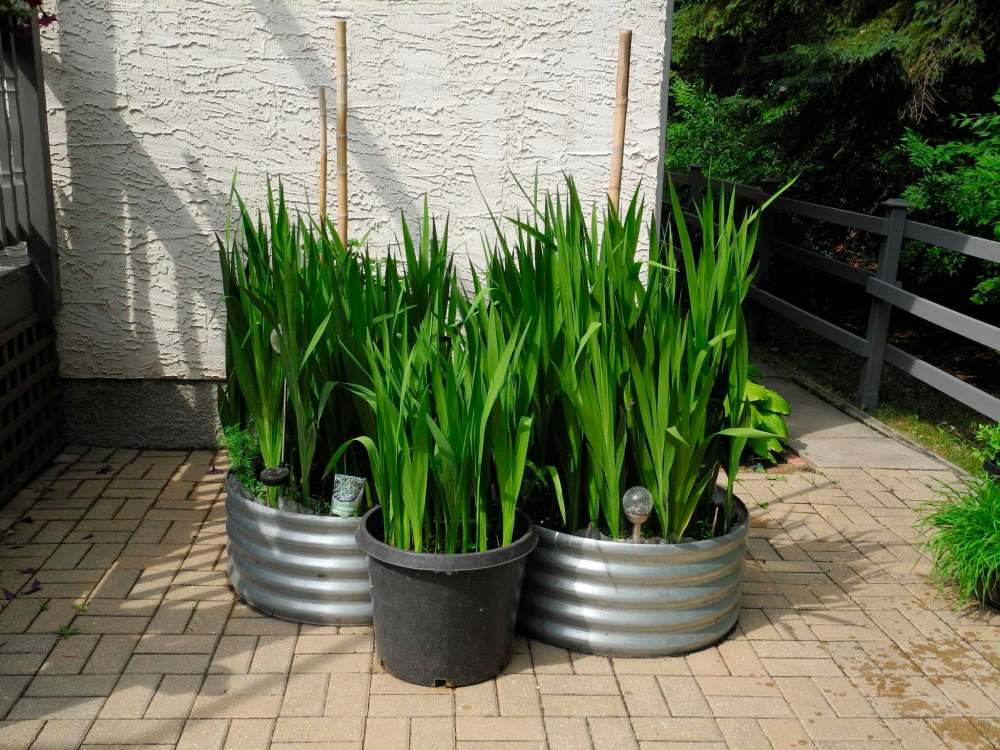
Valerie Cousineau grows pots and pots of gladioli in her north Winnipeg backyard. Most years she lifts the bulbs in fall and stores them indoors for the winter for bigger and better and more prolific blooms the following season. Its fine, too, she says, to grow glads as annuals if lifting and storing the bulbs seems like too much trouble.
What’s the attraction? “I like spears,” Cousineau says. “Gladioli are so regal and exotic. The colours are so exaggerated, but also there is such a concentrated colour. So many other flowering plants in the garden have frothy but scant blooms — the blooms on gladioli are just so intense.”
Cousineau plants gladioli corms in May. The first ones are planted in pots using a four-way soil mix about two weeks prior to the long weekend in May. The corms are protected from the risk of a late frost, she says, because they are beneath the soil surface and tender greenery has not yet formed. Cousineau staggers the bloom time by planting from mid-May until the end of May. This provides her with long-blooming bursts of colour over a period of several weeks.
Cousineau says that this has been a great year for growing gladioli, which like well-drained soil and full sun. At 76 centimetres tall, the flawless foliage spears are well on their way to their expected height of 100 cm, she says. High wind speed can wreak havoc, especially on tall flowering plants, so Cousineau takes care to secure groups of glads together at the bottom with a length of burlap twine.
Sometimes the height and weight of the spears necessitate staking but for the most part, Cousineau says, gladioli provide a trouble-free display in patio containers. A favourite variety is Green Star.
At their annual fair and display from Aug. 9 to 11 at the St. Vital Centennial Arena, the St. Vital Agricultural Society (SVAS) is planning a demonstration called Glorious Gladiolus. Karen Fontaine, a longtime member of SVAS and past winner for her floral displays, will present on tips and advice for growing the perfect gladiolus in flower beds or in containers on your balcony or porch.
Gladiolus likes lots of moisture, Fontaine says, but will suffer in excess moisture. As well, a south or west exposure on a balcony can expose patio pots to excessive heat building within the soil. To help keep the roots and corms cool, Fontaine suggests covering the outside of your pot with a layer of aluminum foil.
Corms should be dug up in the fall when the leaves turn brown and before the ground freezes. Allow the corms to completely dry for two to three weeks. Discard the old corm and place new corms in a paper bag with a small amount of fungicide. Place corms in a box with good air circulation in a cool basement.
Of course, we’re not there yet. August is peak gladioli blooming season. As a cut flower, gladiolus has few equals.
As one to three florets begin opening on the flower stalk, Fontaine uses a clean, sharp knife to cut the gladiolus spike, which is then conditioned for several hours in a sturdy vase filled with clean, warm water.
As lower florets fade and begin to die at the base of the stems, Fontaine removes the stems from the vase, recuts the spike and places the flowers in a shorter vase.
Fontaine says that there are many reasons to exhibit glads at horticultural or agricultural fairs: the thrill of competition and the excitement of ribbons and prize money, but also the simple rewards of taking pride in growing beautiful blooms and exhibiting displays for others to enjoy.
Entering a flower show requires a good understanding of the rules for exhibiting as well as the judging standards for a particular type of cut flower. Fontaine says that a gladiolus spike should be straight and the florets should face forward. One-third of the florets on a spike should be open, one-third partially open and the remaining one-third closed.
According to SVAS judging standards for gladiolus, the greatest number of points are awarded for beauty and colour appeal, however, entries are also judged on the total number of florets, as well as the size of flowers, balance of individual flower heads, their substance and texture, and straightness to tip and strength.
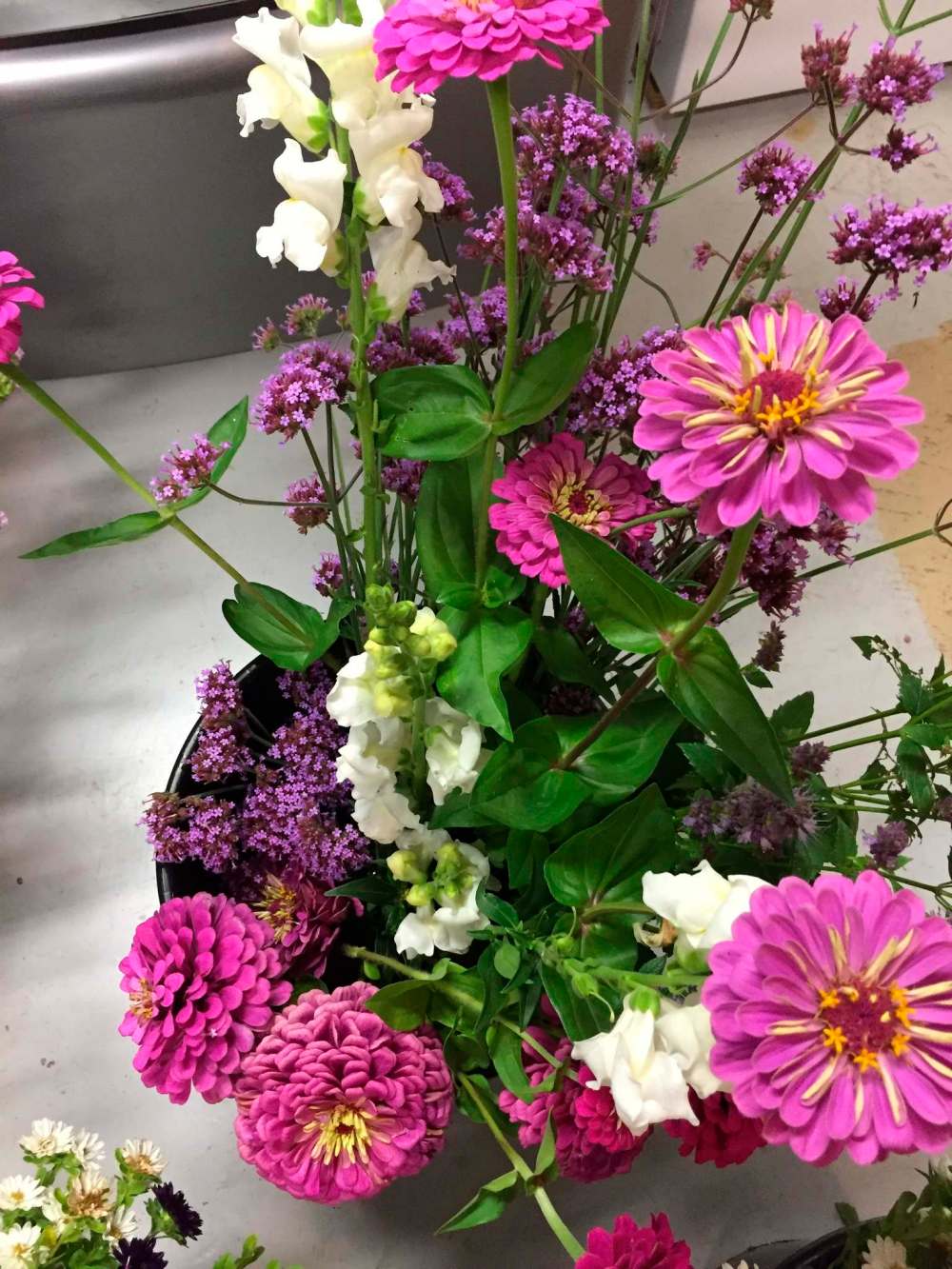
There is an explosion of interest in cut-flower gardens for both home gardeners and professional growers. When it comes to expertly arranging cut flowers, the displays at horticultural flower shows are a master class in technique. Popular entries include dahlia, snapdragon, calendula, cosmos, zinnia and dianthus. Growing in popularity are Echinacea, ornamental grasses, hydrangea, lisianthus and phlox.
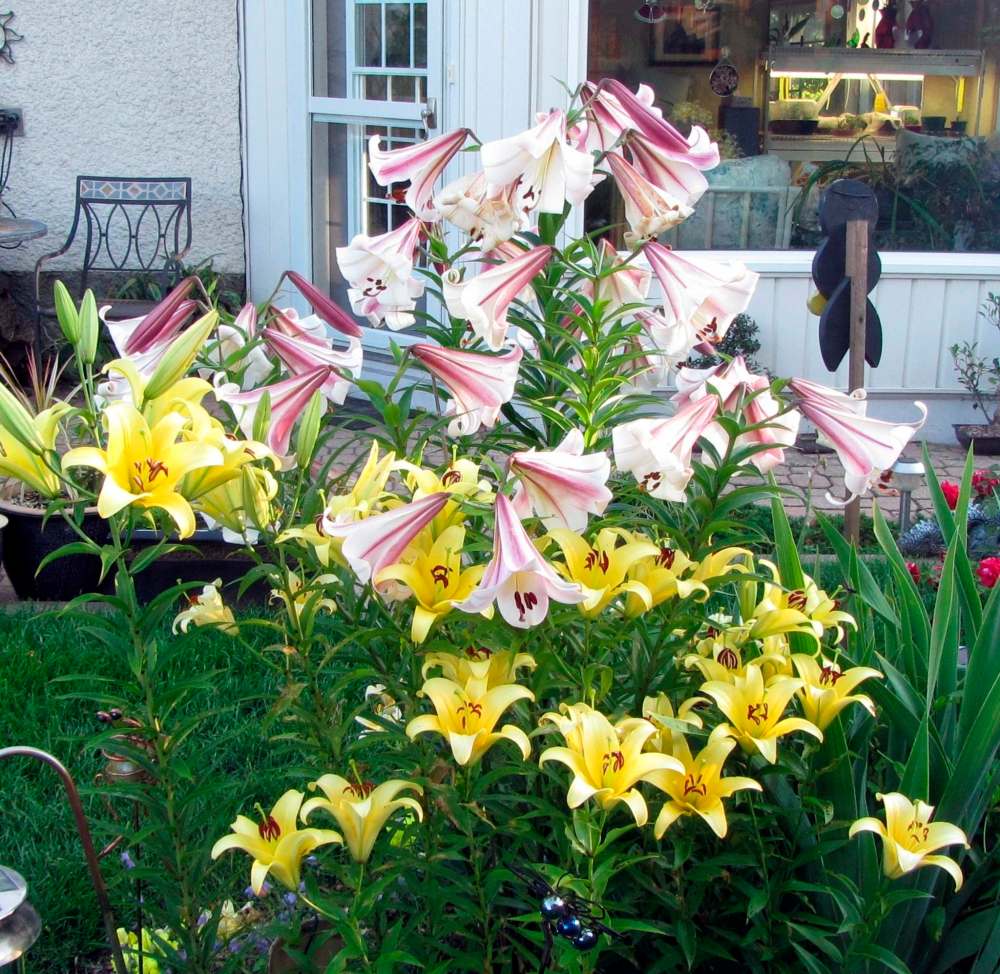
You might also see stems of physocarpus (ninebark), monkshood and August-blooming lilies such as Easter Morn Easterpet Lily, a stunning lily bred in Manitoba by Lynn Collicutt and Wilbert Ronald.
Judges and entrants refer to a manual, Horticultural Judging Standards, which has been created by the Manitoba Horticultural Society. It is available for the nominal price of $2 by emailing m.h.a@shaw.ca and explains how to condition cut flowers, design elements for flower arrangements as well as details relating to preparing entries to meet the expectations of qualified judges. The Court of Honour is reserved for the very best entries.

Mother Nature can interfere with plans to enter flawless, pristine blooms into a show, but also expected bloom periods. Patricia Osmond, past president of the Transcona Garden Club, which hosts its 52nd annual hort show and competition Aug. 12 to 14 at Kildonan Place, says luck, fate and timing are key to having a winning entry. To hold off impatient or early blooms, flowers can be cut and stored in a cool area days before a show.
The Agassiz Garden Club will host its annual horticultural show Aug. 12 and 13. It typically receives more than 300 entries. Carol Clegg, show chair, says that new exhibitors are welcome. Show books and entry tags are available at Ingham Pharmacy, Lac du Bonnet.
Clegg says warmer temperatures this summer have accelerated the bloom period of her gladioli; however, she is hoping for a second flush of rose blooms in time for the show in August.
Attending a horticultural show is about more than entertainment. Rows upon rows of tables are packed with displays of all types of flowers, vegetables and fruit, as well as baking, preserves, crafts and photos. Most of all, it’s an opportunity to talk to expert gardeners and find new inspiration.

colleenizacharias@gmail.com
Colleen Zacharias
Gardening columnist
Colleen Zacharias writes about many aspects of gardening including trends, plant recommendations, and how-to information that is uniquely relevant to Prairie gardeners. She has written a column for the Free Press since 2010 and pens the monthly newsletter Winnipeg Gardener. Read more about Colleen.
Every piece of reporting Colleen produces is reviewed by an editing team before it is posted online or published in print — part of the Free Press‘s tradition, since 1872, of producing reliable independent journalism. Read more about Free Press’s history and mandate, and learn how our newsroom operates.
Our newsroom depends on a growing audience of readers to power our journalism. If you are not a paid reader, please consider becoming a subscriber.
Our newsroom depends on its audience of readers to power our journalism. Thank you for your support.
Colleen Zacharias
Gardening columnist
Colleen Zacharias writes about many aspects of gardening including trends, plant recommendations, and how-to information that is uniquely relevant to Prairie gardeners. She has written a column for the Free Press since 2010 and pens the monthly newsletter Winnipeg Gardener. Read more about Colleen.
Every piece of reporting Colleen produces is reviewed by an editing team before it is posted online or published in print — part of the Free Press‘s tradition, since 1872, of producing reliable independent journalism. Read more about Free Press’s history and mandate, and learn how our newsroom operates.
Our newsroom depends on a growing audience of readers to power our journalism. If you are not a paid reader, please consider becoming a subscriber.
Our newsroom depends on its audience of readers to power our journalism. Thank you for your support.
Advertisement Advertise With Us
Advertisement Advertise With Us