

Whole truth in ER death still secret
brian sinclair case

Advertisement
Read this article for free:
or
Already have an account? Log in here »
To continue reading, please subscribe:

Digital Subscription
One year of digital access for only $205*
- Enjoy unlimited reading on winnipegfreepress.com
- Read the E-Edition, our digital replica newspaper
- Access News Break, our award-winning app
- Play interactive puzzles
*First annual payment billed as $205.00 + GST for one year. This annual subscription will automatically renew at $233.00 + GST every 52 weeks (10% off the regular annual price of $259.35). Offer available to new and qualified returning subscribers only. Cancel any time.
To continue reading, please subscribe:
Add Free Press access to your Brandon Sun subscription for only an additional
$1 for the first 4 weeks*
- Enjoy unlimited reading on winnipegfreepress.com
- Read the E-Edition, our digital replica newspaper
- Access News Break, our award-winning app
- Play interactive puzzles
*Your next Brandon Sun subscription payment will increase by $1.00 and you will be charged $17.95 plus GST for four weeks. After four weeks, your payment will increase to $24.95 plus GST every four weeks.
Read unlimited articles for free today:
or
Already have an account? Log in here »
Hey there, time traveller!
This article was published 09/02/2009 (6446 days ago), so information in it may no longer be current.
Act of omission or commission?
This has been the razor-thin line the Winnipeg Regional Health Authority has tried to walk while trying to explain how and why Brian Sinclair, a double-amputee with a long list of health concerns, was ignored for 34 hours at the Health Sciences Centre emergency room until he died last September of a completely preventable affliction.
The WRHA attempted to portray Sinclair’s death as an error of omission, a systemic failure that began with Sinclair’s own inability to properly register with ER triage staff. From Health Minister Theresa Oswald to Dr. Brock Wright, the WRHA’s chief medical officer, the death was explained away as a tragedy, but an unavoidable one.
We might have continued to believe this version of events if it were not for Dr. Thambirajah Balachandra, Manitoba’s chief medical examiner. This past week, Balachandra revealed that security video showed Sinclair did, in fact, see triage staff before he wheeled himself into a waiting room to die. He also revealed that triage staff repeatedly ignored warnings by ER security that Sinclair’s condition was deteriorating.
WRHA officials have tried to downplay these new revelations. The simple fact is these are details that were known, or should have been known, by senior officials at the WRHA. And they are completely at odds with what the WRHA said last September.
While the initial error of ignoring Sinclair may ultimately qualify as one of omission — although it is increasingly hard to believe that — subsequent efforts to exclude the truth appear to be clear errors of commission.
It is a well-known phenomenon in wrongful convictions that a miscarriage of justice is often aggravated by efforts to cover up the original wrong. It is also understood that the term "systemic failure" is code for "no one will take responsibility." In the Sinclair case, the unsupportable conclusions expressed last September, and efforts to explain the death as a "systemic gap", suggest a concerted effort to obscure the truth and protect those involved.
That the health-care system has trouble admitting the truth, there should be no doubt. WRHA officials acknowledge they hear about fewer than a fifth of all critical incidents. The province has introduced laws to encourage health-care professionals to admit their mistakes, but it has produced mixed results, as this case clearly shows.
A law proclaimed two years ago compels anyone with knowledge of a critical incident to make a full report. The trade-off is that all details of those admissions are kept strictly confidential; nothing is made public, and nothing can be used against an individual in a criminal or civil proceeding.
In essence, the province traded public accountability for truth. But as is now quite obvious, even a confidential process does not produce the truth. In this case, the confidential review became a tool to suppress the truth.
The WRHA said two separate reviews of Sinclair’s death concluded that the double-amputee failed to properly identify himself to triage staff, a statement we now know was not true. Even worse, the very system established to encourage admission of mistakes made it impossible for anyone outside the system to find out what really happened.
The WRHA must release the unedited text of the two reviews. At this point, one must assume with strong justification that the WRHA’s investigators had access to both the security video and security staff. It is essential that the public know whether those facts were explicit in the WRHA reviews, or whether they were excluded.
If those details were included, and then excised from the "official" and public version of events, then the buck must stop with senior WRHA officials. If those key facts were excluded from the reviews, then the authors must be compelled to explain publicly how and why these omissions were made.
Finally, we must not lose sight of the original issue: Who was responsible for ignoring Sinclair for nearly a day and a half? It is an act we must now view as one of commission.
Whether any one person can be held responsible for Sinclair’s abominable treatment may never be known. It is well documented by patient-safety advocates that doctors and nurses have a troubling habit of ignoring the pleadings of those outside the system. Perhaps Sinclair’s death can be explained as simply as that.
Thanks to Balachandra, we know much more now about Sinclair’s death than we did before. A coroner’s inquest may reveal more; however, it is important to note that even a court of law does not have the power to force the WRHA to disclose its previous reviews.
The health authority will no doubt continue to portray Sinclair’s death as an error of omission. We know enough now to know that is not a fair representation, but we are still a long way from the truth. And in a health-care system that puts confidentiality ahead of accountability, we shouldn’t hold our breath waiting for the full truth.
dan.lett@freepress.mb.ca
Dan Lett is a columnist for the Free Press, providing opinion and commentary on politics in Winnipeg and beyond. Born and raised in Toronto, Dan joined the Free Press in 1986. Read more about Dan.
Dan’s columns are built on facts and reactions, but offer his personal views through arguments and analysis. The Free Press’ editing team reviews Dan’s columns before they are posted online or published in print — part of the our tradition, since 1872, of producing reliable independent journalism. Read more about Free Press’s history and mandate, and learn how our newsroom operates.
Our newsroom depends on a growing audience of readers to power our journalism. If you are not a paid reader, please consider becoming a subscriber.
Our newsroom depends on its audience of readers to power our journalism. Thank you for your support.
Dan Lett is a columnist for the Free Press, providing opinion and commentary on politics in Winnipeg and beyond. Born and raised in Toronto, Dan joined the Free Press in 1986. Read more about Dan.
Dan’s columns are built on facts and reactions, but offer his personal views through arguments and analysis. The Free Press’ editing team reviews Dan’s columns before they are posted online or published in print — part of the our tradition, since 1872, of producing reliable independent journalism. Read more about Free Press’s history and mandate, and learn how our newsroom operates.
Our newsroom depends on a growing audience of readers to power our journalism. If you are not a paid reader, please consider becoming a subscriber.
Our newsroom depends on its audience of readers to power our journalism. Thank you for your support.
Related Articles
WRHA board to comment on calls for resignations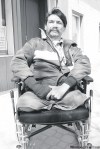
Advertisement Advertise With Us
Advertisement Advertise With Us