

Too wet, chilly to seed
Farmers get $21.5M in insurance payouts
Advertisement
Read this article for free:
or
Already have an account? Log in here »
To continue reading, please subscribe:
Monthly Digital Subscription
$1 per week for 24 weeks*
- Enjoy unlimited reading on winnipegfreepress.com
- Read the E-Edition, our digital replica newspaper
- Access News Break, our award-winning app
- Play interactive puzzles
*Billed as $4.00 plus GST every four weeks. After 24 weeks, price increases to the regular rate of $19.95 plus GST every four weeks. Offer available to new and qualified returning subscribers only. Cancel any time.
Monthly Digital Subscription
$4.99/week*
- Enjoy unlimited reading on winnipegfreepress.com
- Read the E-Edition, our digital replica newspaper
- Access News Break, our award-winning app
- Play interactive puzzles
*Billed as $19.95 plus GST every four weeks. Cancel any time.
To continue reading, please subscribe:
Add Free Press access to your Brandon Sun subscription for only an additional
$1 for the first 4 weeks*
*Your next subscription payment will increase by $1.00 and you will be charged $16.99 plus GST for four weeks. After four weeks, your payment will increase to $23.99 plus GST every four weeks.
Read unlimited articles for free today:
or
Already have an account? Log in here »
Hey there, time traveller!
This article was published 17/07/2009 (6111 days ago), so information in it may no longer be current.
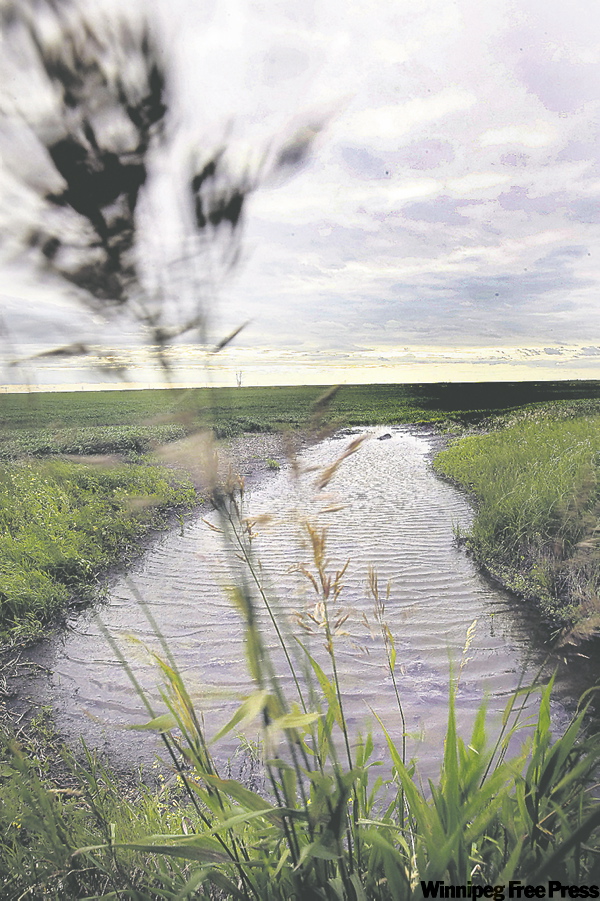
Springtime flooding and cool, wet weather at planting time caused 420,000 acres of Manitoba farmland to go unseeded this year, triggering $21.5 million in insurance payments to farmers.
The provincial government is expected to announce today that grim economic hit from the bad weather.
A government spokeswoman said late Thursday that grain producers filed 1,675 claims for unseeded acres with the Manitoba Agricultural Services Corp. this spring — one of the largest totals in recent years.
The wettest spring on record was in 2005, when an all-time record 1.4 million acres went unseeded because of soggy conditions. That year, farmers made 4,468 excess-moisture claims and received $58.3 million in insurance payments for that reason alone.
Manitoba has about 12 million acres of cropland.
Many of this year’s insurance claims came from the northern Interlake region, where many grain farmers seeded few, if any, fields.
Some farmers there were so desperate to plant a crop they resorted to hiring an airplane to broadcast seed on their land from the air.
The plight of Manitoba farmers with muddy fields contrasted sharply this spring with that of producers in Alberta and western Saskatchewan, where drought has already ruined crops over great tracts of land.
The Canadian Wheat Board predicted last month that Prairie wheat production would fall 20 per cent from last year.
A cold spring and summer has meant that crop development throughout the Prairies is 10 days to two weeks behind normal, the wheat board’s Bruce Burnett said.
That has increased the chances of a late harvest and possible frost damage for some crops. Meanwhile, crops that thrive on heat, such as corn, will find their yield potential affected by the cool temperatures, said Burnett, the CWB’s director of weather and market analysis.
Ample rain has fallen in the last few weeks in the eastern and central grain-growing areas of Manitoba, and crops in some fields there are "struggling with that excess moisture," he said.
Meanwhile, in the western part of the province, farmers are hoping for more rain.
The consensus among crop experts, though, appears to be that Manitoba as a whole could still harvest an average crop — not counting the areas where seeding was impossible this year.
"Everything is moving along quite nicely," said Pam De Rocquigny, a provincial Agriculture department crops expert.

"There’s no indication either way that it’s not going to be an average year," she said.
Ian Wishart, president of Keystone Agricultural Producers, was a little more pessimistic about this year’s harvest.
"I think, because of the late seeding, we were only ever playing for an average crop," he said. "So any damage that comes along now is only taking away from that average."
larry.kusch@freepress.mb.ca

Advertisement Advertise With Us
Advertisement Advertise With Us