

Candidates share broad vision for crime reduction

Advertisement
Read this article for free:
or
Already have an account? Log in here »
To continue reading, please subscribe:

Digital Subscription
One year of digital access for only $205*
- Enjoy unlimited reading on winnipegfreepress.com
- Read the E-Edition, our digital replica newspaper
- Access News Break, our award-winning app
- Play interactive puzzles
*First annual payment billed as $205.00 + GST for one year. This annual subscription will automatically renew at $233.00 + GST every 52 weeks (10% off the regular annual price of $259.35). Offer available to new and qualified returning subscribers only. Cancel any time.
To continue reading, please subscribe:
Add Free Press access to your Brandon Sun subscription for only an additional
$1 for the first 4 weeks*
- Enjoy unlimited reading on winnipegfreepress.com
- Read the E-Edition, our digital replica newspaper
- Access News Break, our award-winning app
- Play interactive puzzles
*Your next Brandon Sun subscription payment will increase by $1.00 and you will be charged $17.95 plus GST for four weeks. After four weeks, your payment will increase to $24.95 plus GST every four weeks.
Read unlimited articles for free today:
or
Already have an account? Log in here »
Hey there, time traveller!
This article was published 21/10/2010 (5824 days ago), so information in it may no longer be current.
When the pops of gunfire fell silent early one recent Sunday morning, a 21-year-old woman was dead, an apparent innocent bystander, and the 600 block of Selkirk Avenue was swarmed by police.
In this part of the Mynarski ward, it was nothing new. “They’re always shooting at each other,” one crime-weary resident sighed recently. “It’s not abnormal around here.”
In a blue-collar ward scourged in large swaths by crumbling roads, slum landlords and collapsing parks, crime erupts on a regular basis. Much of wedge-shaped Mynarski falls within police district three.

This year, that district (which also includes parts of the Point Douglas and Old Kildonan wards) has already suffered 554 home invasions, 45 sexual assaults, 389 successful car thefts, 29 shootings and seven homicides.
Early in the morning of Sunday, Oct. 10, Tiffany Johnston, a mother of two, died in a narrow alley after being shot repeatedly.
In the ward’s south and east regions, neighbourhoods such as William Whyte are punctuated by near-nightly violence. In the ward’s quieter northern corridor, residents fear spillover violence from the streets closer to the core.
Now, a week before Winnipeggers heads to the civic election polls, candidates vying for Mynarski’s open seat must convince voters that they have the solution for safer neighbourhoods. Thirty-year Mynarski Coun. Harry Lazarenko is stepping down, sidelined after the May brain aneurysm; six council candidates are betting that they can push a fresh crime-prevention plan at city hall.
Mynarski’s candidates largely share a broad vision for crime reduction. For instance, all champion revitalized community centres to keep youth off the streets. But specific ideas set them apart. Some call for more cops; others call for more community. But which idea will score the most with voters?
Here, a capsule look at each candidates’ core ideas on crime:

ROSS EADIE: TAKING BACK THE STREETS
Eadie, a founding member of a citizen-patrol group in the Seven Oaks neighbourhood, says there is untapped potential in training citizens to spot and report crime to police. If elected, Eadie plans to help organzize and train citizen patrols, which have had occasional bouts of success in Winnipeg but often fall by the wayside. The plan is a key part of his “Triple P” platform on crime: policing, prevention, punishment.
“Crime reduction is a complex issue that requires a holistic approach,” Eadie says. “Community policing is one of the most important initiatives in my strategy.”
GREG LITTLEJOHN: CALLING ALL CADETS
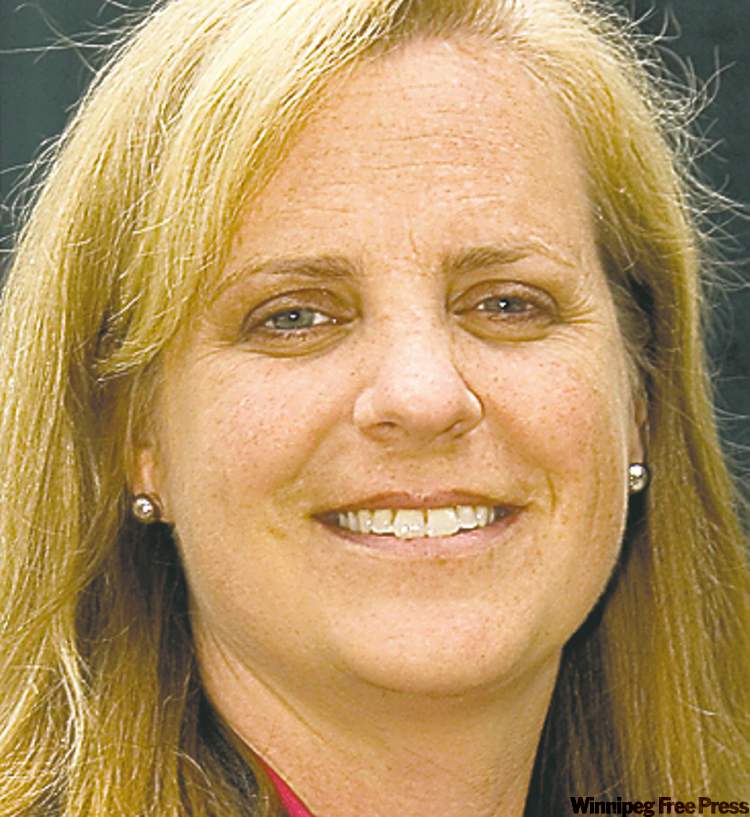
Littlejohn, an affable lawyer who garnered a respectable 20 per cent of the vote against Lazarenko in the 2006 council election, is especially excited about the new Winnipeg Police Service cadet program that will see non-officer cadets dealing with minor calls and freeing up police resources.
“The exciting thing to me is that they are going to do foot patrols, and hopefully put meaning into the phrase ‘building relationships,'” Littlejohn says. “They will be more in touch with the community, walking through neighbourhoods. That’s a great thing for the North End, and the city in general.”
If elected, Littlejohn hopes to build a close relationship with the cadet program and push for a renewed bicycle patrol in Mynarski, which could be staffed by cops freed up by the cadet patrols. Littlejohn would also like to consider installing emergency police-call boxes in high-crime areas.
JENNY MOTKALUK:
A COP ON EVERY CORNER
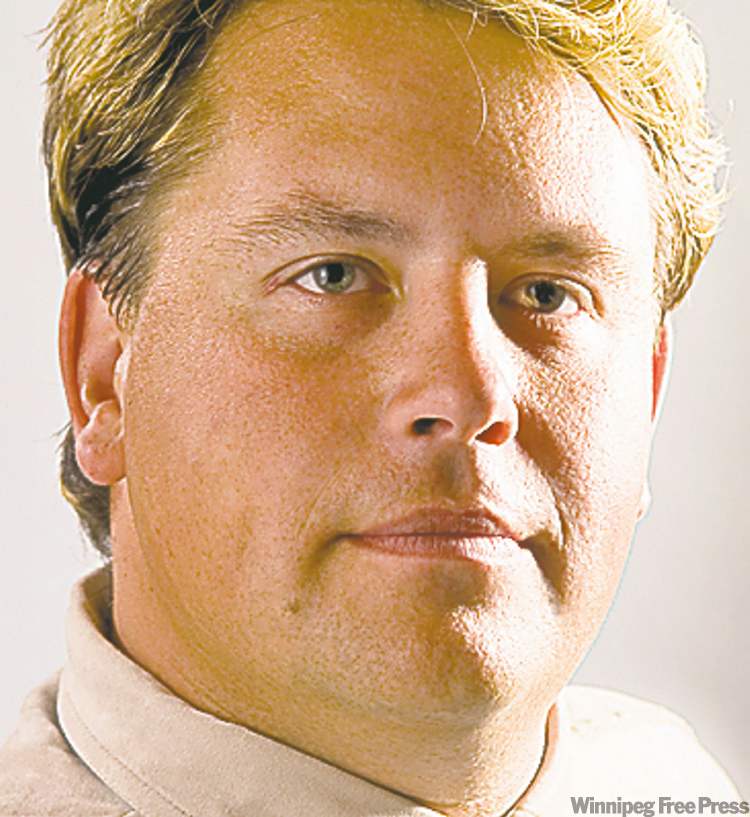
Earlier in the campaign, Motkaluk says, Winnipeg Police Association president Mike Sutherland told her it would take about 100 officers to walk the beat on Selkirk Avenue and Main Street. At a total cost of $100,000 per officer, per year, hiring and deploying those police would cost about $10 million… or just over one per cent of the city’s budget. Can it be done? “It seems like a small price to pay to restore law and order,” says Motkaluk, who vows to work with police to make it happen.
TREVOR MUELLER: COMMUNITIES COME ALIVE
Mueller, a construction surveyor, also supports community patrols. If elected, he also would support expanding Point Douglas’ successful “Power Line” concept — a volunteer-staffed telephone line on which residents can report safety concerns across Mynarski. He’d also like to push to expand the police service’s community support unit. “Any solution is not going to be an overnight thing,” Mueller says. “We can’t just say, ‘OK, we’re going to hire 100 cops, that’s going to solve everything.’ It’s going to be impossible to have beat cops in every district. But how many things are being left unreported because people feel that nothing’s going to get resolved? That’s why we really need to work on the rebuilding of our community.”
JOHN PETRINKA: YOUNG MONEY

John Petrinka, a passionate 69-year-old non-profit activist, also votes to connect the community. To tackle the roots of crime, Petrinka would like to see Mynarski initiate a program to connect at-risk area youth with local entrepreneur mentors to launch their own businesses.
DAVID POLSKY:
SMILE, YOU’RE ON CAMERA

Polsky, a gregarious salesman making his first run for public office, questions the dollars-and-cents of expanding the police force. “We cannot have a cop on every corner,” he says simply.
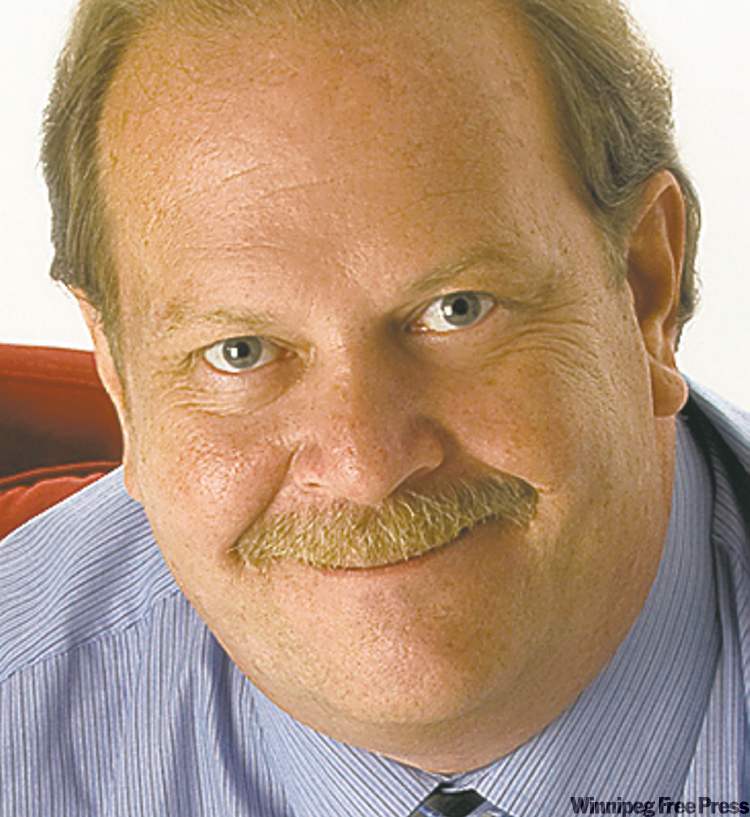
Polsky would rather see security cameras installed throughout Mynarski’s crime hot spots. The cameras, he proposes, would be monitored by trained non-police staff, who could alert police to any incidents that occur.
“They’re working in London. They’re working all over the world. We have the infrastructure in place to monitor cameras… so why aren’t we doing it? This way, the cops can stop picking up bodies and start picking up criminals.”
melissa.martin@freepress.mb.ca
Melissa Martin
Reporter-at-large
Melissa Martin reports and opines for the Winnipeg Free Press.
Every piece of reporting Melissa produces is reviewed by an editing team before it is posted online or published in print — part of the Free Press‘s tradition, since 1872, of producing reliable independent journalism. Read more about Free Press’s history and mandate, and learn how our newsroom operates.
Our newsroom depends on a growing audience of readers to power our journalism. If you are not a paid reader, please consider becoming a subscriber.
Our newsroom depends on its audience of readers to power our journalism. Thank you for your support.
Melissa Martin
Reporter-at-large
Melissa Martin reports and opines for the Winnipeg Free Press.
Every piece of reporting Melissa produces is reviewed by an editing team before it is posted online or published in print — part of the Free Press‘s tradition, since 1872, of producing reliable independent journalism. Read more about Free Press’s history and mandate, and learn how our newsroom operates.
Our newsroom depends on a growing audience of readers to power our journalism. If you are not a paid reader, please consider becoming a subscriber.
Our newsroom depends on its audience of readers to power our journalism. Thank you for your support.
Advertisement Advertise With Us
Advertisement Advertise With Us