

High court says plea deals can be broken
Ruling could affect cases like Taman crash

Advertisement
Read this article for free:
or
Already have an account? Log in here »
To continue reading, please subscribe:

Digital Subscription
One year of digital access for only $205*
- Enjoy unlimited reading on winnipegfreepress.com
- Read the E-Edition, our digital replica newspaper
- Access News Break, our award-winning app
- Play interactive puzzles
*First annual payment billed as $205.00 + GST for one year. This annual subscription will automatically renew at $233.00 + GST every 52 weeks (10% off the regular annual price of $259.35). Offer available to new and qualified returning subscribers only. Cancel any time.
To continue reading, please subscribe:
Add Free Press access to your Brandon Sun subscription for only an additional
$1 for the first 4 weeks*
- Enjoy unlimited reading on winnipegfreepress.com
- Read the E-Edition, our digital replica newspaper
- Access News Break, our award-winning app
- Play interactive puzzles
*Your next Brandon Sun subscription payment will increase by $1.00 and you will be charged $17.95 plus GST for four weeks. After four weeks, your payment will increase to $24.95 plus GST every four weeks.
Read unlimited articles for free today:
or
Already have an account? Log in here »
Hey there, time traveller!
This article was published 25/06/2011 (5504 days ago), so information in it may no longer be current.
It’s hard not to read this story and wonder what could have been.
In a unanimous decision Friday, the Supreme Court of Canada said that prosecutors can, in exceptional circumstances, renege on plea agreements if they are contrary to the best interests of the justice system.
Prior to this decision, most prosecution services would not even consider overturning a plea agreement, even if evidence arose later that would have increased the likelihood of conviction and nullified the need for a deal to secure a guilty plea. Prosecutors are loath to overturn these agreements because in pleading guilty to a lesser charge, accused persons are essentially giving up their right to a trial. Reneging on a plea agreement has been considered a violation of the accused person’s constitutional rights.
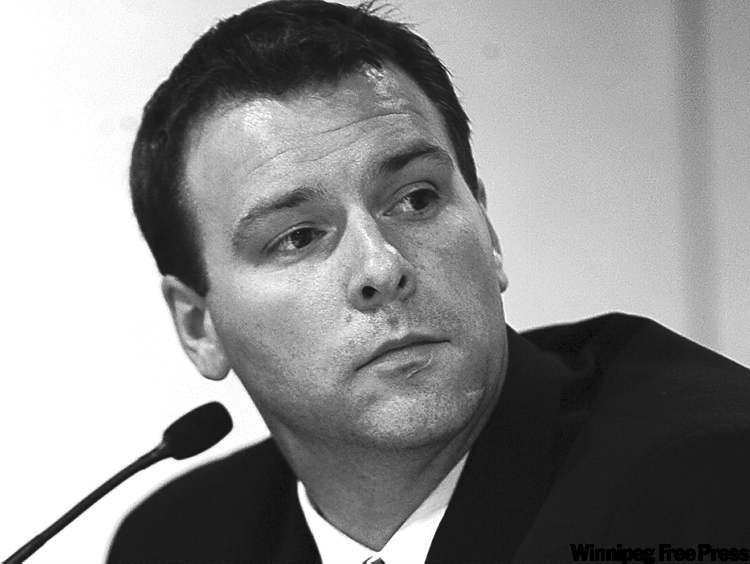
However, the high court believes there are situations where this storied legal tradition can be undone, such as in an Alberta case that bears striking similarities to a Manitoba case where a plea bargain was a key element in both the prosecution and the public outcry that followed.
In 2006, Alberta prosecutors withdrew a plea agreement with Olga Maria Nixon who, while drunk, drove her motorhome through a stop sign and struck another vehicle. A husband and wife were both killed, and their seven-year-old son was injured.
Based on concerns about the evidence, the prosecutor offered her a deal that would see her plead guilty to careless driving, which carried an $1,800 fine. However, at the last moment, prosecutors asked for a continuance, withdrew the deal and charged her with impaired driving causing death, a charge that carries the very real likelihood of a prison sentence.
The trial judge ordered the prosecutor to uphold the plea agreement, sparking an appeal to the Alberta Court of Appeal. The appellate court agreed that prosecutors should, in some cases, be able to renege on pleas. Nixon appealed that decision to the Supreme Court, which this week upheld the prosecutor’s right to renege.
The plea bargain is a legal principal that has been much debated in recent years.
The Ontario government stuck by a plea bargain with Karla Homolka, even after video evidence was uncovered post-agreement showing that she was a willing participant in sex crimes with Paul Bernardo. Homolka pleaded guilty to a reduced crime of manslaughter and received a sentence of 12 years, considerably less than the life sentence she no doubt would have received had she stood trial for murder with Bernardo.
For Manitobans, the Nixon case is strikingly similar to the Derek Harvey-Zenk case. In 2005, Crystal Taman was struck by an off-duty police officer and killed. Evidence showed that the officer had been drinking for several hours prior to the accident. Harvey-Zenk eventually pleaded guilty to a lesser charge and received a conditional sentence. Public outrage about the investigation and prosecution was so shrill, it prompted the province to call a judicial inquiry.
The independent prosecutor handling the case argued that problems with the evidence made the likelihood of conviction very remote. Chief provincial court Judge Ray Wyant expressed his deep skepticism about the handling of the investigation and prosecution of the case, but upheld the plea agreement as sacrosanct.
How important is this issue to the provinces? Manitoba had intervener status in the Nixon case before the Supreme Court, arguing with two other provinces that plea agreements should not be subject to judicial review. Their argument is based on the principal that a plea agreement is part of prosecutorial discretion. If appellate courts are allowed to enforce or withdraw these agreements, then eventually the public will lose faith in the justice system.

That argument is salient. If plea agreements are offered, and then rescinded, then not only would the public begin to lose faith in the justice system, but it would be much harder to get anyone to plead guilty in exchange for a lesser sentence. And plea bargains are, as troubling as they may be sometimes, one of the tools used to keep the justice system working.
The problem, of course, is that plea bargains that are the result of poor or corrupt investigations, or shoddy prosecutions, do far more damage to the public’s impression of the justice system. The Taman inquiry showed quite clearly how much work went into spoiling the prosecution of Harvey-Zenk. There are reasons why the justice system fails in its bid to convict certain people. And a gentlemen’s agreement is not a valid justification for many members of the public, when a plea seems in and of itself to be a crime against fairness. That is essentially what the Supreme Court has said.
The door has been opened, just a smidge, to a new era of plea bargains. It will be up to prosecution services to show that they can use their new powers for the public good.The Supreme Court can do many things, but it cannot rewrite history.
And yet, it is hard to look at this decision and wonder, what could have been?
dan.lett@freepress.mb.ca
Dan Lett is a columnist for the Free Press, providing opinion and commentary on politics in Winnipeg and beyond. Born and raised in Toronto, Dan joined the Free Press in 1986. Read more about Dan.
Dan’s columns are built on facts and reactions, but offer his personal views through arguments and analysis. The Free Press’ editing team reviews Dan’s columns before they are posted online or published in print — part of the our tradition, since 1872, of producing reliable independent journalism. Read more about Free Press’s history and mandate, and learn how our newsroom operates.
Our newsroom depends on a growing audience of readers to power our journalism. If you are not a paid reader, please consider becoming a subscriber.
Our newsroom depends on its audience of readers to power our journalism. Thank you for your support.
Dan Lett is a columnist for the Free Press, providing opinion and commentary on politics in Winnipeg and beyond. Born and raised in Toronto, Dan joined the Free Press in 1986. Read more about Dan.
Dan’s columns are built on facts and reactions, but offer his personal views through arguments and analysis. The Free Press’ editing team reviews Dan’s columns before they are posted online or published in print — part of the our tradition, since 1872, of producing reliable independent journalism. Read more about Free Press’s history and mandate, and learn how our newsroom operates.
Our newsroom depends on a growing audience of readers to power our journalism. If you are not a paid reader, please consider becoming a subscriber.
Our newsroom depends on its audience of readers to power our journalism. Thank you for your support.
Advertisement Advertise With Us
Advertisement Advertise With Us