

A gentle fire that burned so bright
Babs Asper had energy all her own
Advertisement
Read this article for free:
or
Already have an account? Log in here »
To continue reading, please subscribe:
Monthly Digital Subscription
$1 per week for 24 weeks*
- Enjoy unlimited reading on winnipegfreepress.com
- Read the E-Edition, our digital replica newspaper
- Access News Break, our award-winning app
- Play interactive puzzles
*Billed as $4.00 plus GST every four weeks. After 24 weeks, price increases to the regular rate of $19.95 plus GST every four weeks. Offer available to new and qualified returning subscribers only. Cancel any time.
Monthly Digital Subscription
$4.99/week*
- Enjoy unlimited reading on winnipegfreepress.com
- Read the E-Edition, our digital replica newspaper
- Access News Break, our award-winning app
- Play interactive puzzles
*Billed as $19.95 plus GST every four weeks. Cancel any time.
To continue reading, please subscribe:
Add Free Press access to your Brandon Sun subscription for only an additional
$1 for the first 4 weeks*
*Your next subscription payment will increase by $1.00 and you will be charged $16.99 plus GST for four weeks. After four weeks, your payment will increase to $23.99 plus GST every four weeks.
Read unlimited articles for free today:
or
Already have an account? Log in here »
Hey there, time traveller!
This article was published 31/07/2011 (5382 days ago), so information in it may no longer be current.
I didn’t really know Babs Asper.
And yet I knew her better than most.
We only spoke or communicated with each other a handful of times over the last three decades. Via email once or twice. Bumping into her at Metro Cleaners on Grosvenor Avenue or at a restaurant. There was that time Prime Minister Stephen Harper announced her late husband Izzy Asper’s legacy project, the Canadian Museum for Human Rights, would be receiving annual operating funding.
“Isn’t it wonderful, Gordon?” she asked smiling warmly, as if we were close and I understood. I did understand.
But, of course, we weren’t close. Still, I got to know her in ways only her intimates did, because they’re the ones who shared what they knew and how they felt about her over the course of the three years I devoted to researching a biography on her husband, the international media mogul.
Babs never did grant an interview.
But as I was suggesting, I also got to know her by the gracious manner in which she treated me when we did encounter one another. This, remember, was during a time when she clearly knew I was delving into private family matters she felt should remain private.
I didn’t finish the book because I didn’t make the publisher’s deadline and, in that way, I am glad I didn’t.
That said, long before she died unexpectedly Saturday — sadly at a time when she was seemingly just coming into her own flying solo at age 78 — I had grown immensely fond of Babs Asper.
Given that she suffered in ways too many women do, I saw Babs as a heroic figure.
There was the little known, inconsolable tragedy of putting their baby girl to sleep in a crib that spring night in 1963. And waking up to find her dead.
Little Leanne Asper was less than seven weeks old.
Then there was living with Izzy and his manic manner. His all-day-and-all-night obsession with work, his incessant drinking and smoking that left a colony of worm-like burn marks on his side of the bed.
“Izzy,” I could almost hear Babs screaming when I saw the carpet as their house on Wellington Crescent was being demolished, “you’re going to kill us one day.”
Not that Babs didn’t like to light up herself occasionally.
There was the time at Gunn Lake Lodge, in northwestern Ontario, when the Aspers showed up for the annual jazz festival and one of the workers heard a voice.
“How about going for a cigarette?”
It was Babs Asper and she wanted to bum a smoke.
“I said, ‘Sure,’ the worker, Doug Allan, recalled. ” ‘We’ll just go outside.’ “
That wasn’t going to work for Babs.
“Oh, no, I can’t be seen,” she said. “I’m not supposed to be smoking.”
Allan knew that could only mean one thing. Babs was hiding from Izzy.
“I said, ‘OK, the only thing we can do is go into the women’s washroom.’ “
And that’s what they did, squeezing into a stall together so they wouldn’t be seen.
“An hour or so later,” Allan said, “she hunted me down again.”
” ‘Let’s go have another one,’ she said.”
Of course, if there were ever a dropped-cigarette fire in their ranch-style bungalow on Wellington Crescent, they wouldn’t have noticed given the huge flame thrown by Izzy’s life force.
Yet, Babs had her own gentle fire.
She was educated, deeply thoughtful and concerned by the grotesque, unrelenting nature of anti-Semitism and racism generally.
Above all, though, she had a kind of intelligence that surpassed even her brilliant, vision-driven husband.
In her case, it was the gift of being sensitive to, and caring about, others.
Once, an elementary teacher told me how she left a note for Babs in her mailbox, boldly asking if she could bring her class by to sketch the sculptures of the children at play that graced the Aspers’ lawn. Babs not only invited them over, she invited them to use the Aspers’ washroom.
My sense of it, though, is that Babs cared more about others than she cared about herself.
Especially her own children.
Her understanding early on, for example, that David, Gail and Leonard needed to find their own path, especially with a father who had the gravitational pull of a sun god. For me, that’s what made Babs shine even brighter than Izzy.
Her emotional intelligence.
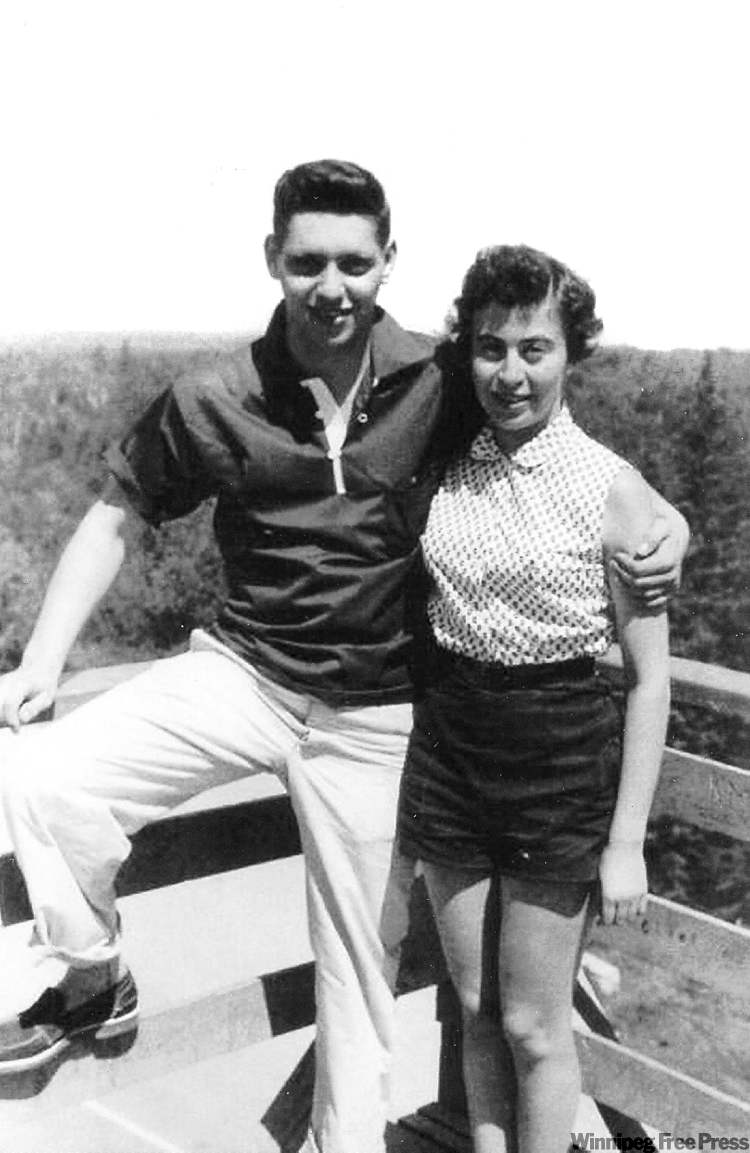
You wouldn’t see it in their wedding photo, taken on the hot and sunny day in May 1956 when Izzy seemed to be directing the spotlight in his dazzling white dinner jacket.
That’s undoubtedly why it’s only since Izzy’s death eight years ago that their mutual friend, and Izzy’s former law partner, Yude Henteleff, started to recognize the real radiance of Babs. He had known her since she was in her 20s, but he only got to really know her Saturday, when the news of her death hit him “like a kick in the stomach.”
Henteleff talked about her leadership qualities, what he called her dynamism and the energy he witnessed while they were working together on the human rights museum.
Then Henteleff had this insight about Babs that he really got to know so late in life.
“You’d have to be able to hold your own and shine your own light,” he said of living with Izzy. “And she certainly did that.”
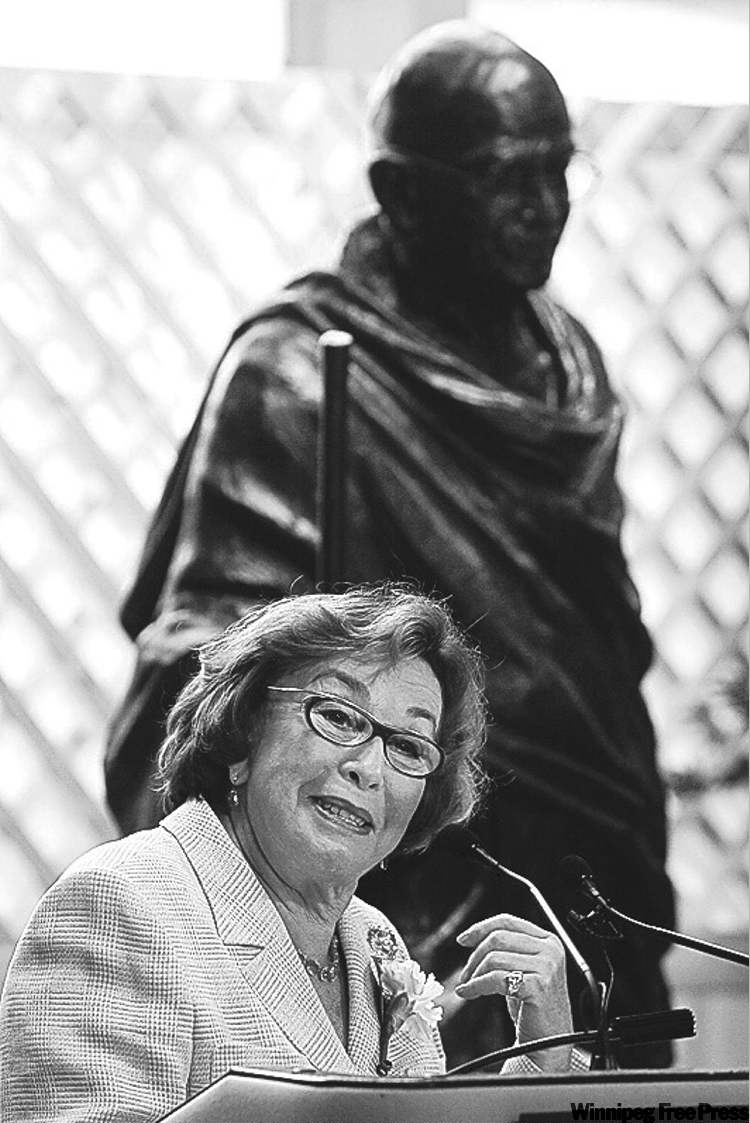
And not just for her own family, but for so many other families through her personal community leadership and the tens of millions The Asper Foundation she co-founded has given to Winnipeg.
Which brings me to the Asper family motto. The one on the coat of arms they created not long before Izzy’s death that seems sadly ironic today.

“Reach for the stars,” it reads.
Turns out the Asper children and grandchildren didn’t have to reach far to find a shining spirit.
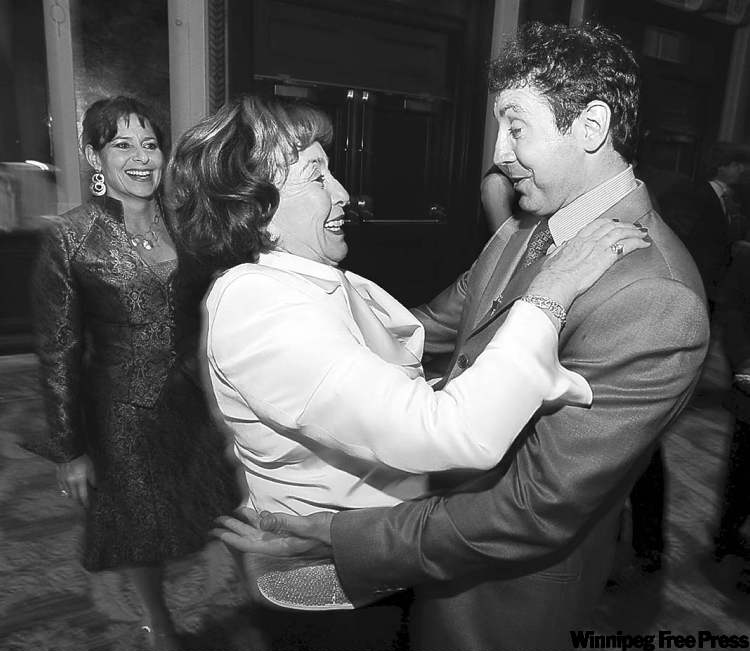
Babs was always just an arms-length, and one last hug, away.
gordon.sinclair@freepress.mb.ca
Advertisement Advertise With Us
Advertisement Advertise With Us