

Status Indians could be extinct
Entire way of life vanishing: professor
Advertisement
Read this article for free:
or
Already have an account? Log in here »
To continue reading, please subscribe:
Digital Subscription
One year of digital access for only $1.44 a week*
- Enjoy unlimited reading on winnipegfreepress.com
- Read the E-Edition, our digital replica newspaper
- Access News Break, our award-winning app
- Play interactive puzzles
*Billed as $5.77 plus GST every four weeks. After 52 weeks, price increases to the regular rate of $19.95 plus GST every four weeks. Offer available to new and qualified returning subscribers only. Cancel any time.
To continue reading, please subscribe:
Add Free Press access to your Brandon Sun subscription for only an additional
$1 for the first 4 weeks*
- Enjoy unlimited reading on winnipegfreepress.com
- Read the E-Edition, our digital replica newspaper
- Access News Break, our award-winning app
- Play interactive puzzles
*Your next Brandon Sun subscription payment will increase by $1.00 and you will be charged $17.95 plus GST for four weeks. After four weeks, your payment will increase to $24.95 plus GST every four weeks.
Read unlimited articles for free today:
or
Already have an account? Log in here »
Hey there, time traveller!
This article was published 19/10/2011 (5344 days ago), so information in it may no longer be current.
A Mi’kmaq author is touring the country with a dire warning for First Nations people: the rights that set them apart from other Canadians are dying out.
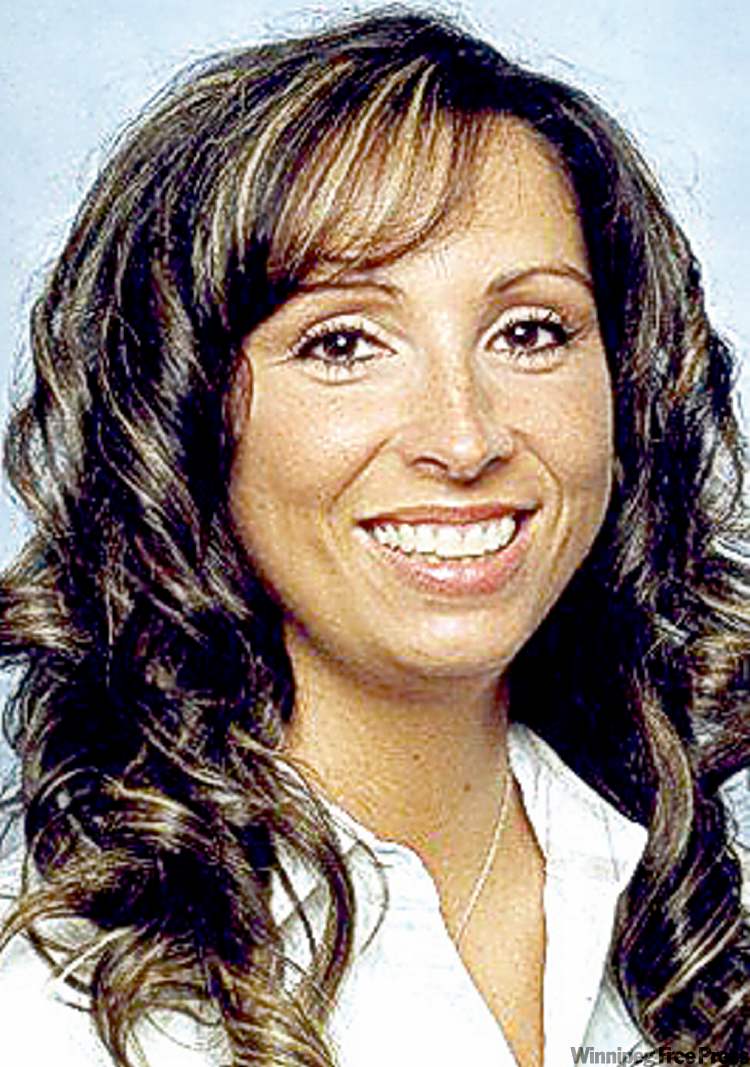
Ryerson University associate Prof. Pamela Palmater says status rights are slowly being legislated out of existence but few people, including many in Canada’s 633 First Nations, are aware of it.
The consequences mean the lands set aside for First Nations will return to provincial control as birth rates of children entitled to full status fall, registration rolls decline, adults die off and reserves are lost.
Some internal federal projections Palmater obtained through federal access to information laws predict many of the country’s First Nation lands will be dissolved within 75 years.
An entire way of life is vanishing, she said.
“I go around the world presenting this information to people and they say, ‘What? That can’t be. You have a Charter of Rights. A constitution that protects aboriginal rights.’
“The thing is, a lot of this information doesn’t ever filter down to the people.”
Palmater is the chairwoman of Ryerson’s Centre for Indigenous Governance and she’s laid out a complex scenario for the legislative extinction of Indian status in a new book, Beyond Blood, Rethinking Indigenous Identity.
Palmater said her research shows the legislative foundation dates back more than a century to the 1876 Indian Act.
Successive amendments, including changes in response to landmark court victories against gender discrimination in status rights in 1985 and 2010, entrenched the timeline to status extinction.
Manitoba First Nation chiefs have been briefed in closed-door sessions about the research Palmater presents publicly. Those consequences are the elephant in the room behind pronouncements that focus on sovereignty rights.
For years, lawyers have privately warned First Nations leaders to do something or watch their power base disappear and treaty rights vanish.
First Nation leaders in British Columbia and Ontario have issued explicit warnings to their people, Palmater said.
When thousands of children and grandchildren of women who lost their Indian status were recently entitled to restore their Indian status for up to two generations, the downside was never mentioned, the professor said.

“You went from a situation that was gender discriminatory you were supposed to fix to a situation now where it will guarantee the extinction of status Indians,” Palmater said.
“There are some First Nations that in less than 75 years will be legally extinct. The people will still be living. They will still be there but that means there will be no legal land owners… and the land goes back to the Crown.
“So your land’s gone. You’re no longer a community. You can’t exercise your aboriginal rights. Then what about the treaties? If there are no treaty beneficiaries, I guess you don’t have to worry about treaty rights, either.”
Palmater is speaking at McNally Robinson Booksellers at 1120 Grant Ave., Thursday at 7:30 p.m.
alexandra.paul@freepress.mb.ca