

Winnipeggers can’t escape their homing instinct
If you lived here, it pulls you back
Advertisement
Read this article for free:
or
Already have an account? Log in here »
To continue reading, please subscribe:
Digital Subscription
One year of digital access for only $1.44 a week*
- Enjoy unlimited reading on winnipegfreepress.com
- Read the E-Edition, our digital replica newspaper
- Access News Break, our award-winning app
- Play interactive puzzles
*Billed as $5.77 plus GST every four weeks. After 52 weeks, price increases to the regular rate of $19.95 plus GST every four weeks. Offer available to new and qualified returning subscribers only. Cancel any time.
To continue reading, please subscribe:
Add Free Press access to your Brandon Sun subscription for only an additional
$1 for the first 4 weeks*
- Enjoy unlimited reading on winnipegfreepress.com
- Read the E-Edition, our digital replica newspaper
- Access News Break, our award-winning app
- Play interactive puzzles
*Your next Brandon Sun subscription payment will increase by $1.00 and you will be charged $17.95 plus GST for four weeks. After four weeks, your payment will increase to $24.95 plus GST every four weeks.
Read unlimited articles for free today:
or
Already have an account? Log in here »
Hey there, time traveller!
This article was published 10/12/2011 (5282 days ago), so information in it may no longer be current.
I was having lunch this week with one of Winnipeg’s finest citizens, a man whose primary purpose in life is to resettle refugees here, in the place most of us call home.
So it was that the topic turned to “home.” And why we tend to be drawn home, in different ways, even after we leave.
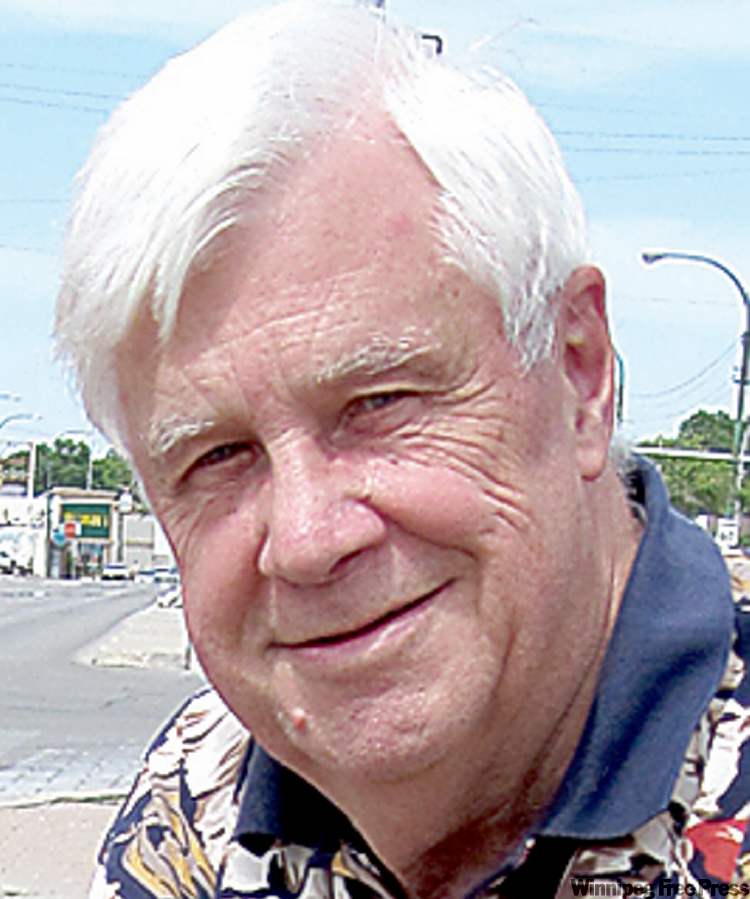
“I’m really interested in the ties of home,” Tom Denton said, “and how that affects us all. Because if you think about it, there’s lots of places in Canada where one would wonder at why people live there… and yet they stay.”
Then Denton, who was born 77 years ago in Nova Scotia but arrived here to stay when he was in his early 30s, made this observation.
“We know more about the homing instincts of birds than we do about human beings.”
Which brings me back to Winnipeg.
We live in one of those places where, as Denton suggested, some would wonder why anyone would stay. Or even when we don’t stay, why so many still tend to call it home.
I have my own story and my own answer about why I returned at age 30, as so many have tended to do around that time of life. But I decided to ask someone else, someone with a much better story about why he came home.
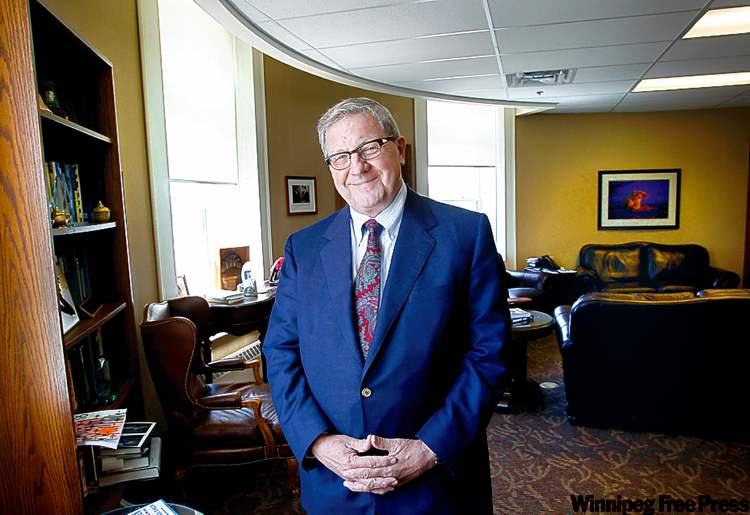
As Canada’s foreign minister, Lloyd Axworthy got to see a lot of the world, but when he retired from politics, he chose to come home.
Although not directly.
Originally, Axworthy, and his wife, Denise Ommanney, relocated to the place so many Prairie people go when they retire, or wish they could afford to go. In the fall of 2000, he was offered a job as head of a think-tank at the University of British Columbia, so he moved to a two-acre home on Vancouver Island. It seemed the ideal job in the ideal place — and in many ways, it was both.
“But I was not fully comfortable in British Columbia,” Axworthy told me.
He missed home.
Home as he imagined it, of course, with the comfort of familiar people and places, including that retro-summer bedroom community like no other, Victoria Beach.
So three-and-a-half years after moving to the West Coast, when he was offered the presidency of the University of Winnipeg — the school he graduated from and taught at, in the neighbourhood he represented provincially and federally for three decades in politics — Axworthy was ready to return.
All he needed was his wife’s blessing and he was on the Trans-Canada Highway to Winnipeg. But it was somewhere on the road home — outside Regina, as he tells it — that Axworthy pulled over and had what he later described as an epiphany. In the distance, he saw a ribbon of rail cars full of grain being pulled across the backdrop of a big Prairie sky.
And right there and then, he knew he had made the right decision.
During the seven years since their return, his wife, who is from Quebec City, has made a circle of friends and found a home of her own here.
“She loves Winnipeg,” Axworthy said.
So much so that when he retires in a couple of years, they’ve decided to stay here. Of course, there are so many others who have chosen to return, or stay rather than leave. People who have been forced to transfer here from places such as Toronto, who refuse to leave “home” when their time here is supposed to be up.
As for Denton, he is still drawn to the ocean and family and the memories of Nova Scotia, but the pull of Winnipeg as home is even greater.
“I think this is a wonderful city,” he said, “and I cannot imagine a better.”

And what I think makes Winnipeg a city and a home like no other is our storied “one degree of separation.” That unique kind of separation that brings us closer. It’s what compels former Winnipeggers all over the world to read the online Free Press from afar just to get that feel for what’s happening back “home.”
As for me, the homing instinct that guided me back is no mystery, at least not to me. Winnipeg looks, smells and feels like home. It’s where three generations of my family are buried. And, in particular, it’s where my uncle Clayton Sinclair chose as his final resting place, even though he hadn’t lived here for more than six decades. That, I would suggest, is the ultimate power of the human homing instinct.
To return to the place we feel we belong.
Even after we’ve gone.
gordon.sinclair@freepress.mb.ca