

Manitoba facing nursing crunch
Number of those nearing age of retirement higher here
Advertisement
Read this article for free:
or
Already have an account? Log in here »
To continue reading, please subscribe:
Monthly Digital Subscription
$1 per week for 24 weeks*
- Enjoy unlimited reading on winnipegfreepress.com
- Read the E-Edition, our digital replica newspaper
- Access News Break, our award-winning app
- Play interactive puzzles
*Billed as $4.00 plus GST every four weeks. After 24 weeks, price increases to the regular rate of $19.95 plus GST every four weeks. Offer available to new and qualified returning subscribers only. Cancel any time.
Monthly Digital Subscription
$4.99/week*
- Enjoy unlimited reading on winnipegfreepress.com
- Read the E-Edition, our digital replica newspaper
- Access News Break, our award-winning app
- Play interactive puzzles
*Billed as $19.95 plus GST every four weeks. Cancel any time.
To continue reading, please subscribe:
Add Free Press access to your Brandon Sun subscription for only an additional
$1 for the first 4 weeks*
*Your next subscription payment will increase by $1.00 and you will be charged $16.99 plus GST for four weeks. After four weeks, your payment will increase to $23.99 plus GST every four weeks.
Read unlimited articles for free today:
or
Already have an account? Log in here »
Hey there, time traveller!
This article was published 28/01/2012 (5182 days ago), so information in it may no longer be current.
Manitoba has a greater percentage of nurses approaching retirement age than most other provinces, raising concerns about whether it can adequately replace these caregivers as they retire.
A study this week by the Canadian Institute for Health Information reveals 40.2 per cent of Manitoba’s registered nurses — nearly 5,000 workers — are age 50 or over. That compares to 37.7 per cent in that age category nationally.
Some 27 per cent of registered nurses in the province are 55 and over, compared to 25.5 per cent nationally. Among licensed practical nurses, the difference is greater — 27.1 per cent in Manitoba are age 55 and older compared to 19.7 per cent across the country.
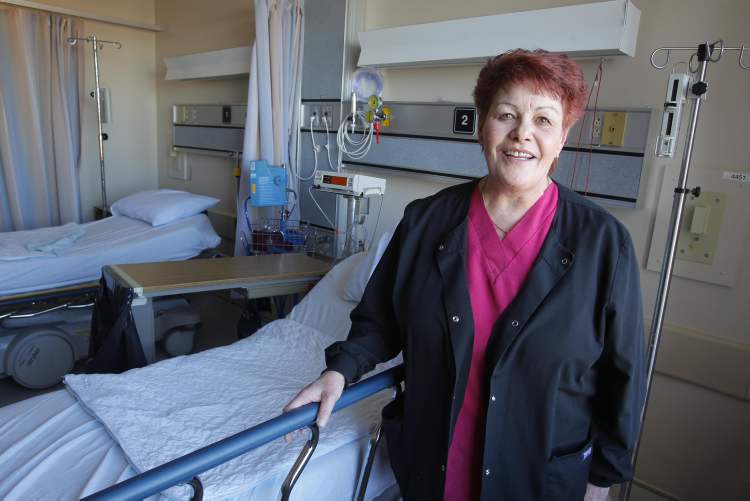
Karen Sadler, president of the St. Boniface Hospital local of the Manitoba Nurses Union, said nursing shortages continue in certain specialized areas.
“We still have huge issues in critical care, where there are a lot of spaces that need to be filled.”
Sadler said the “mature nurse” dominates the nursing population, and “God forbid” if all of those nurses eligible for retirement decided to leave all at once.
“There’s a significant proportion of nurses who just have to have that one day where they are saying, ‘That’s it, that’s all. I am truly done.’ And they’ll walk out of the building in busloads,” she said.
During the October provincial election, the Manitoba NDP vowed to hire 2,000 nurses over the next four years. Half of those are intended to replace retiring nurses.
Health Minister Theresa Oswald said the province is well aware of the nursing profession’s demographic realities and has been “planning for this in earnest” for several years.
“The bottom line is that we know about it, we’re concerned about it and we’ve got a multi-pronged approach to make sure that we’re building our workforce in such a way that we will be able to deal with this reality,” she said this week.
Oswald speculated an anticipated wave of retirements might be slowed by a worsening economic climate. She also pointed out there are 3,000 nursing students in Manitoba schools who will soon enter the workforce.
Also working in Manitoba’s favour is the rate of retirement among nurses age 60 and over is lower here than in most other provinces, according to the Canadian Institute for Health Information.

Tracy Heppner, 55, has worked in the same acute surgical ward at St. Boniface Hospital since she was 19. She said Friday she has no intention of retiring any time soon — even though she reached her “magic 80” (age plus years of service needed to collect her pension) several years ago.
“I love it,” said Heppner, a clinical resource nurse (or what used to be called “head nurse”) of her job.
She said there are a lot of senior nurses on her ward, ranging from their early 50s to 65 years old. A lot of them could have already taken retirement but remain on the job, she said. Some have changed roles, getting away from being a bedside nurse to training nursing students on the ward.
Heppner said proper staffing levels on wards are key to retaining senior nurses. If shortages were to develop to the point where nurses felt patient safety was at risk, it would be tougher for them to face the job past pension age.
larry.kusch@freepress.mb.ca