

Farm elk running wild
Escaped Saskatchewan animals a threat to Manitoba herd
Advertisement
Read this article for free:
or
Already have an account? Log in here »
To continue reading, please subscribe:
Digital Subscription
One year of digital access for only $1.44 a week*
- Enjoy unlimited reading on winnipegfreepress.com
- Read the E-Edition, our digital replica newspaper
- Access News Break, our award-winning app
- Play interactive puzzles
*Billed as $5.77 plus GST every four weeks. After 52 weeks, price increases to the regular rate of $19.95 plus GST every four weeks. Offer available to new and qualified returning subscribers only. Cancel any time.
To continue reading, please subscribe:
Add Free Press access to your Brandon Sun subscription for only an additional
$1 for the first 4 weeks*
- Enjoy unlimited reading on winnipegfreepress.com
- Read the E-Edition, our digital replica newspaper
- Access News Break, our award-winning app
- Play interactive puzzles
*Your next Brandon Sun subscription payment will increase by $1.00 and you will be charged $17.95 plus GST for four weeks. After four weeks, your payment will increase to $24.95 plus GST every four weeks.
Read unlimited articles for free today:
or
Already have an account? Log in here »
Hey there, time traveller!
This article was published 03/03/2012 (5207 days ago), so information in it may no longer be current.
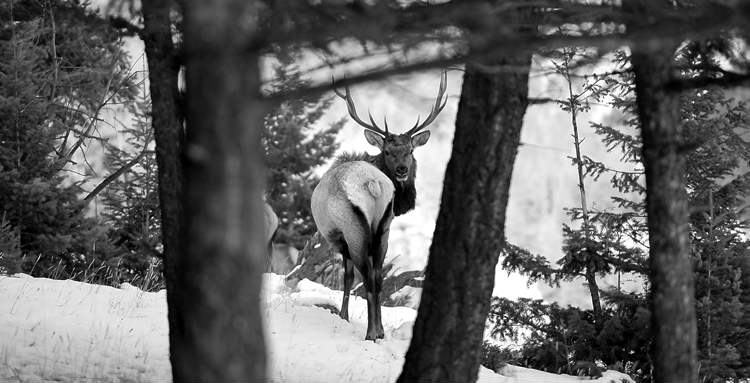
Escaped game-farm elk from Saskatchewan, the worst vectors for chronic wasting disease, are being spotted in northwestern Manitoba with increased regularity since last summer.
One land owner in the Swan River area reported spotting nine of the elk (recognized as “farm elk” by their ear tags) running with a wild herd. There have been many sightings of ear-tagged elk around the Duck Mountain area.
Last fall, one of the ear-tagged elk was killed in a vehicle collision near Benito. Another was killed by a hunter. Both animals tested negative for chronic wasting disease.
“A lot of people in Manitoba should know about this,” said Prof. Ryan Brook, a professor of agriculture and bio-resources at University of Saskatchewan.
People in the northwest region say Manitoba Conservation isn’t acting quickly enough to destroy these animals before they introduce chronic wasting disease into Manitoba. “These elk should have been taken out immediately,” Brook said.
Chronic wasting disease is devastating to cervid species (deer, moose, etc.). It attacks the nervous system and results in a slow death in which animals lose weight, and eventually begin to stagger and drool in the final stages. It’s related to BSE, also known as mad cow disease. However, there is no evidence yet that CWD will spread to livestock.
CWD has not been found in Manitoba yet but it has entered Alberta. Saskatchewan and Alberta are the only two provinces with CWD.
Saskatchewan is the hotbed.
The disease took root there in 1996 from an elk imported from Colorado to a game farm. The disease has since spread to all cervid species in that province, particularly mule deer. Over 100 mule deer shot by hunters have been found to have CWD. Many elk farms have had to destroy entire herds because of CWD.
Manitoba Conservation found the herd alleged to have nine elk with deer tags but could not see the tags, perhaps because officers couldn’t get near enough, said Richard Davis, department wildlife biologist.
Conservation has also put up video cameras controlled by motion detectors along animal trails, but to no avail.
“I wish I could tell people we’re stopping every animal that comes into the province with ear tags,” said Davis, but, “it’s very difficult to spot them and then difficult to remove them.”
People are not allowed to shoot elk without a permit, but restrictions could be lifted if the province sees a need, he said.
So far, there is no evidence CWD can be transferred to humans but the meat is not recommended.
— — —
ETC… A rural reporter gets to know hotel keepers the way former national columnist Alan Fotheringham got to know cab drivers. Both are fonts of local information.
One of the good guys is former NHLer Bob Fitchner, who owned the Super 8 hotel in Portage la Prairie for many years before selling 15 months ago and moving to Winnipeg.
Fitchner is a former NHL grinder. He followed the Quebec Nordiques from the World Hockey Association into the NHL, where he ended his career two years later. He’s also a great guy, and his employees at Super 8 miss him. Also missed are the hockey pool drafts he held in the board room.

Bob was born in Sudbury, Ont., but only because his parents moved there for a year so his dad could work in a nickel mine. Then they moved back to Roblin, where Bob grew up. He played forward for the Brandon Wheat Kings.
Bob is now building a Best Western Hotel on Portage Avenue just west of the Perimeter Highway, next to the new Denny’s. It’s scheduled to open in September.
Why stay in the hotel business after you’ve passed the magic 60 age mark? “I just really enjoy the industry and I really like meeting people,” said Bob. “Plus, I didn’t make the salaries the guys (hockey players) make today. I have to keep working,” he said, partly in jest.
bill.redekop@freepress.mb.ca