

Correct? Yes. Right? Unfortunately not
Judge made the wrong decision, as demanded by Canadian law

Advertisement
Read this article for free:
or
Already have an account? Log in here »
To continue reading, please subscribe:

Digital Subscription
One year of digital access for only $205*
- Enjoy unlimited reading on winnipegfreepress.com
- Read the E-Edition, our digital replica newspaper
- Access News Break, our award-winning app
- Play interactive puzzles
*First annual payment billed as $205.00 + GST for one year. This annual subscription will automatically renew at $233.00 + GST every 52 weeks (10% off the regular annual price of $259.35). Offer available to new and qualified returning subscribers only. Cancel any time.
To continue reading, please subscribe:
Add Free Press access to your Brandon Sun subscription for only an additional
$1 for the first 4 weeks*
- Enjoy unlimited reading on winnipegfreepress.com
- Read the E-Edition, our digital replica newspaper
- Access News Break, our award-winning app
- Play interactive puzzles
*Your next Brandon Sun subscription payment will increase by $1.00 and you will be charged $17.95 plus GST for four weeks. After four weeks, your payment will increase to $24.95 plus GST every four weeks.
Read unlimited articles for free today:
or
Already have an account? Log in here »
Hey there, time traveller!
This article was published 21/03/2012 (5272 days ago), so information in it may no longer be current.
No judge would have wanted this case.
The trial and sentencing of former junior hockey coach Graham James on charges of sexual assault is hardly what you would call a plum assignment. A notorious figure, James was facing new allegations of sexual assault from two more of his former players, including NHL star Theoren Fleury. Having pleaded guilty to these new crimes, the general public had primed itself for nothing less than a public hanging.
Into this charged context walked provincial court Judge Catherine Carlson. No one seeks a position on the bench without being willing to take on the tough assignments. Still, for those present in a Winnipeg courtroom Tuesday to hear the highly anticipated sentencing, there was little doubt the weight of victim and public expectation weighed heavily on Carlson.
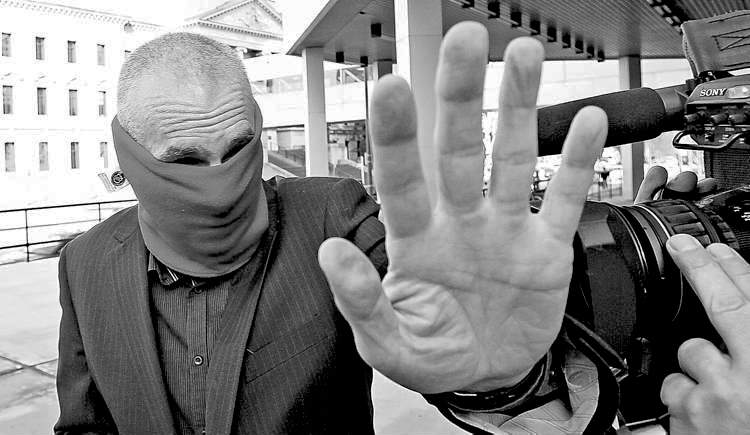
Carlson repeatedly noted how challenging this case was, and how the circumstances made it unique in Canadian legal history. And how no sentence could ever repair the damage done by James.
It would be easy to dismiss Carlson’s comments as trite, even glib. Carlson at one point acknowledged as much. But there was, in fact, nothing glib or trite about the sentencing decision. It was meticulous and thoughtful, touching on all arguments — legal, emotional, rational and irrational — and considering the interests of all parties.
The challenge of the James case lies in the fact that the crimes for which he was sentenced this week were committed 15 or more years ago. That was at the same time he committed offences for which he was already convicted and sentenced. According to the legal principle of “totality,” a concept enshrined in the Criminal Code and confirmed by court decisions at all levels, someone convicted of crimes that occurred at the same time as previous offences cannot be imprisoned for a period that, taken together with previous sentences, would result in a total sentence of more than the maximum allowable by law.
Totality required Carlson to estimate the sentence James would have received in 1997 if all of the sexual assaults were tried at the same time. That sentence would have to fit within the maximum 10-year sentence allowed by the Criminal Code. Finally, the court was compelled to consider all aggravating and mitigating circumstances that arose during the period between the original convictions and the new charges.
In the list of mitigating factors were a series of undisputed facts: James returned voluntarily to Canada from Mexico and turned himself in to police to face the new charges; he pleaded guilty, sparing the victims the tribulation of having to testify; he successfully completed counselling and parole; despite still battling his deviant demons, he had not reoffended in the 15 years since he was released after his first convictions; he expressed remorse for his crimes and apologized fully and completely to his victims.
At the heart of this case is an underlying principle of fairness, both for victims and perpetrators. As Carlson so eloquently outlined Tuesday, sentences function to denounce and deter the commission of criminal acts, separate offenders from society, rehabilitate those offenders and reflect the gravity of harm done to victims. But there is a check on those functions: Sentences must not be unduly punitive, so much so that the punishment does not fit the crime. Courts must consider acts of contrition, or evidence of even partial rehabilitation, in its decisions.
These are grand principles that, lamentably, provide no comfort in this case. Although James has been contrite and has shown a commitment to controlling his urges for 15 years, there are few who can accept that 24 months of additional incarceration is a good fit for these additional crimes. Totality is a fair and noble concept, and completely inappropriate for the facts of this case.
Thus, we are left with a profound moral dilemma: Do we defend a justice system that clings so desperately, even blindly, to the principle of fairness that it produces results that are unfair?

It is ironic that prior to the sentencing decision, Carlson refused an application from media outlets, including the Winnipeg Free Press, to allow cameras to televise the proceedings. The irony is the public interest would have been served by hearing the “totality” of Carlson’s decision. It may not have changed many minds, but it would have made that outrage a bit more informed, and shown clearly that Carlson made the only decision the law would allow.
Perhaps totality isn’t the problem. Perhaps new laws will prescribe new allowable maximum sentences for sexual assault, or an end to concurrent sentencing for sex offenders. The possibilities for lawmakers are endless.
In the final assessment, this decision was consistent with one of the most important principles of Canada’s justice system, a hallmark of a fair and noble society.
It was also, lamentably, the wrong decision.
dan.lett@freepress.mb.ca
Dan Lett is a columnist for the Free Press, providing opinion and commentary on politics in Winnipeg and beyond. Born and raised in Toronto, Dan joined the Free Press in 1986. Read more about Dan.
Dan’s columns are built on facts and reactions, but offer his personal views through arguments and analysis. The Free Press’ editing team reviews Dan’s columns before they are posted online or published in print — part of the our tradition, since 1872, of producing reliable independent journalism. Read more about Free Press’s history and mandate, and learn how our newsroom operates.
Our newsroom depends on a growing audience of readers to power our journalism. If you are not a paid reader, please consider becoming a subscriber.
Our newsroom depends on its audience of readers to power our journalism. Thank you for your support.
Dan Lett is a columnist for the Free Press, providing opinion and commentary on politics in Winnipeg and beyond. Born and raised in Toronto, Dan joined the Free Press in 1986. Read more about Dan.
Dan’s columns are built on facts and reactions, but offer his personal views through arguments and analysis. The Free Press’ editing team reviews Dan’s columns before they are posted online or published in print — part of the our tradition, since 1872, of producing reliable independent journalism. Read more about Free Press’s history and mandate, and learn how our newsroom operates.
Our newsroom depends on a growing audience of readers to power our journalism. If you are not a paid reader, please consider becoming a subscriber.
Our newsroom depends on its audience of readers to power our journalism. Thank you for your support.
Related Articles
Two years for destroying lives
Advertisement Advertise With Us
Advertisement Advertise With Us