

Stolen motherhood
Young, naive, unmarried women abandoned by their families to wait out pregnancies at Winnipeg's Church Home for Girls say they were drugged and their wishes dismissed while their babies were being abducted for waiting couples in a mid-century horror story
Advertisement
Read this article for free:
or
Already have an account? Log in here »
To continue reading, please subscribe:
Monthly Digital Subscription
$1 per week for 24 weeks*
- Enjoy unlimited reading on winnipegfreepress.com
- Read the E-Edition, our digital replica newspaper
- Access News Break, our award-winning app
- Play interactive puzzles
*Billed as $4.00 plus GST every four weeks. After 24 weeks, price increases to the regular rate of $19.95 plus GST every four weeks. Offer available to new and qualified returning subscribers only. Cancel any time.
Monthly Digital Subscription
$4.99/week*
- Enjoy unlimited reading on winnipegfreepress.com
- Read the E-Edition, our digital replica newspaper
- Access News Break, our award-winning app
- Play interactive puzzles
*Billed as $19.95 plus GST every four weeks. Cancel any time.
To continue reading, please subscribe:
Add Free Press access to your Brandon Sun subscription for only an additional
$1 for the first 4 weeks*
- Enjoy unlimited reading on winnipegfreepress.com
- Read the E-Edition, our digital replica newspaper
- Access News Break, our award-winning app
- Play interactive puzzles
*Your next Brandon Sun subscription payment will increase by $1.00 and you will be charged $17.95 plus GST for four weeks. After four weeks, your payment will increase to $24.95 plus GST every four weeks.
Read unlimited articles for free today:
or
Already have an account? Log in here »
Hey there, time traveller!
This article was published 07/04/2012 (5150 days ago), so information in it may no longer be current.
Katie describes the birth of her only child as “a bloodbath.”
She was 17, a naive girl banished from her Thunder Bay home and sent to wait out her pregnancy in a Winnipeg home for unwed mothers. It was 1965, and girls like her were considered shameful, fallen women.
Katie, who doesn’t want her last name used because her daughter was the result of rape, says her time at the Church Home For Girls was humiliating. The teens were told they were sinners. They were lectured on what poor mothers they’d make. She claims they were never told their babies would be taken from them at birth.
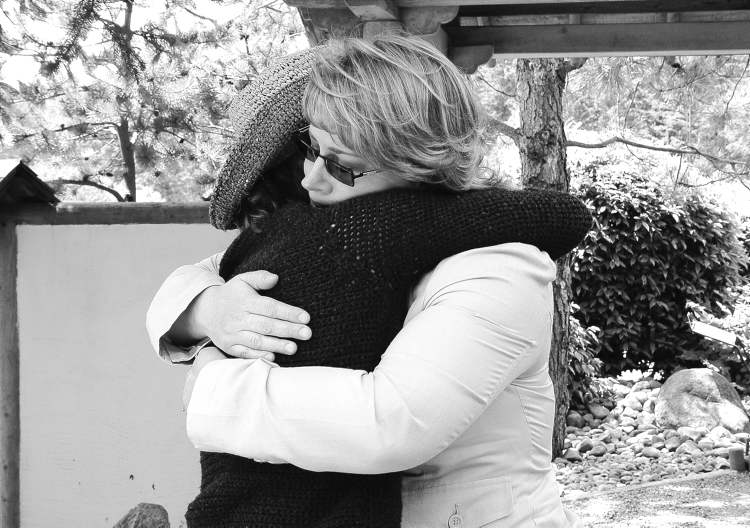
The home was run jointly by the United and Anglican churches.
Katie says the baby she named Deborah Lynn was stolen from her St. Boniface General Hospital delivery room.
“I was taken (from the Church Home after her water broke) and delivered to the St. Boniface emergency by taxi. I was left there. I was taken up to labour and delivery and prepped in front of student nurses. I was beyond mortification.”
She says she was admitted at 5:30 in the morning. Although her medical records show her cervix was not dilated when she came in, her daughter was born two hours later.
“They had given me drugs to speed things up. My daughter just exploded out of me. I had to be sewn up afterwards.”
She wanted to see her baby. Instead, she claims, she was shown another infant.
“The baby was too big to be mine. It had black hair and I’m very fair. It wasn’t a newborn. It was all cleaned up. Mine would have still been messy.”
She says she was drugged and blacked out. She spent five days in and out of consciousness. When she tried to go to the nursery to see Deborah, she says her dosage was increased.
Her medical records show she was given painkillers and a sedative. She was given a drug to dry up her milk.
“I didn’t feel a lot of emotion. I thought I was a monster. It convinced me I wasn’t fit to be a mother.”
She returned to Church Home, where she says her breasts were bound to ensure her milk didn’t come in. She insisted she was going back to the hospital to claim her daughter.
“The social worker said, ‘But I have such a wonderful family for your baby.’ I felt such rage. They were using us as breeders. They set up all these obstacles.”
Katie retrieved her baby and used a plane ticket her parents sent her to return to Thunder Bay. When she arrived, her parents weren’t there. Another social worker was waiting. Deborah Lynn was taken from her arms.
“I didn’t have any more rights than a five-year-old.”
Katie is 65 now. Her daughter is 47. They met once. It went poorly, but Katie still moved back to Thunder Bay from California so she could steal glimpses of the child she was denied.
Katie’s story would sound incredible if there weren’t potentially thousands of Canadian women whose babies were put up for adoption without their consent between the 1940s and 1980s. The stories aren’t unique to Canada. Women in the United States, Ireland, Spain and Australia have all reported forced adoptions.
This spring, the Australian parliament released the results of an 18-month investigation into techniques used to convince young unmarried women to surrender their babies. The methods were described as “illegal and unethical.”
An Australian senate committee has called for a national apology to thousands of women who were forced to give up their children for adoption between the 1950s and 1970s.
A recently founded Canadian national organization has been using social media to bring together mothers whose children were involuntarily adopted at birth. Justice For Mother and Child, the brainchild of Vancouverite Hanne Andersen, has seen roughly 100 mothers send letters to their MPs, demanding their losses be acknowledged.
The group would like a formal process put into place so they can report what they call “abductions” to the RCMP. RCMP spokesmen say, to the best of their knowledge, no such program is in the works.
A Saskatchewan-based law firm is investigating a class-action suit on behalf of women whose infants were taken between the 1940s and 1980s. Andersen has signed on.
Katie’s Church Home roommate was a 16-year-old Virden girl named Jeannette Murdoch. The two sat up together the night before Katie gave birth. She remembers her friend fondly, although they lost touch after their children were adopted out.
But Bruce Murdoch, Jeannette’s younger brother, says the experience ruined her life.
“Jeanette never talked about it,” says Murdoch, now a Cranbrook, B.C., resident. “When she was younger, prior to her getting pregnant at 15, 16, she was productive, intelligent, with a genius-level IQ. She was very talented — piano, academics, sports.”
No one in the family talked about Jeanette’s pregnancy at the time. Everyone knew, Murdoch says, but it wasn’t until some 15 years later that it was openly discussed.
“She was such a different person when she came back. She had become cynical. She hated religion with a passion. She didn’t want anyone touching her.”
Her boyfriend, the father of the son she bore, denied responsibility.
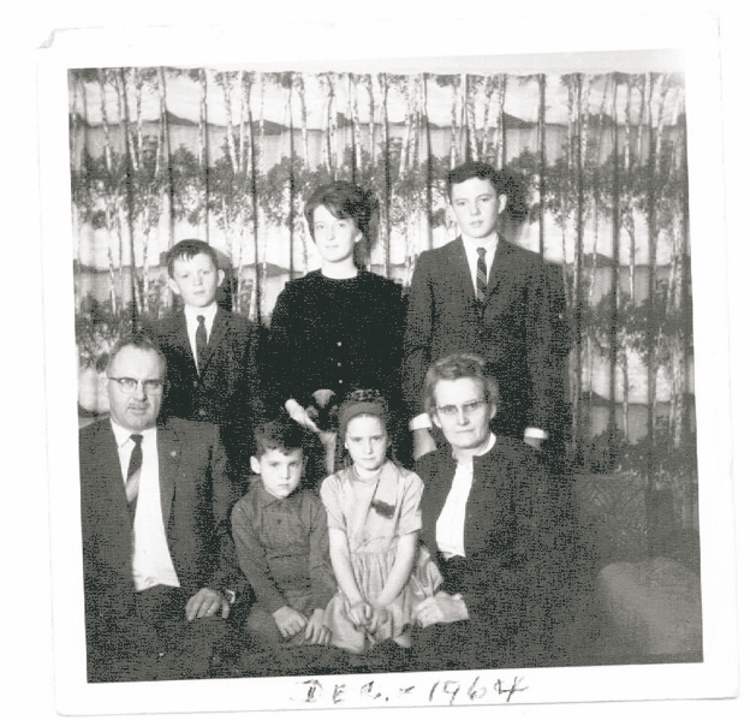
Jeanette became an alcoholic with other substance-abuse issues. She died of cancer at 52, an illness her brother says was lifestyle-related.
“The month that her son was born, every year she went through three weeks of extreme emotional distress. In the early years, she went on a bender.”
He said the experiences of girls like Jeanette were akin to programming.
“They were treated like sinners. They were told they were evil, that their children deserved to be taken away.”
Although she married in her 30s, Jeanette Murdoch did not give birth again.
Justice for Mother and Child’s Andersen tells a similar story. She was raped at 15 and became pregnant as a result. The Vancouver girl was sent to a Salvation Army home for unwed mothers.
It was 1983.
She says her immigrant parents did not understand their rights or hers. Andersen thought she could keep her child.
“She was abducted,” says the 44-year-old today. “I wasn’t even told if it was a boy or a girl. I asked to hold her. I think I said it kind of quietly. They ignored me.”
She says there was a medical protocol at the time for treating women whose babies would be adopted out. Their files were marked BFA (babies for adoption).
“They were told to ignore the mothers, to bar them from seeing the babies, drug them to prevent lactation, give them barbiturates after the baby was born.”
Andersen has met her daughter.
“It was really exciting. She’s really a great person.”
Andersen never had another child. She says between 40 and 60 per cent of the women in her group didn’t become pregnant again.
“It was just too traumatic.”
She says the young mothers and their parents were coerced into handing over the infants.
“They were allowing infertile couples to wait list for healthy white babies,” she says. “I don’t think we were ever seen as mothers. I think we were seen as breeding machines.”
And Katie remembers the confusion she felt.

“They (adoptive parents) inspected us while we were pregnant. We were just too sweet and innocent to understand what was going on.”
While none of the mothers will be whole again, they say recognition for their loss will help.
“Can you imagine being told you were some sort of monster who didn’t deserve her baby?” Katie asks.
“They stole our children and said it was our fault.”
lindor.reynolds@freepress.mb.ca
History
Updated on Saturday, April 7, 2012 8:22 AM CDT: adds photo, corrects cutline
Updated on Saturday, April 7, 2012 10:48 AM CDT: adds fact box