

The cloak of secrecy over Project Devote may be making investigators’ jobs even tougher
Advertisement
Read this article for free:
or
Already have an account? Log in here »
To continue reading, please subscribe:

Digital Subscription
One year of digital access for only $205*
- Enjoy unlimited reading on winnipegfreepress.com
- Read the E-Edition, our digital replica newspaper
- Access News Break, our award-winning app
- Play interactive puzzles
*First annual payment billed as $205.00 + GST for one year. This annual subscription will automatically renew at $233.00 + GST every 52 weeks (10% off the regular annual price of $259.35). Offer available to new and qualified returning subscribers only. Cancel any time.
To continue reading, please subscribe:
Add Free Press access to your Brandon Sun subscription for only an additional
$1 for the first 4 weeks*
- Enjoy unlimited reading on winnipegfreepress.com
- Read the E-Edition, our digital replica newspaper
- Access News Break, our award-winning app
- Play interactive puzzles
*Your next Brandon Sun subscription payment will increase by $1.00 and you will be charged $17.95 plus GST for four weeks. After four weeks, your payment will increase to $24.95 plus GST every four weeks.
Read unlimited articles for free today:
or
Already have an account? Log in here »
Hey there, time traveller!
This article was published 25/08/2012 (5082 days ago), so information in it may no longer be current.
It’s been three years since the announcement of a joint RCMP/Winnipeg Police Service (WPS) task force to examine the cases of Manitoba’s slain and missing women.
Trying to determine what they’ve accomplished since the Aug. 26, 2009 announcement is a near-impossibility.
Neither the RCMP nor the WPS will reveal the task force’s budget, timeline, how success is measured or even where its officers work. Requests to interview police Chief Keith McCaskill and RCMP assistant commissioner Bill Robinson for this article were denied.
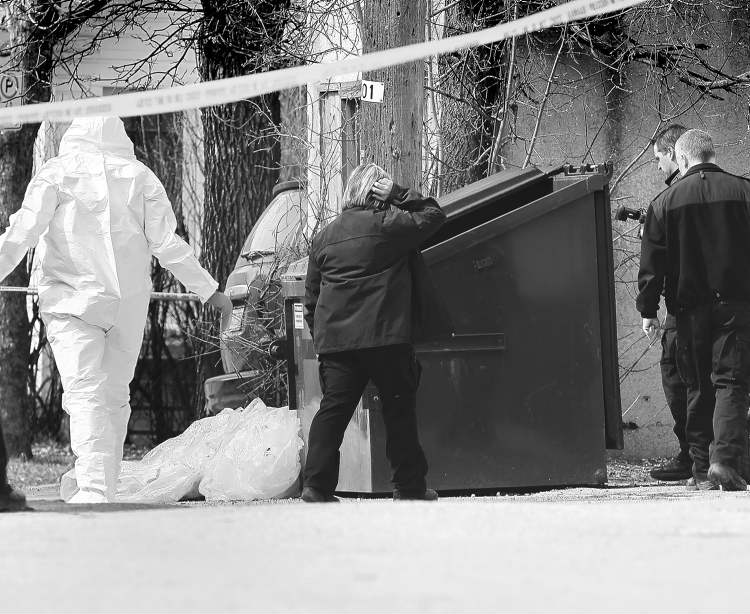
The task force is a maelstrom, fed by political interests, the anguish of families, historic mistrust of police by aboriginals, perceptions of racism and a police bureaucracy operating under a cloak of secrecy.
The work seems nearly impossible. Some cases are decades old. Many victims worked in the sex trade, exposing them to a number of strangers. In some cases, no body has been found.
In an email, a Manitoba Justice spokesman said each police service pays the salaries of its members. The province, he said, supports the project with funding through the Provincial Policing Services Agreement. There is not “a dollar figure that was specific to the task force.”
The province has also committed to support “extraordinary costs” of Project Devote as required, he said. Since the police services refuse to reveal their budget, it’s impossible to know what those costs entail.
The province has assigned two prosecutors to work on Project Devote. They added a staff member to stay in touch with the families of the victims.
Here’s what else we know:
In mid-August 2009, both police forces insisted they would continue to investigate their cases separately. That changed by the end of the month after the bodies of Cherisse Houle, 17, and Hillary Wilson, 18, were found weeks apart.
At the time, the botched British Columbia police investigation of serial killer Robert Pickton was front and centre in the public’s mind.
The Manitoba task force was formed and given the job of examining unsolved homicides of women and missing-women investigations where foul play was suspected.
Some believed the move was purely political.
In February 2010, task force members had identified 84 cases of interest but they said nothing pointed to a serial killer — something that worried those who would have preferred a serial killer to 84 separate killers operating in Manitoba with impunity.
In September 2010, police announced an arrest in the 2004 slaying of transgender Winnipeg sex-trade worker Divas Boulanger.
In an internal email sent three months earlier, the RCMP’s Robinson wrote: “… one of the files involving a transgender worker that ended up with the task force and then passed back to the investigators has been solved. Arrests are forthcoming, this will be an exceptional break for the team — MCU-SCU-Missing Women’s Task Force-Cold Case.”
Although arresting Boulanger’s alleged killer was first credited to the task force, that claim was later dropped. It would be two years before the hard work of investigators landed the first arrest.
In December 2010, a Free Press investigation revealed that for more than a year after it was announced, the task force didn’t formally exist. It showed “a document to formalize the Integrated Task Force” had still not been completed by Oct. 19, 2010.
Manitoba Justice refused to release any documents related to the task force, including its annual budget, mission statement and the names or titles of the officers on the task force. That intransigence continues today.
RCMP officers made it clear at the time while there were no documents formalizing the task force, its work was well underway.
In May 2011, it was announced the task force’s work would continue under the name Project Devote. Eighteen police officers (10 from the WPS and eight from the RCMP), were assigned. Police said there was still nothing to indicate any person was responsible for more than one of the killings.
In an interview this spring, a former police officer said he believed one person was responsible for several of the killings.
“You don’t just go out and do it once,” said the former cop, who requested anonymity.
“When it appears to be a random one, it’s unlikely. There’s probably a thrill-killer out there.”
The former officer said he believes the task force was formed because “Pickton scared them.”
In June 2012, police announced the arrest of Shawn Lamb. He was charged with the deaths of Carolyn Sinclair, 25, Lorna Blacksmith, 18, and Tanya Nepinak, 31. Nepinak’s body, believed to be in the Brady Road Landfill, has not been recovered.
Police have said they’re now working with investigators across Canada to see if Lamb might be connected with other cases.
In mid-July 2012, Project Devote narrowed its list to 28 victims. All were at high risk of becoming victims of violent crime because of lifestyle or mental-health issues.
One man was on the list. His inclusion baffled those advocating for the slain and missing women.
Police have long believed information about some of the slayings is out there, but no one has come forward to share what they know.
Retired homicide detective Bob Marshall said police never stop trying to solve their cases. He worked the case of Tania Marsden, an 18-year-old who was slain 13 years ago.
“Police don’t care who they were, what they did. We want them solved. I think the thing about the task force, there are answers out there. It may be a witness who hasn’t come forward. It may be science that can tell us something now.”
Tania Marsden is on Project Devote’s list of 28.
Nicolle Hands was slain in 2003. She was on the original task force list but not on the short list. Her mother, Eleanor Hands, said she’s glad her daughter’s case is still being worked on, even if it’s not on the short list.
Still, she feels out of the loop.
“I don’t know what the agenda is, if two people are working on the case… I’m sure if I asked I wouldn’t be told.”
Nahanni Fontaine, once a community activist and fierce critic of how police handle cases of missing aboriginal women, was appointed the province’s special adviser on aboriginal women’s issues in 2010.
If the hope was to temper her bluntness, there has been some success.
But her advocacy for missing women and their families has not been dulled. Does she consider the task force a success?
“How can I measure success?” she asked. “We have this task force. When you look at the evolution of the task force members, it’s a success. It is what it is. However long it took us to get here, at least we’re here.”
She said police are making a genuine effort.
“We have dedicated (police) members who work long hours, who establish relationships with families,” she said.
For the past three years, Fontaine has organized a gathering for the family members of the missing and slain women. This May, 80 people representing about 15 women met at the Clarion Hotel for a weekend session.
Elders, grief counsellors and social workers addressed the group. The province’s Aboriginal and Northern Affairs Department picked up the $40,000 tab.
Project Devote members were present. They broke the news they had narrowed the list.
Tanya Nepinak’s sister Gail was at the Clarion. She said she’s been angry with authorities since her sister disappeared.
“They’re don’t phone us, they don’t tell us anything,” she said of the RCMP, adding she has had a great relationship with the two WPS officers assigned to the Nepinak case.
“But these guys, I didn’t even know the RCMP was involved. Why now? They’re trying to take credit for stuff they didn’t do.”

Fontaine said the gatherings give people the chance to talk to others who have experienced the same terrible loss.
The police services are justified in keeping details of their ongoing investigations close to the chest. You don’t reveal you’re about to arrest a bad guy; you just arrest him.
Thousands of hours have gone into the task force already. No cop wants a crime to remain unsolved.
But their masters are doing them and the families no favours by drawing the shutters on how much money they’re spending and how long they plan to keep Project Devote alive.
lindor.reynolds@freepress.mb.ca
Related Articles
Info sought on group with possible connection to 1998 slaying of Tania Marsden

Advertisement Advertise With Us
Advertisement Advertise With Us